



Quick Marrakesh Travel Essentials
✈️ Arrival: The private airport transfer is the best way to get to your hotel. It helped a lot.
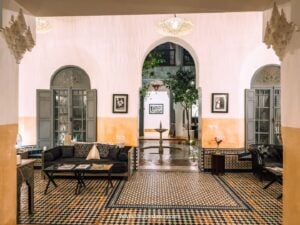
🛏️ Where to stay: ⭐️ Riad Tizwa and Riad Adore in the medina
🥙 Traditional food: Café Restaurant Dar L’hssira
🇲🇦 Top tours: Souks Walking Tour and Street Food Tour
🛒 Shop/Groceries: BIM near Koutoubia Mosque, and BIM near El Badi Palace
💳 Card/ATM: Use the Wise card for the best conversion rate, and Al Barid ATM for the lowest commission.
💵 Money exchange: Bureau De Change near Le Jardin Secret and Madrasa, and Bab Agnaou Change near El Badi Palace
🛜 eSIM: Our favorite Morocco eSIM connects to the best networks at fast speeds (tried & tested).
Things to do in Marrakesh
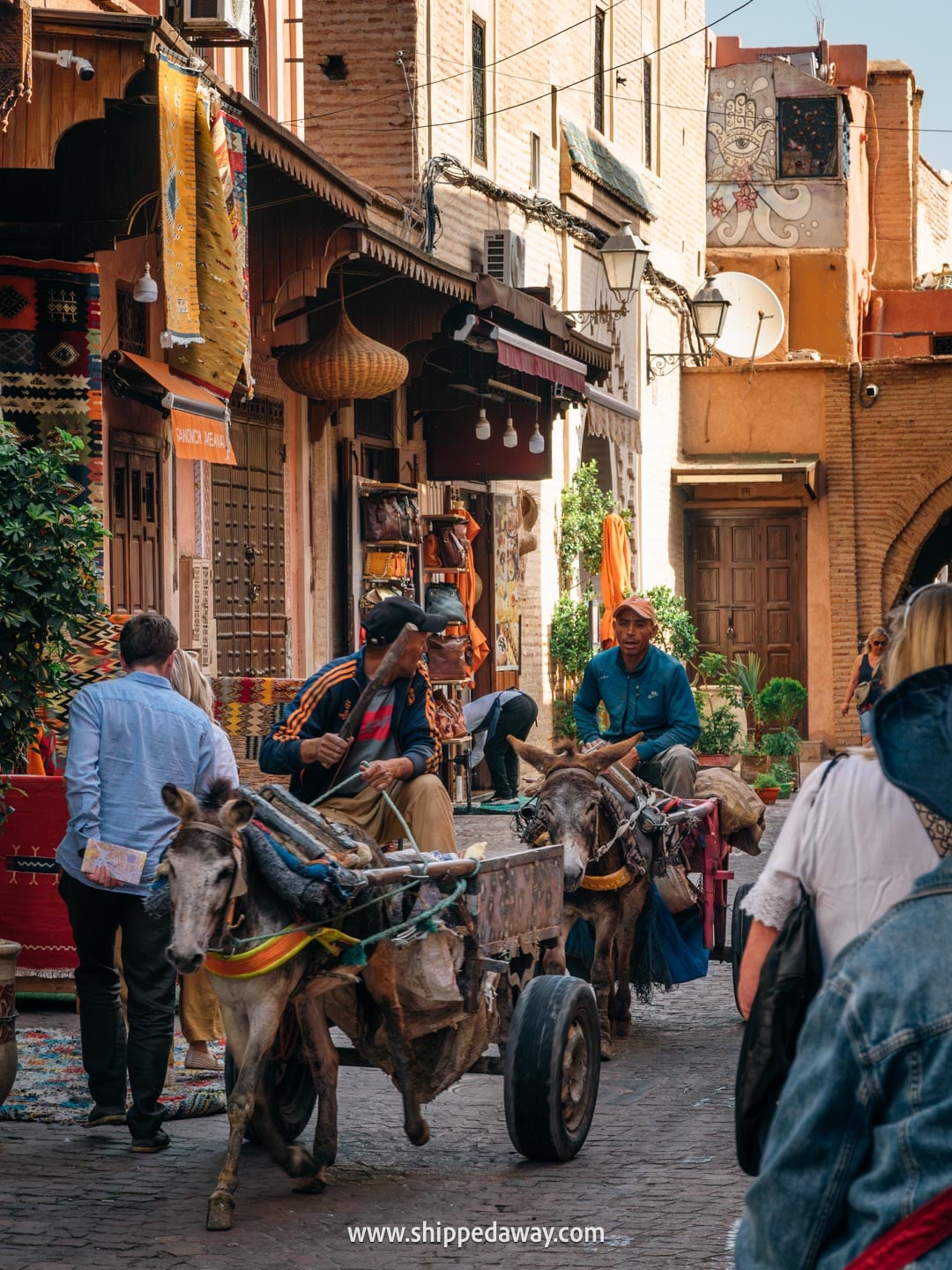
While the medina (old city) of Marrakesh is pedestrian-only, and taxis and other vehicles can’t drive inside, you will still see locals driving their scooters, donkey carts, and sometimes these small transportation truck-things that can squeeze through the narrow streets. Without that, life inside the medina would be impossible for them! So keep that in mind.
1. Riad stay
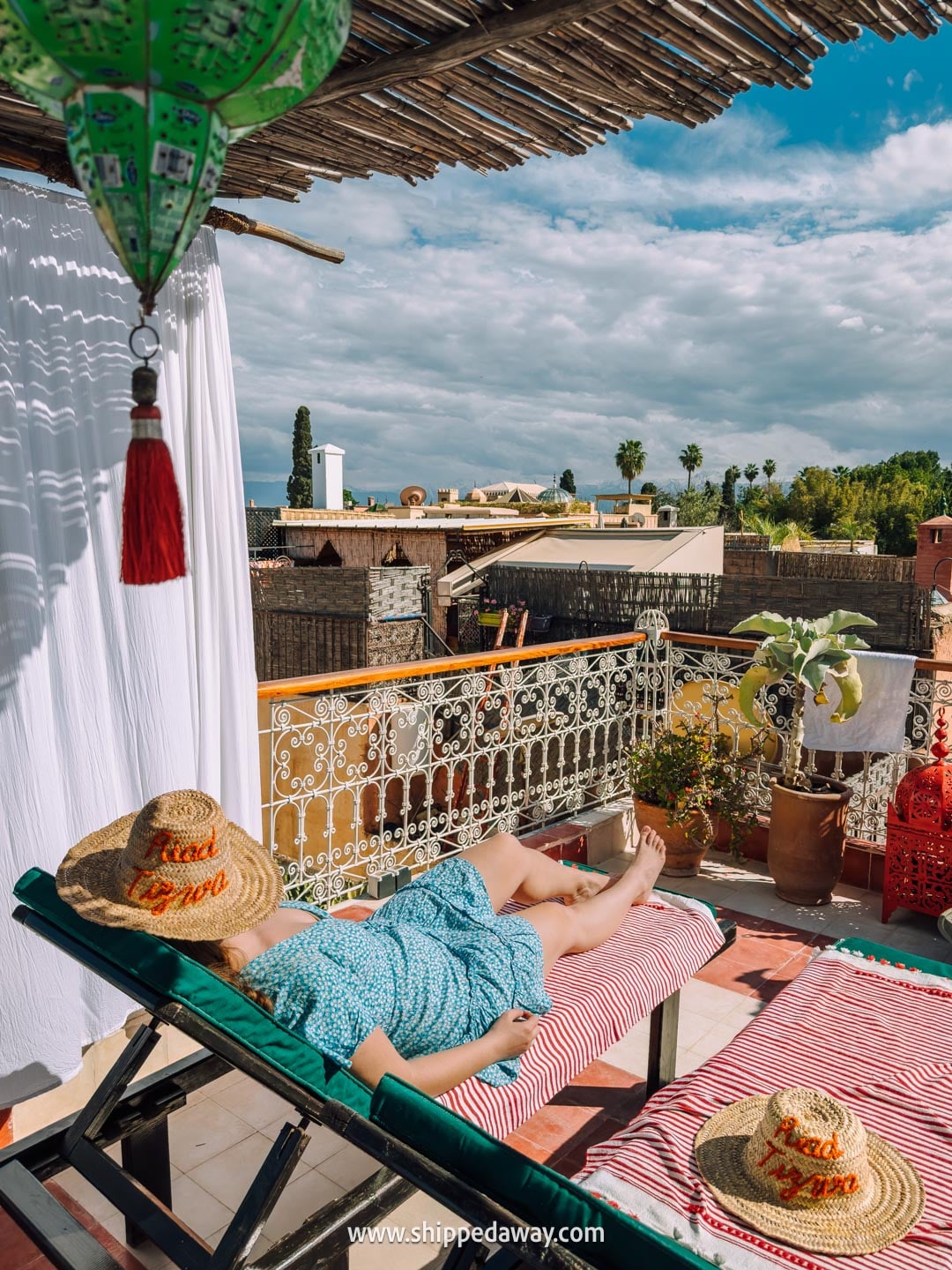
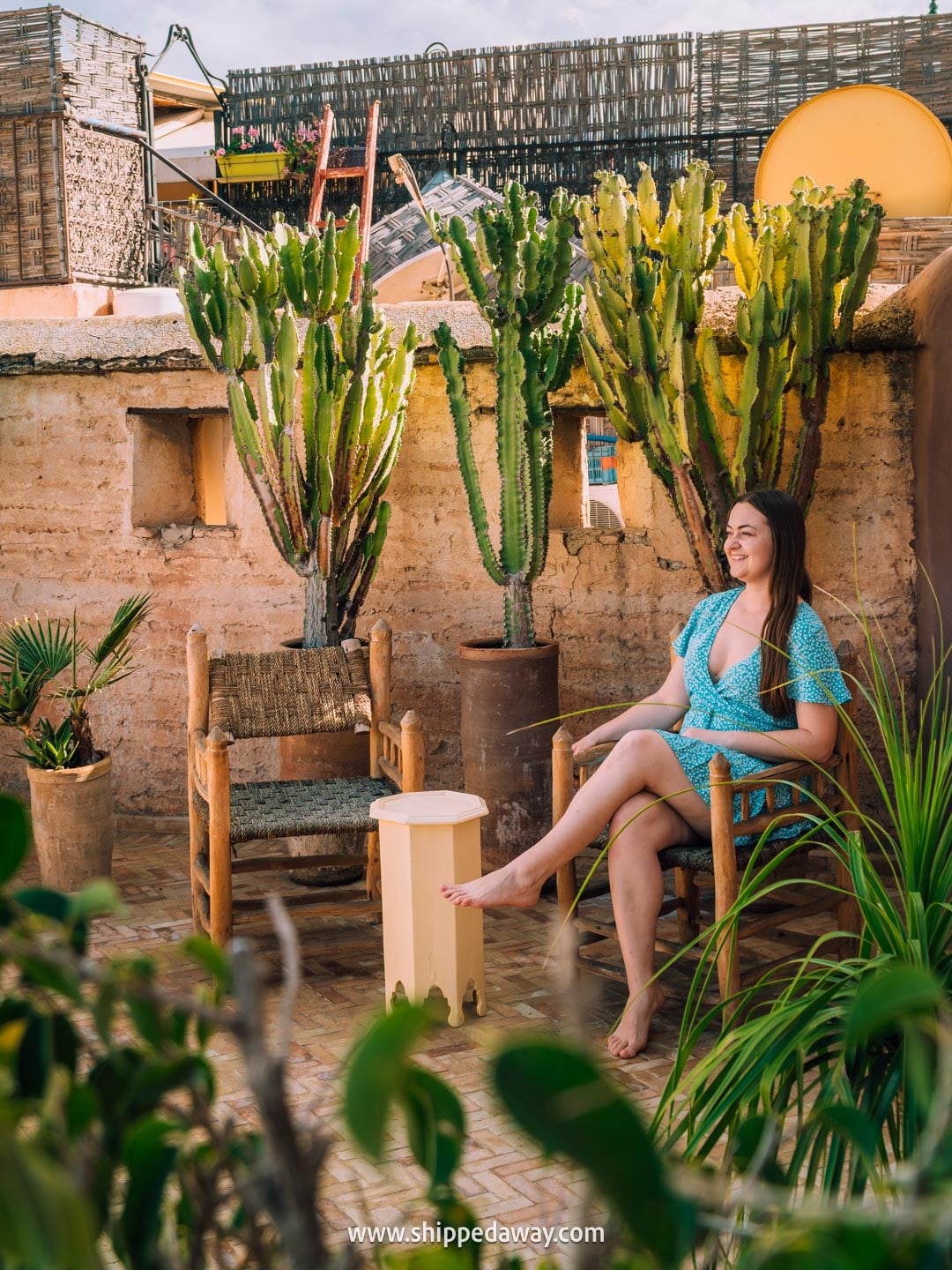
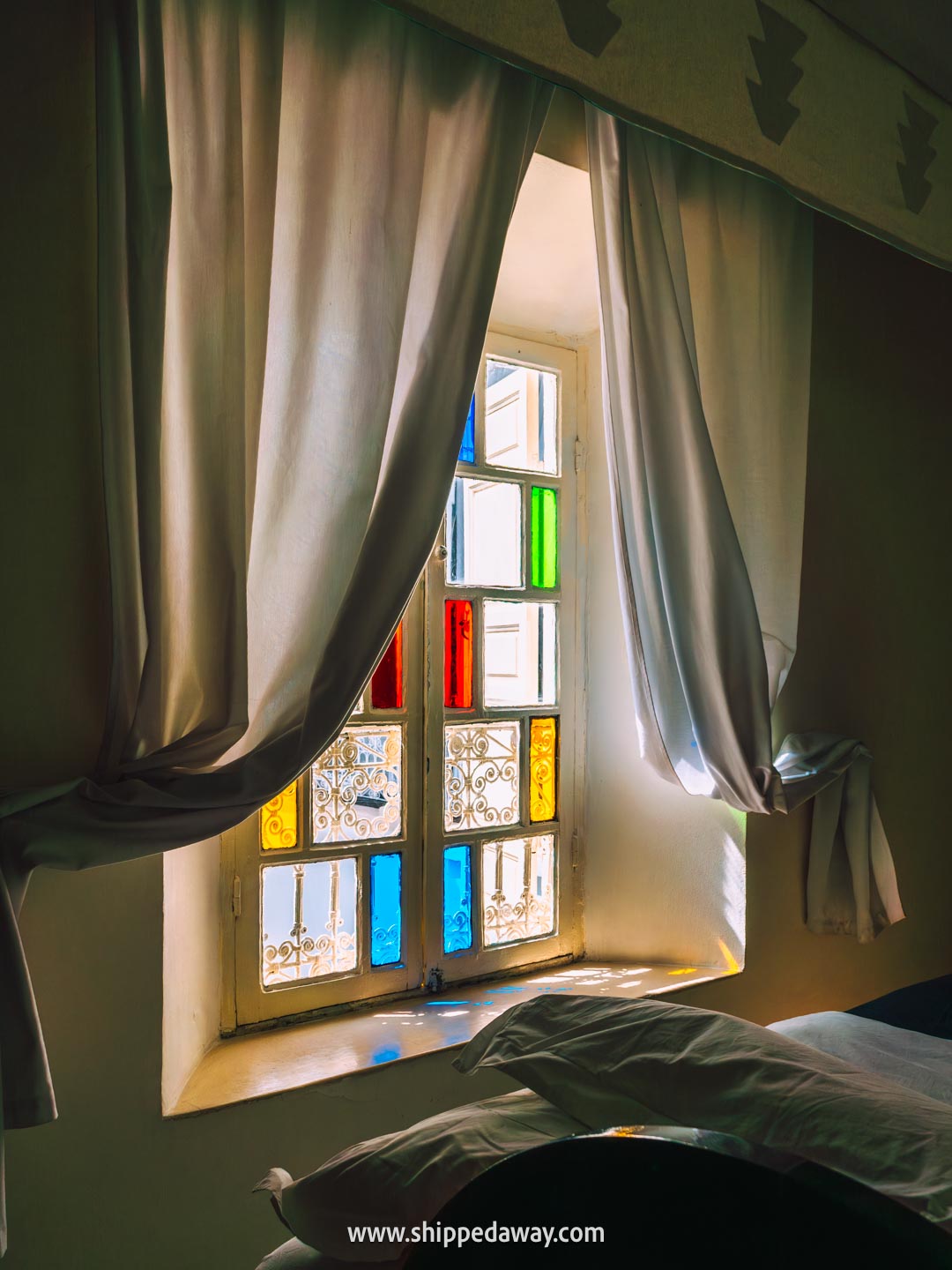
First on our list of must-dos in Marrakesh is to stay in a traditional Riad, a type of hotel with rooms centered around a shared interior courtyard or garden.
Riads were historically homes of the wealthy Moroccan elite, and this is reflected to this day in the prices of hotels built inside them. They are not a budget option, but more of a luxury guesthouse.
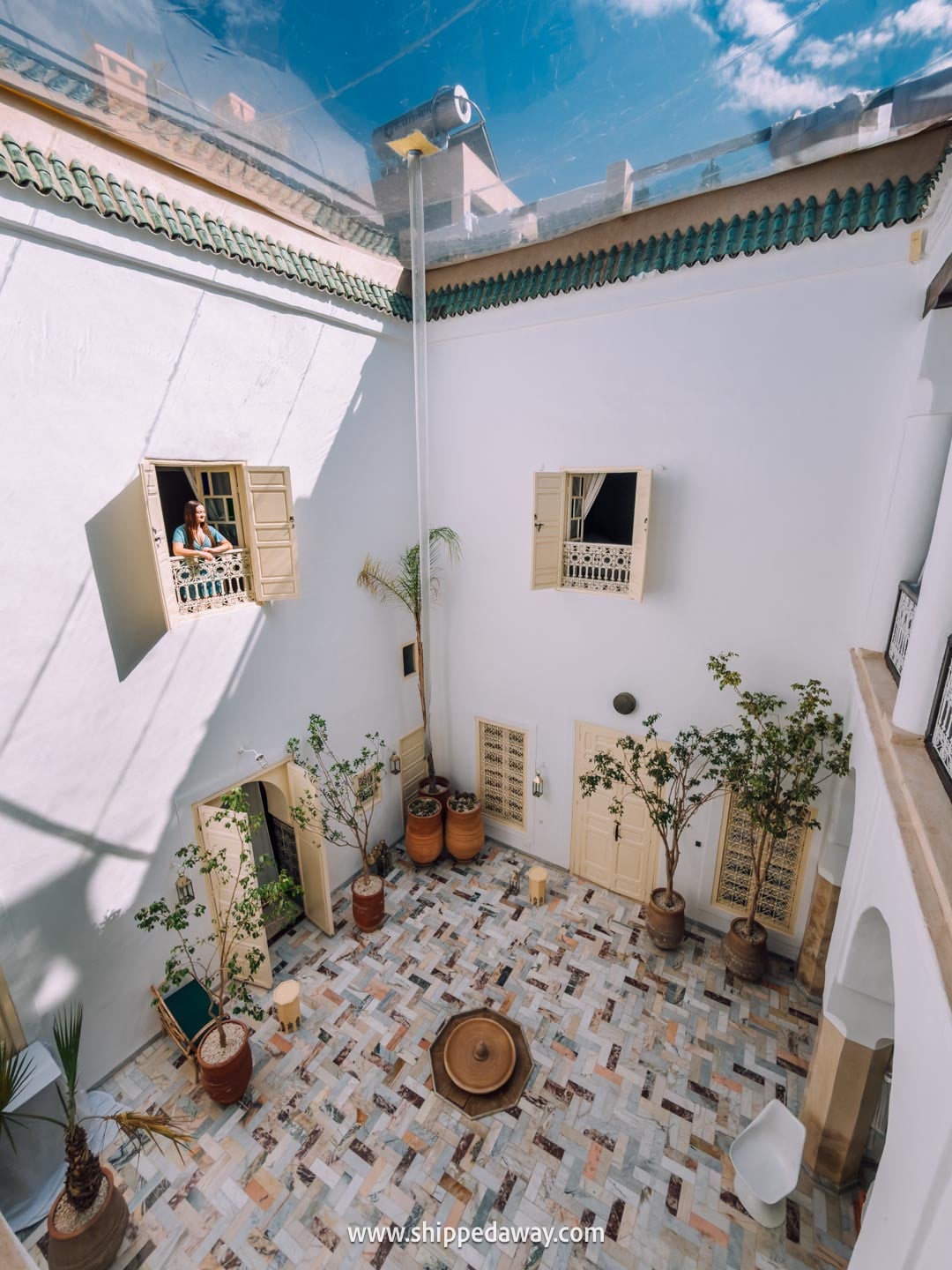
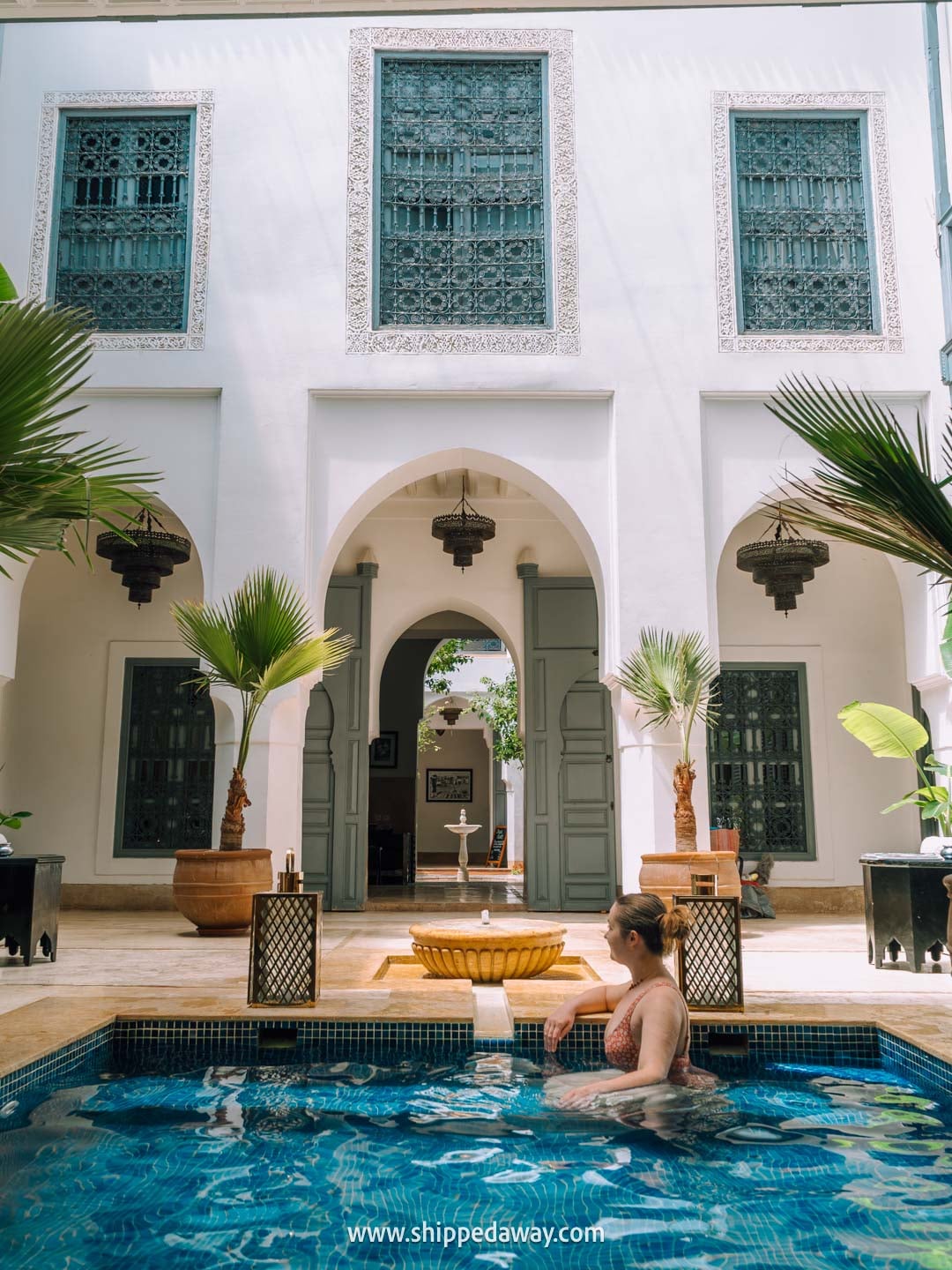
While you can stay in a cheaper room elsewhere, staying in a traditional Riad gets you up close to how the wealthy lived and still do live in Morocco.
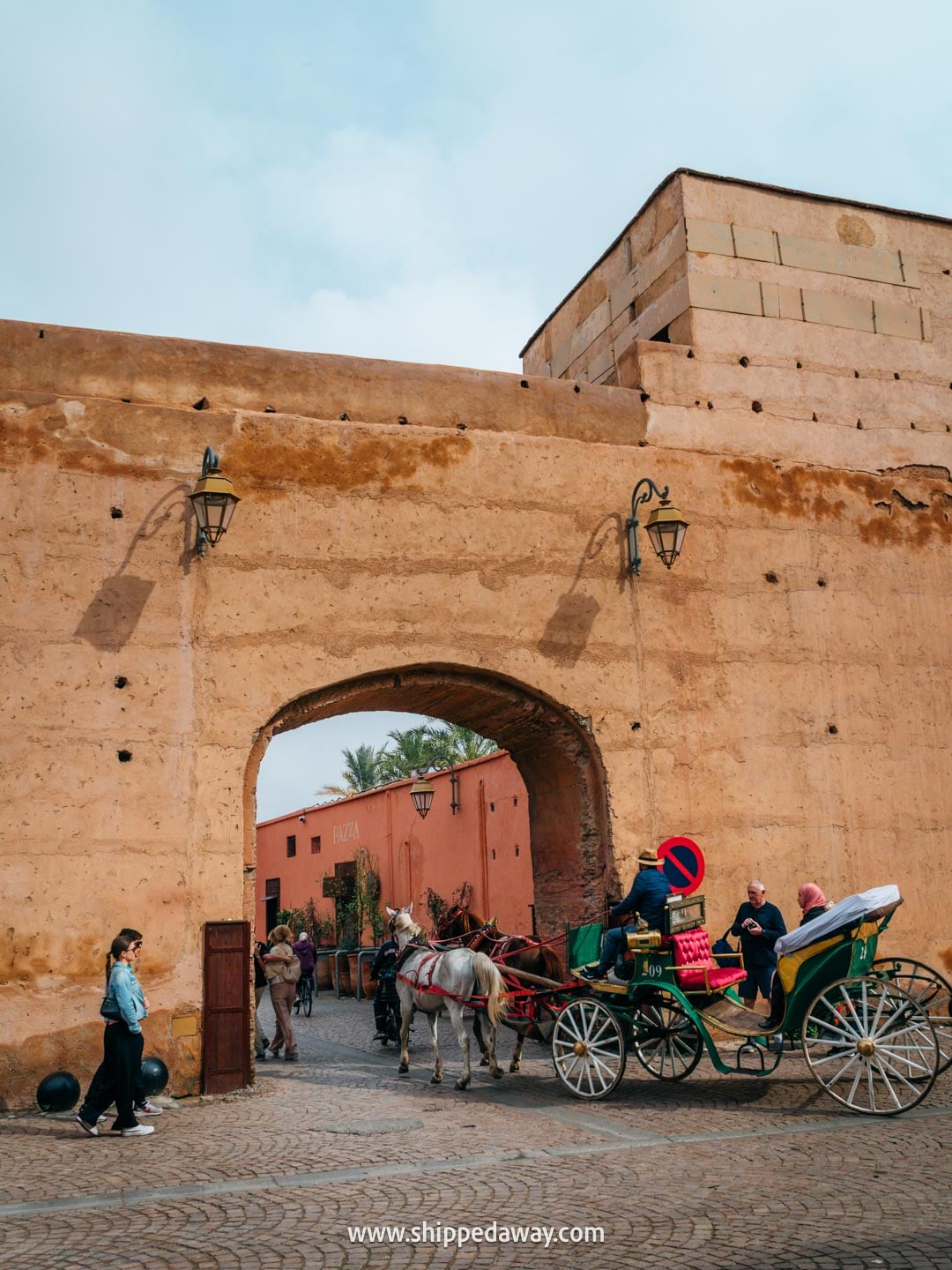
Walking around the busy, narrow streets of Marrakesh’s medina, the historic old city, you don’t really expect such grand places to exist behind the iconic red walls.
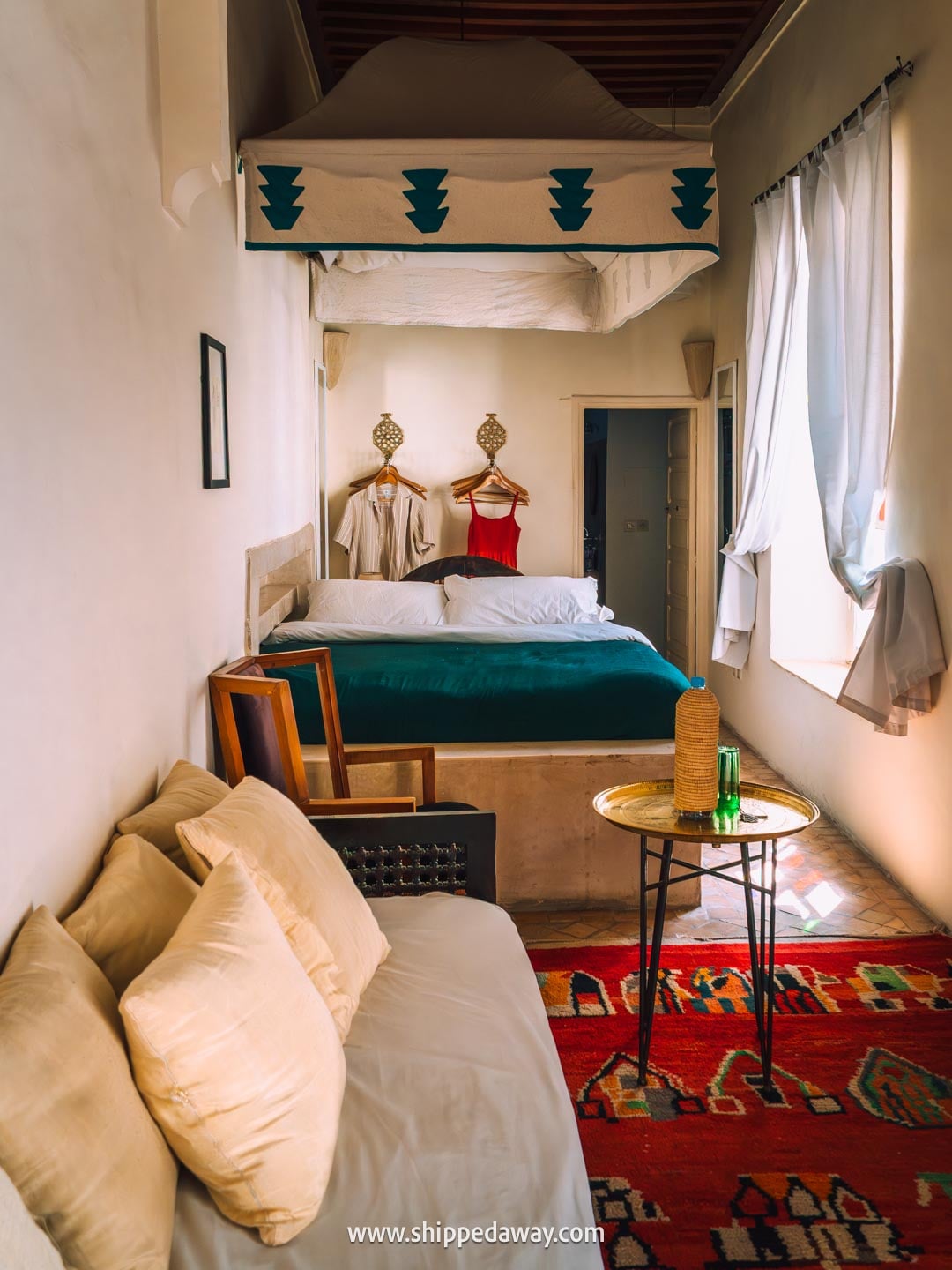
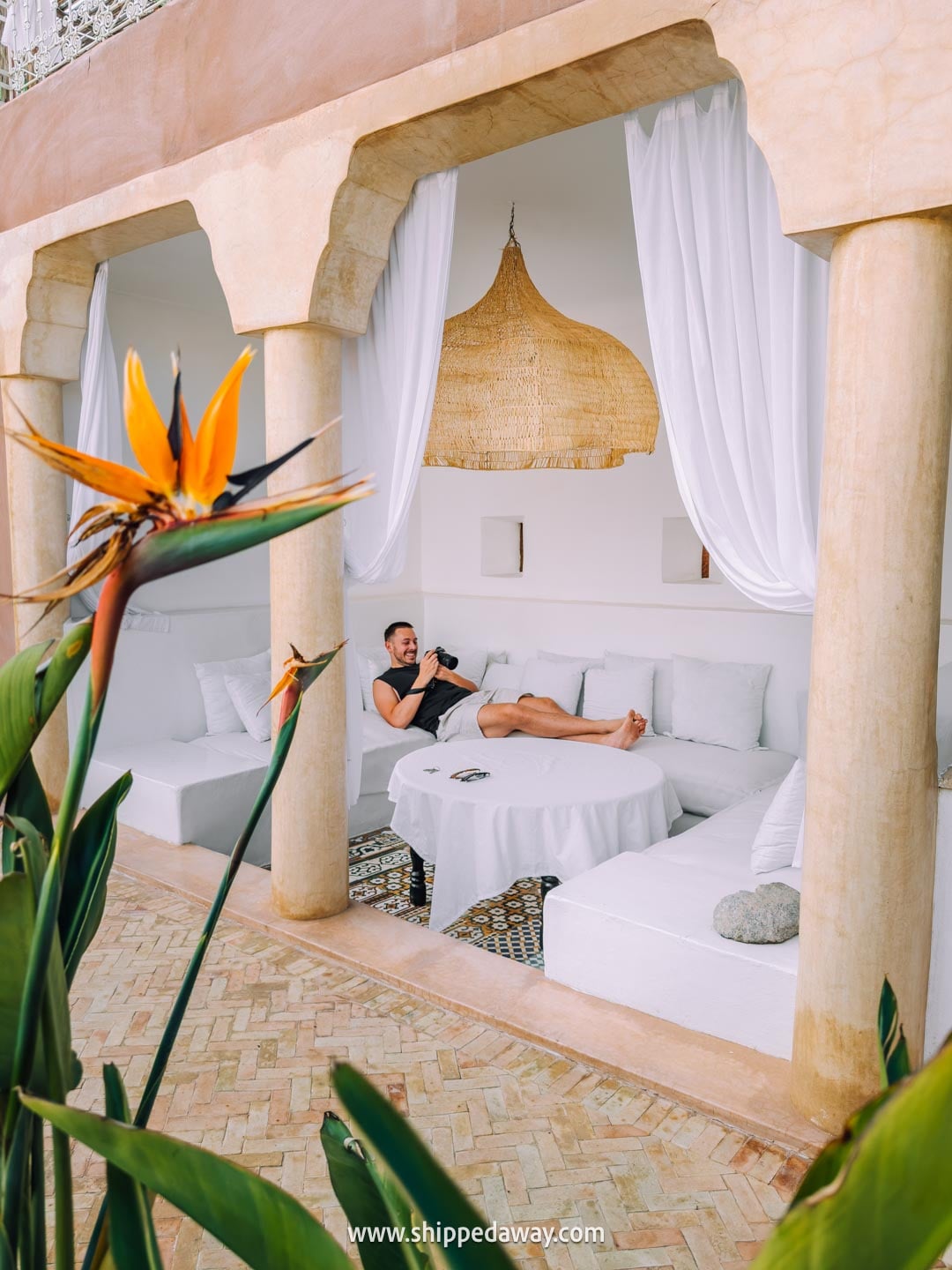
And that’s, in our opinion, the real magic of staying in a Riad while in Marrakesh. You can be right in the busy medina, but also retreat to your peaceful riad between exploring the city.
We first believed the Riads were overhyped, but after staying in multiple Riads in Marrakesh and elsewhere in Morocco, we finally understand the appeal.
The shared/common area in a riad is one of our favorite parts, as you typically have plenty of places around the building to chill.
2. Moroccan breakfast
Something we really enjoyed on our trip was their traditional Moroccan breakfast!
Tasty Moroccan breakfasts typically include various delicious sweet and salty spreads (honey, amlou, butter, jam), many types of breakfast breads, eggs and cheese, olives, as well as coffee, mint tea, orange juice, and fruit.
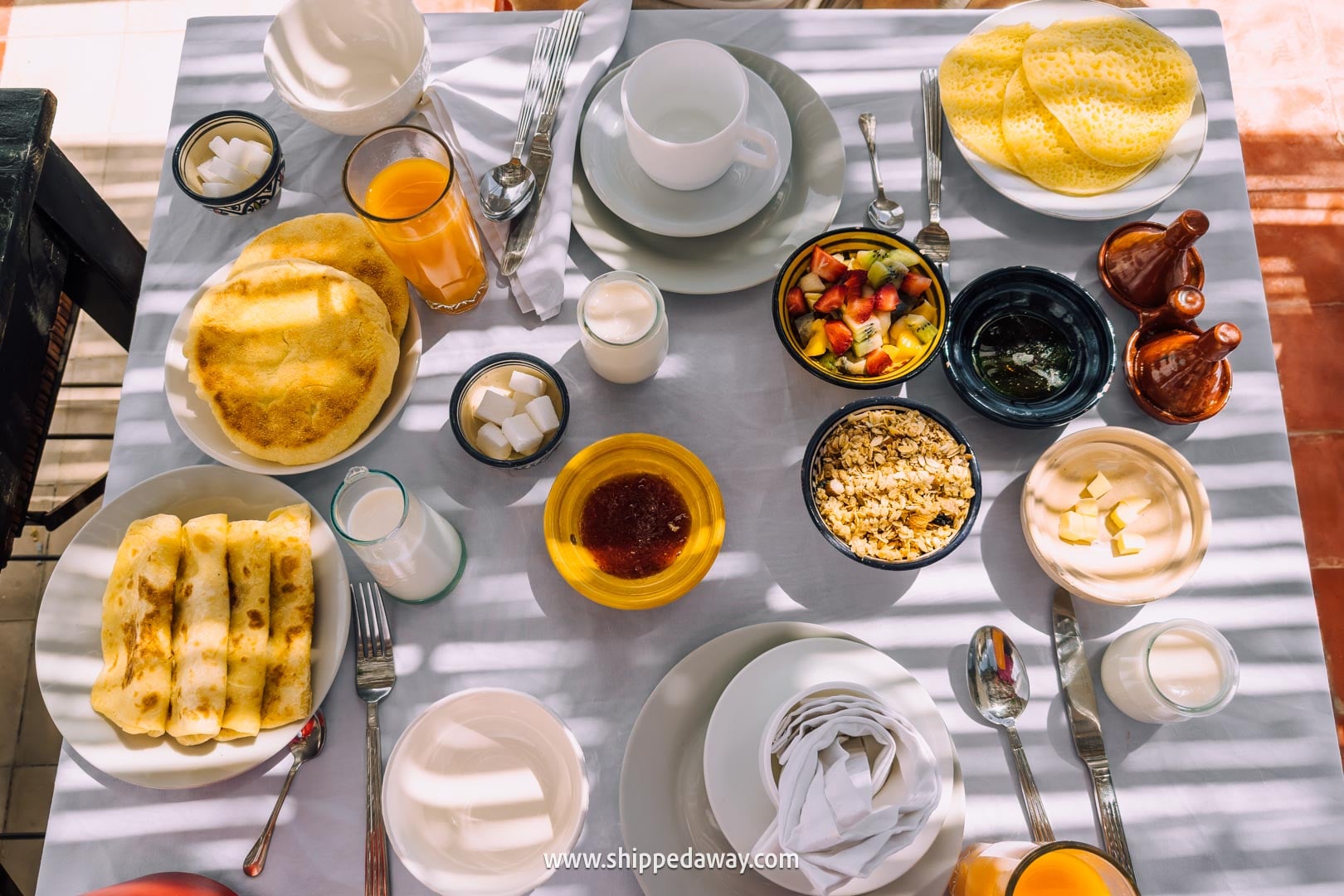
If you can, book a hotel that serves a traditional Moroccan breakfast, which is perfect for fuelling up before going around the city. That’s another great benefit of staying in a Riad, as they usually prepare a diverse Moroccan breakfast. We loved it!
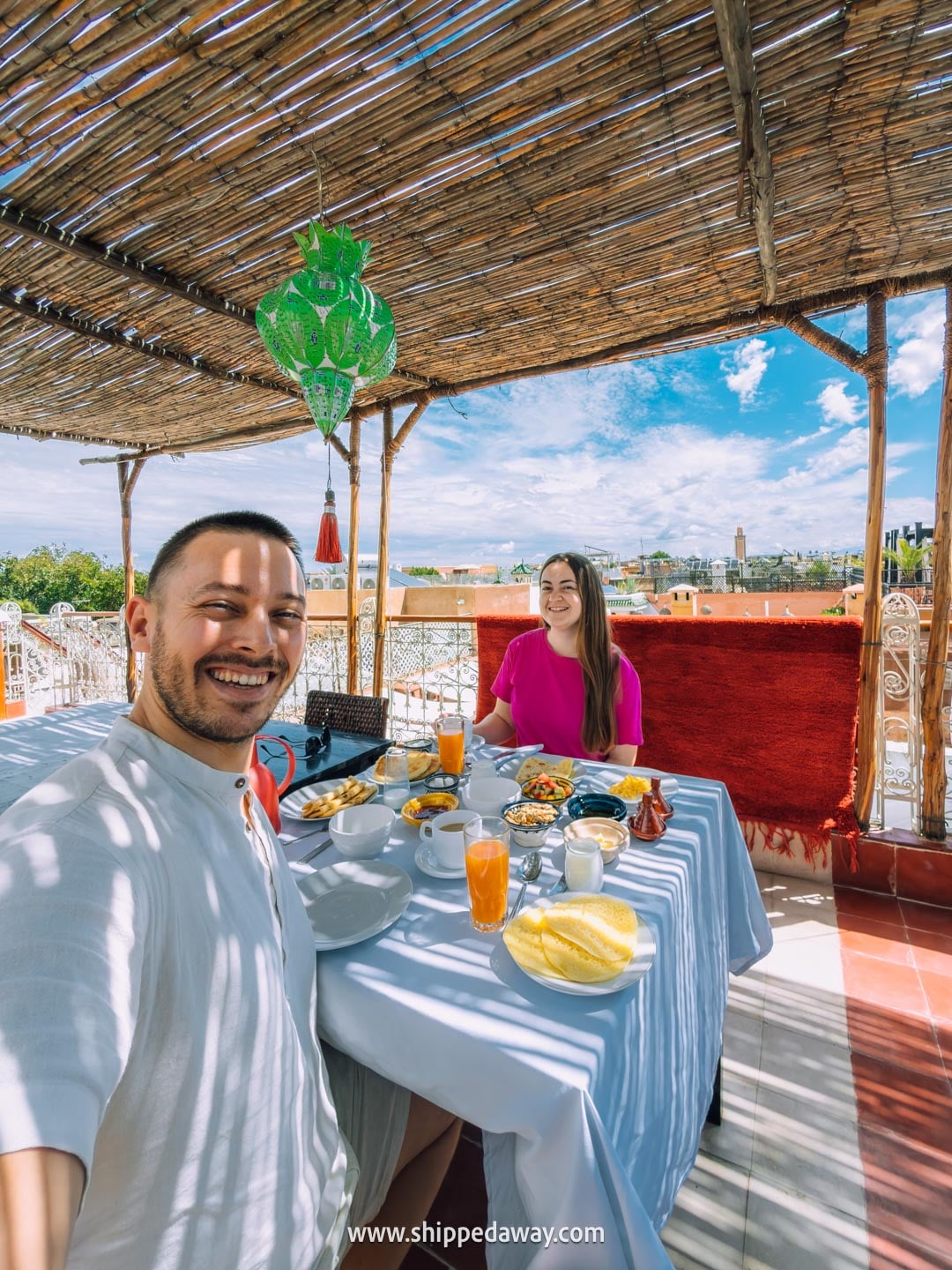
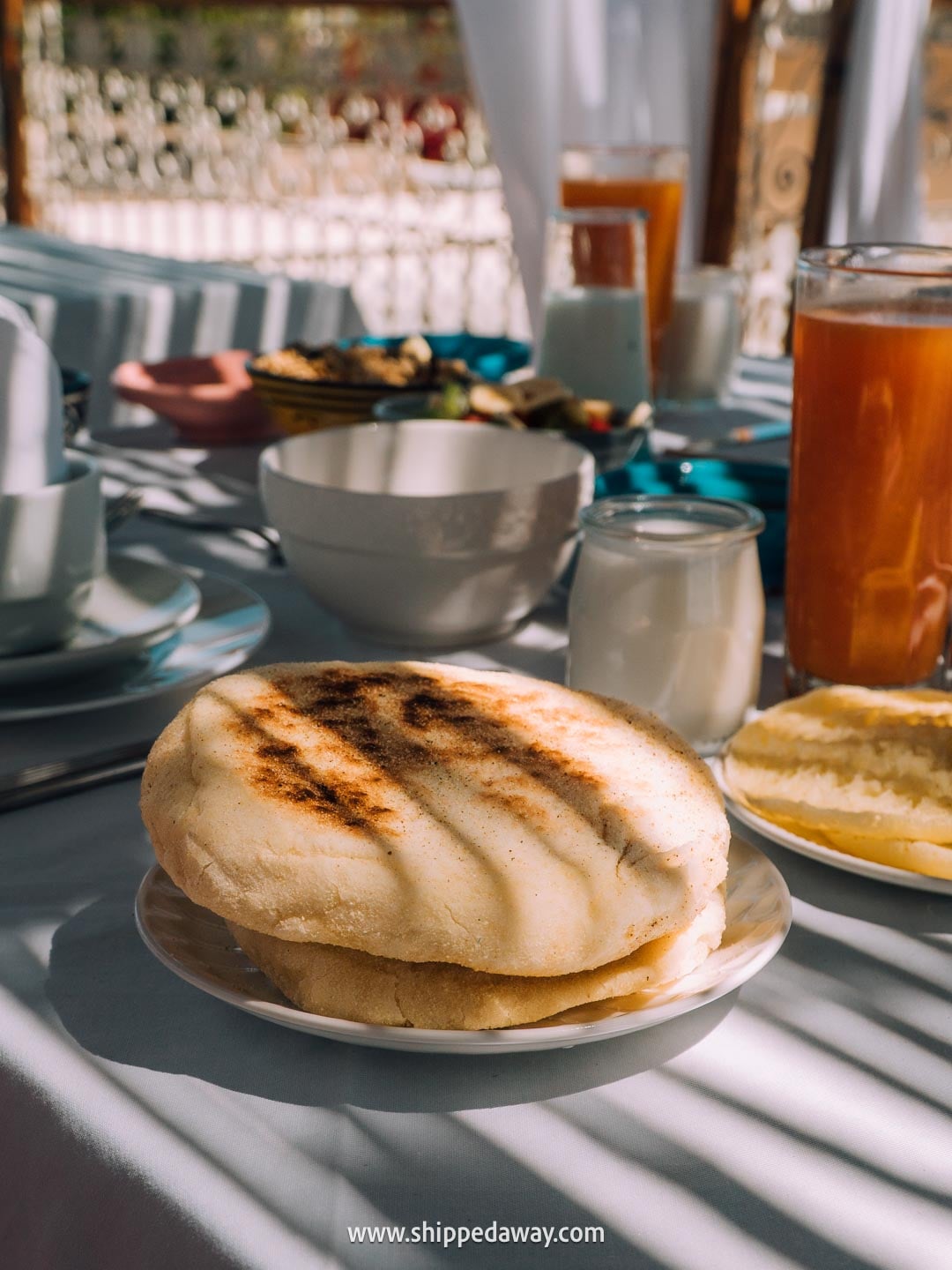
Many restaurants in Marrakesh serve traditional Moroccan breakfasts between 9 am and around 12:00, which cost 50 to 90 MAD per person (5-9 EUR). There are different versions, some sweet/savory, others salty, and then also there are modern alternatives.
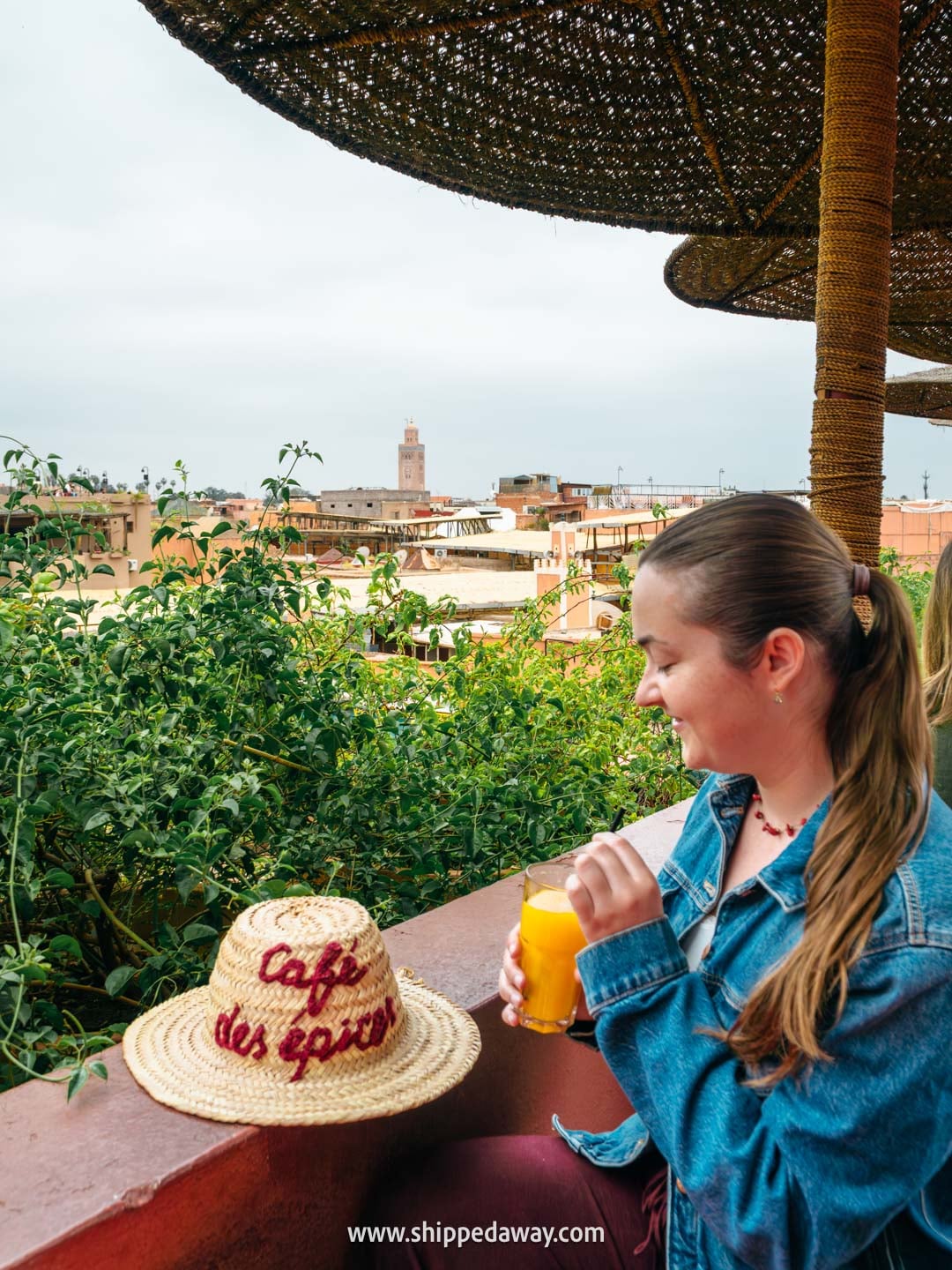
A popular breakfast spot is Café des Épices, which also has a great rooftop terrace and second-floor seating overlooking a market.
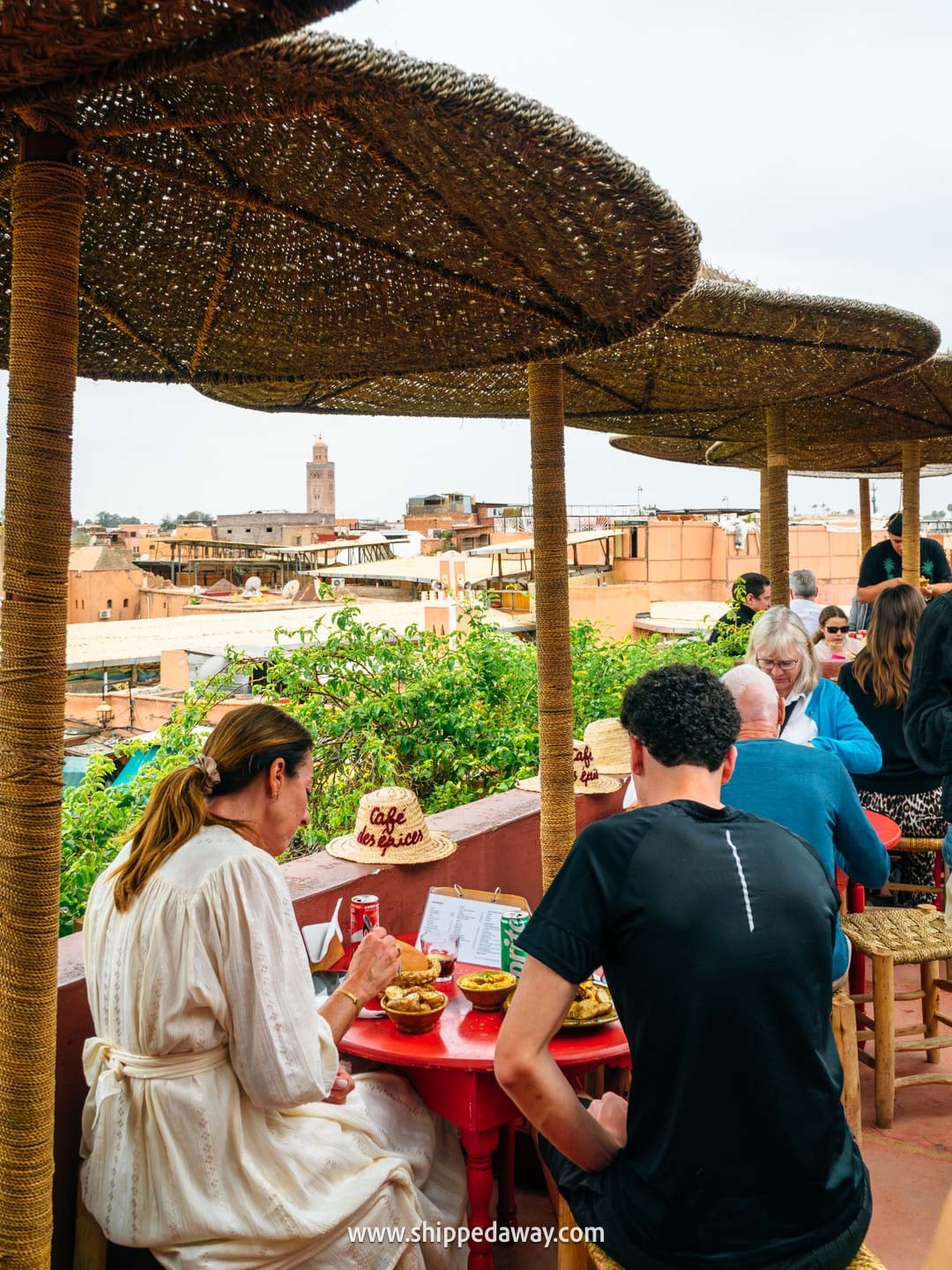
Just keep in mind that Moroccan breakfast is quite bread-heavy, as it’s the heart of the meal, and there are so many different types (crusty, round, layered, flatbread, spongy, brioche, pita). But in many places you can also choose a different breakfast, like yogurt and granola, if you don’t want bread.
We genuinely enjoyed the Moroccan breakfast, and it reminded us of the many delicious Turkish breakfasts we had in Turkey, such as the one at Van Breakfast House in Istanbul. Yum! 😋
3. Souks (covered markets)
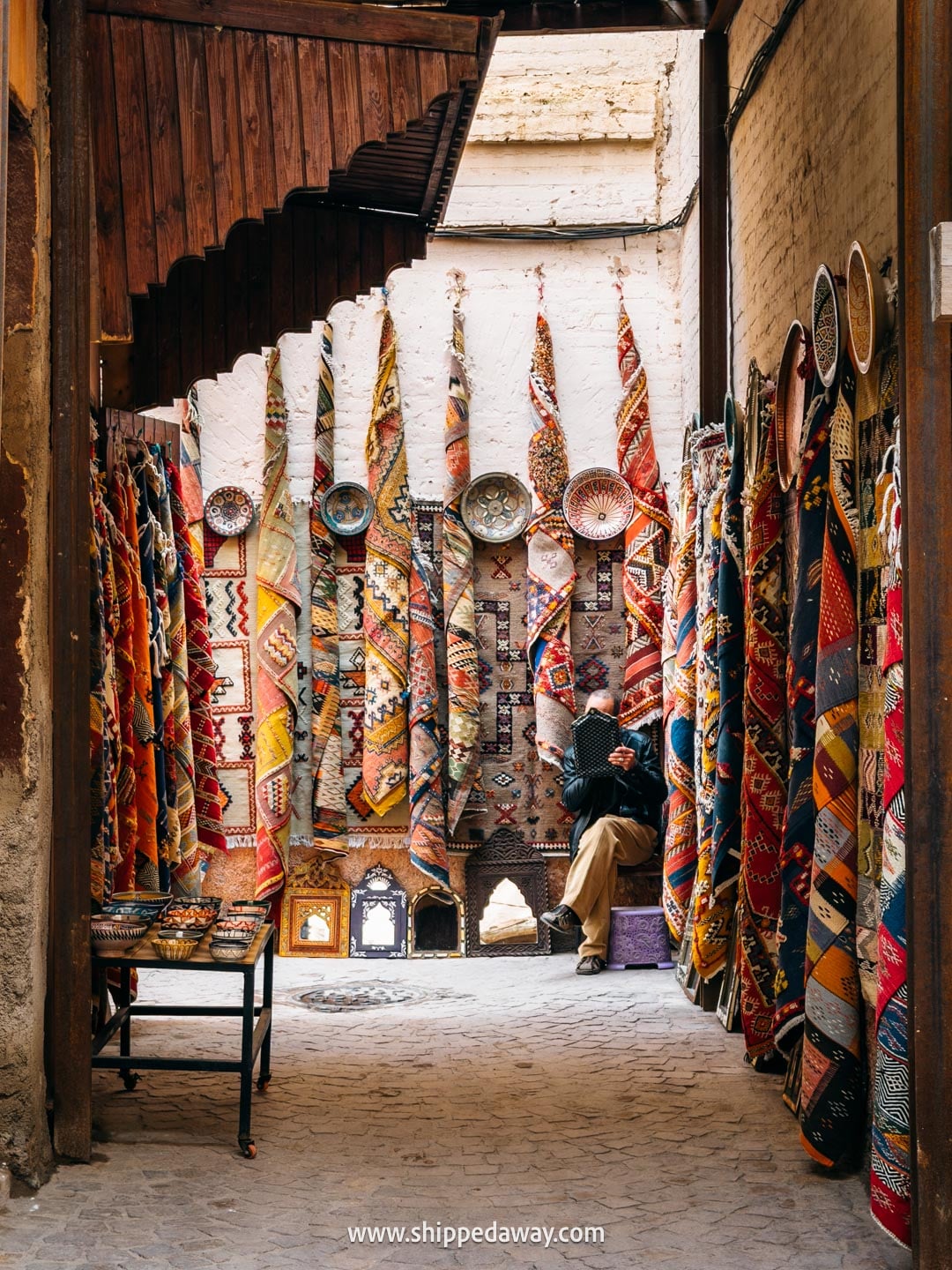
One of Morocco’s most recognizable things is definitely the many busy Souks, a type of covered market found throughout Marrakesh’s medina.
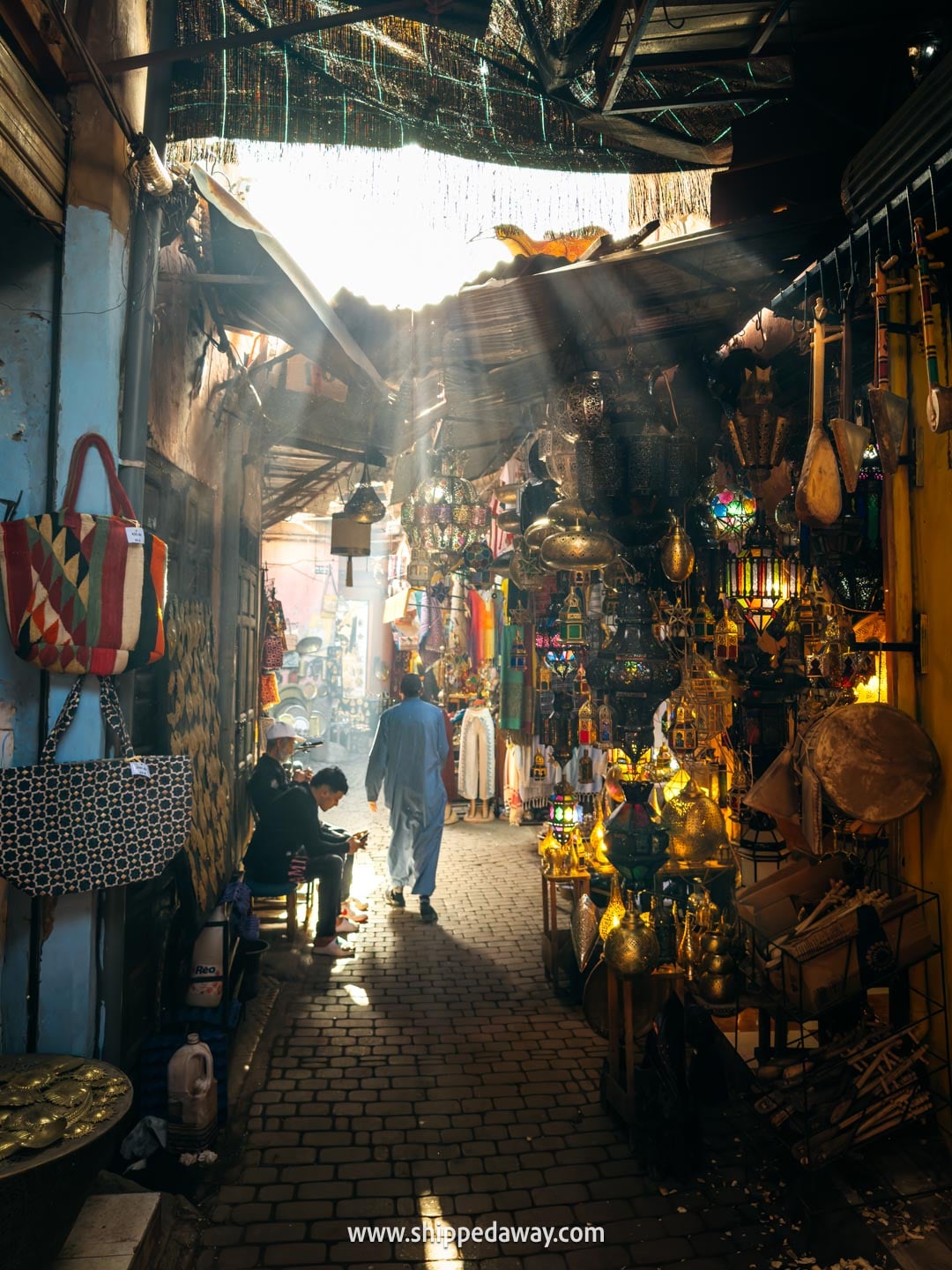
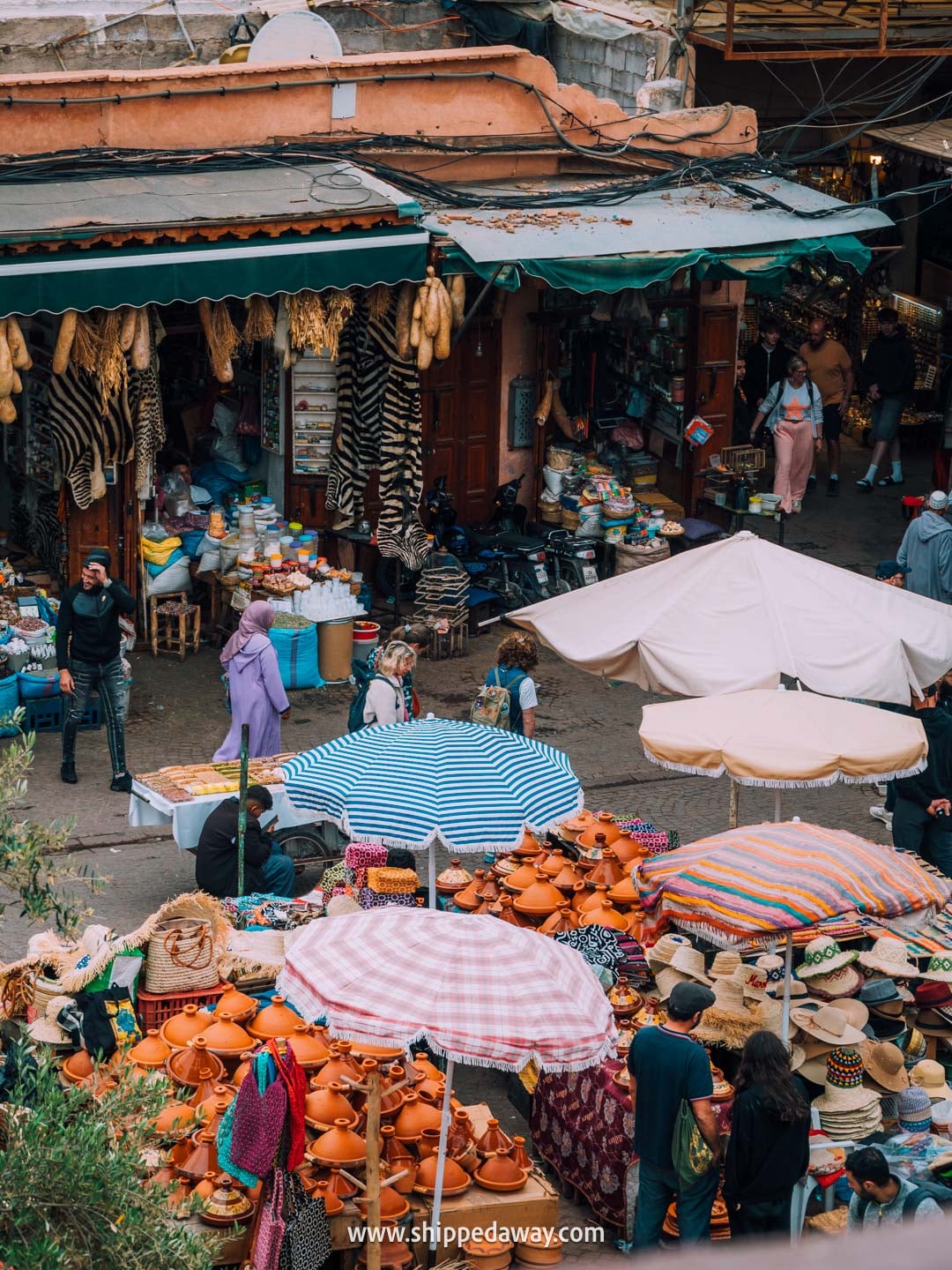
Souks in Marrakesh are usually organized by product type, with the popular ones specializing in spices, copper/silverware, lanterns, and leather goods.
For shopping while in Marrakesh, the many Souks are where you will find anything you could think of.
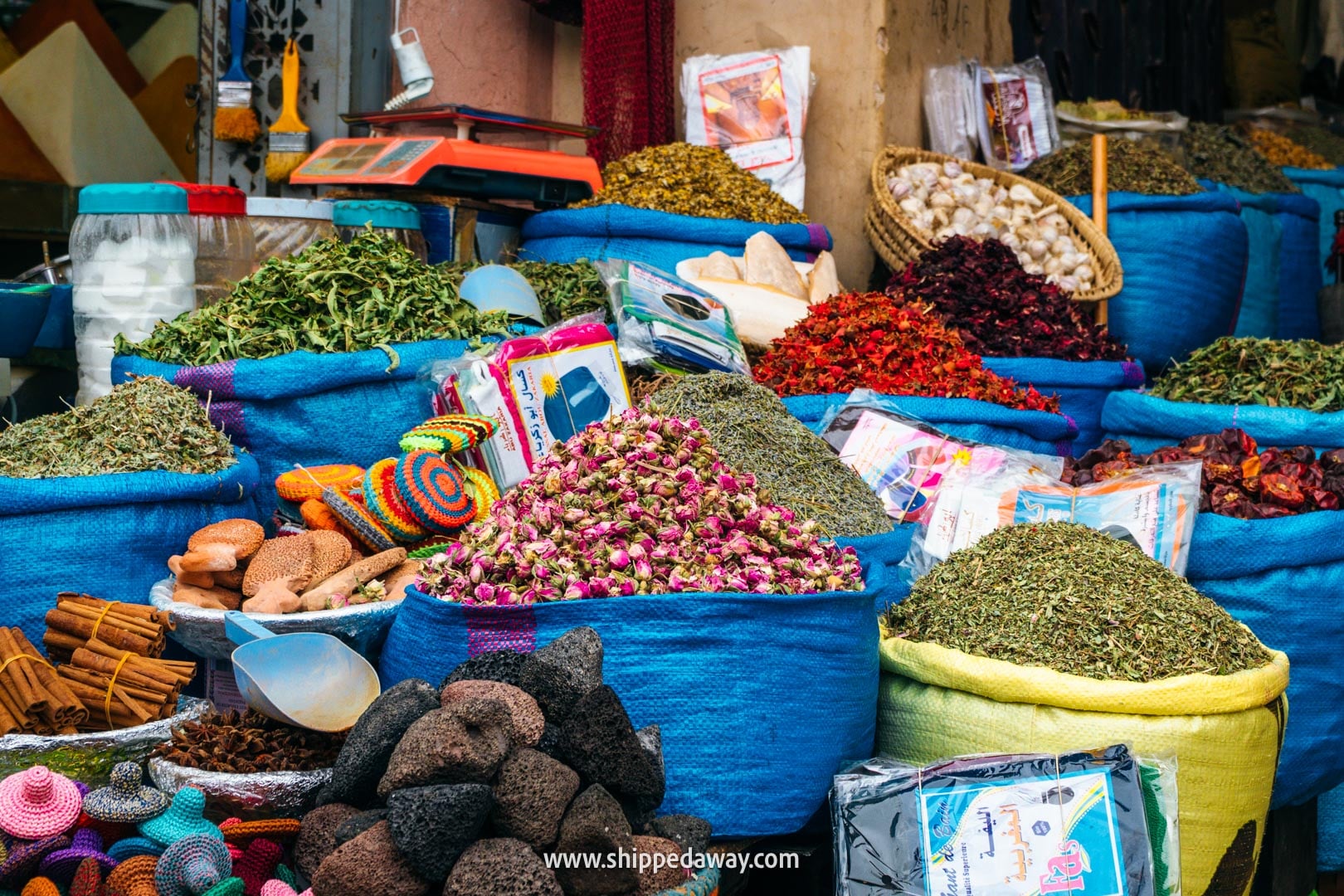
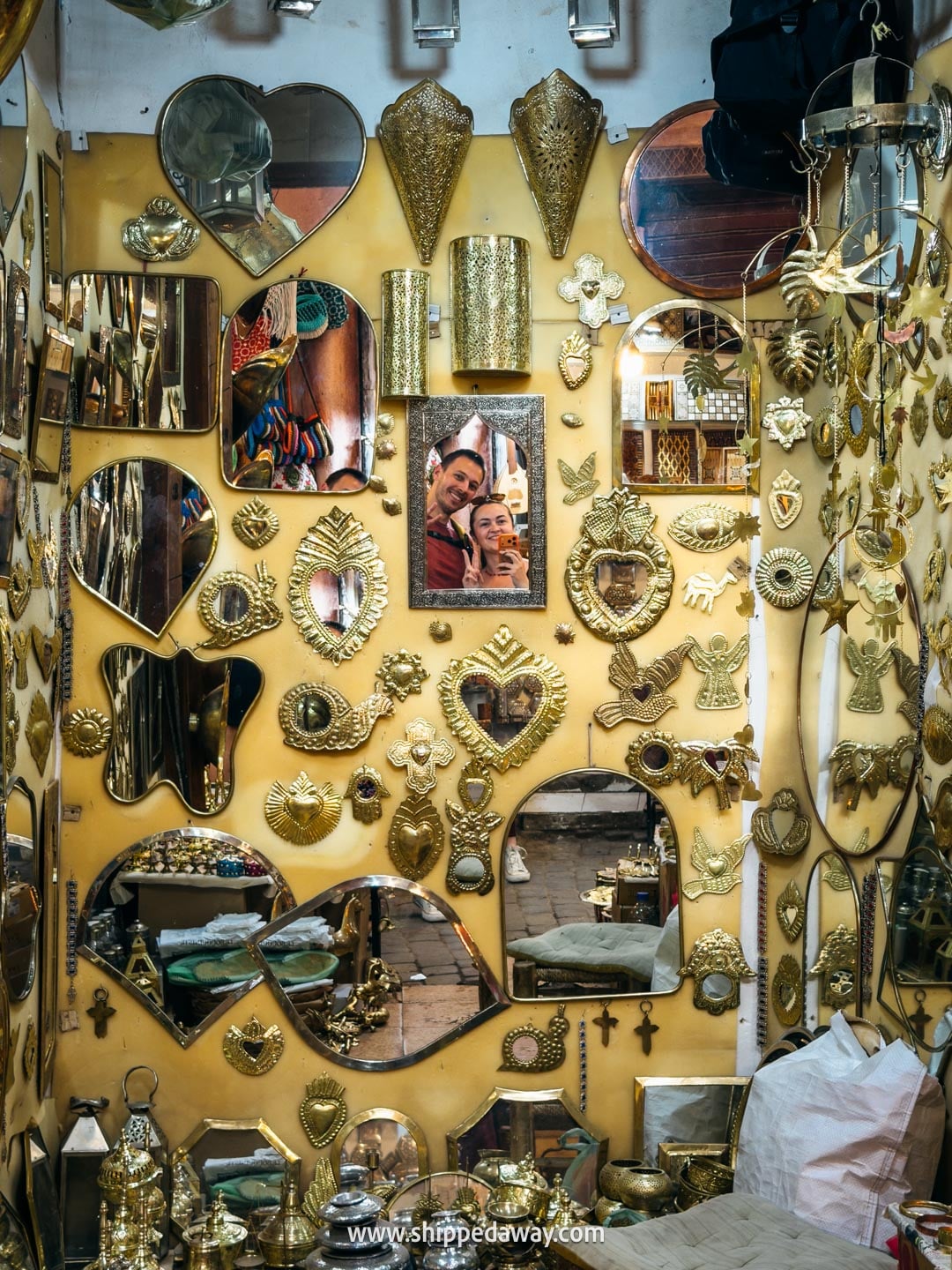
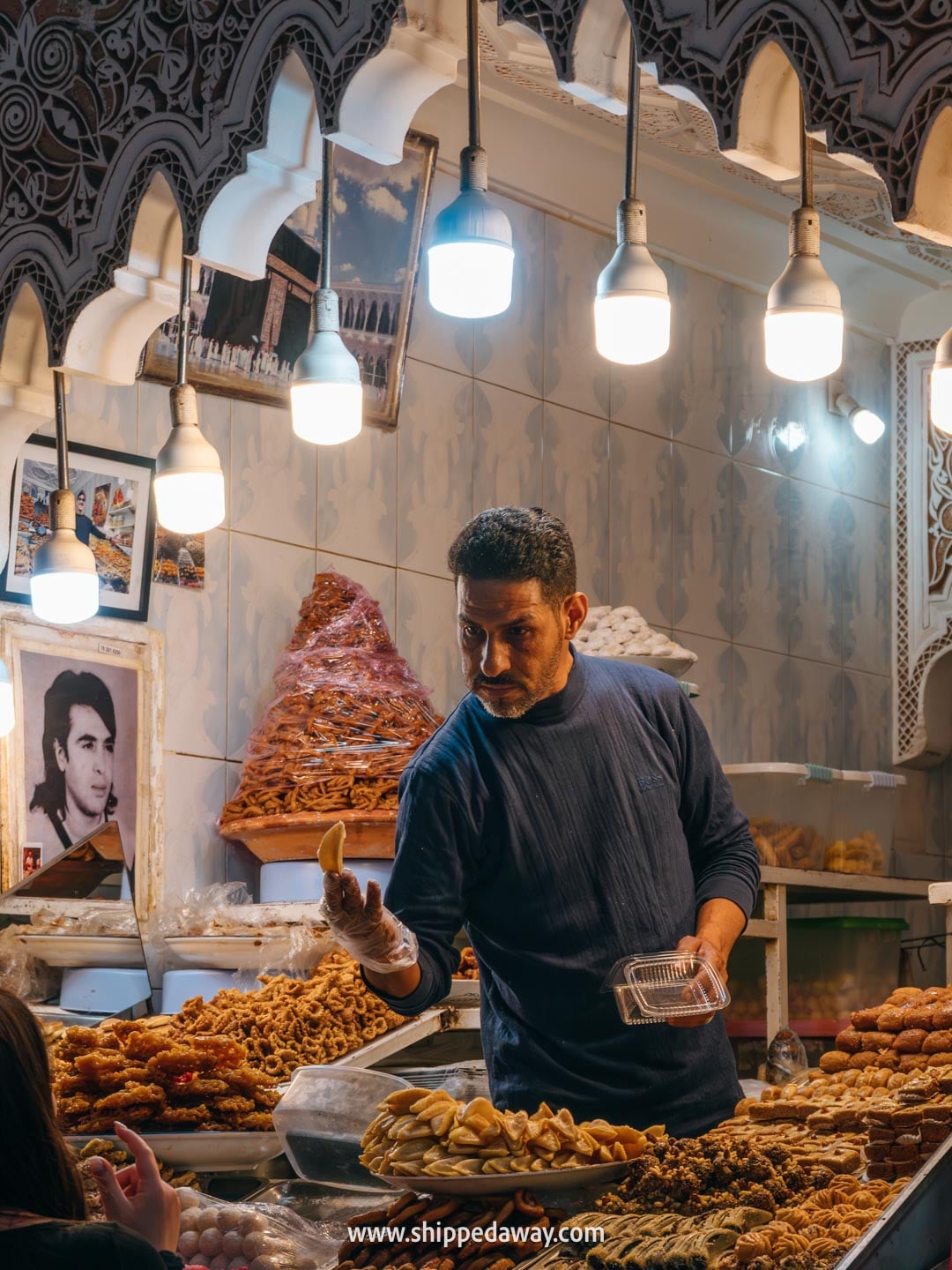
Souks and Workshops PHOTOGRAPHY TIP
Taking photos of cool things you see in Marrakesh is pretty straightforward. However, if you’d like to take high-quality photos at souks, especially the ones like the copper souk, where workers are crafting things right there, we highly recommend going on a souk or photo tour.
That way, it’s easier to find those workshops that are okay with photography. Otherwise, you can expect quite a bit of pushback if you want to take close-up photos at each workshop. We had this happen at the Copper Souk, but the guided tour before us had no issues.
We recommend this top-rated Medina and Souks tour, which explores all the best spots. Choose the private tour option if you want to customize it!
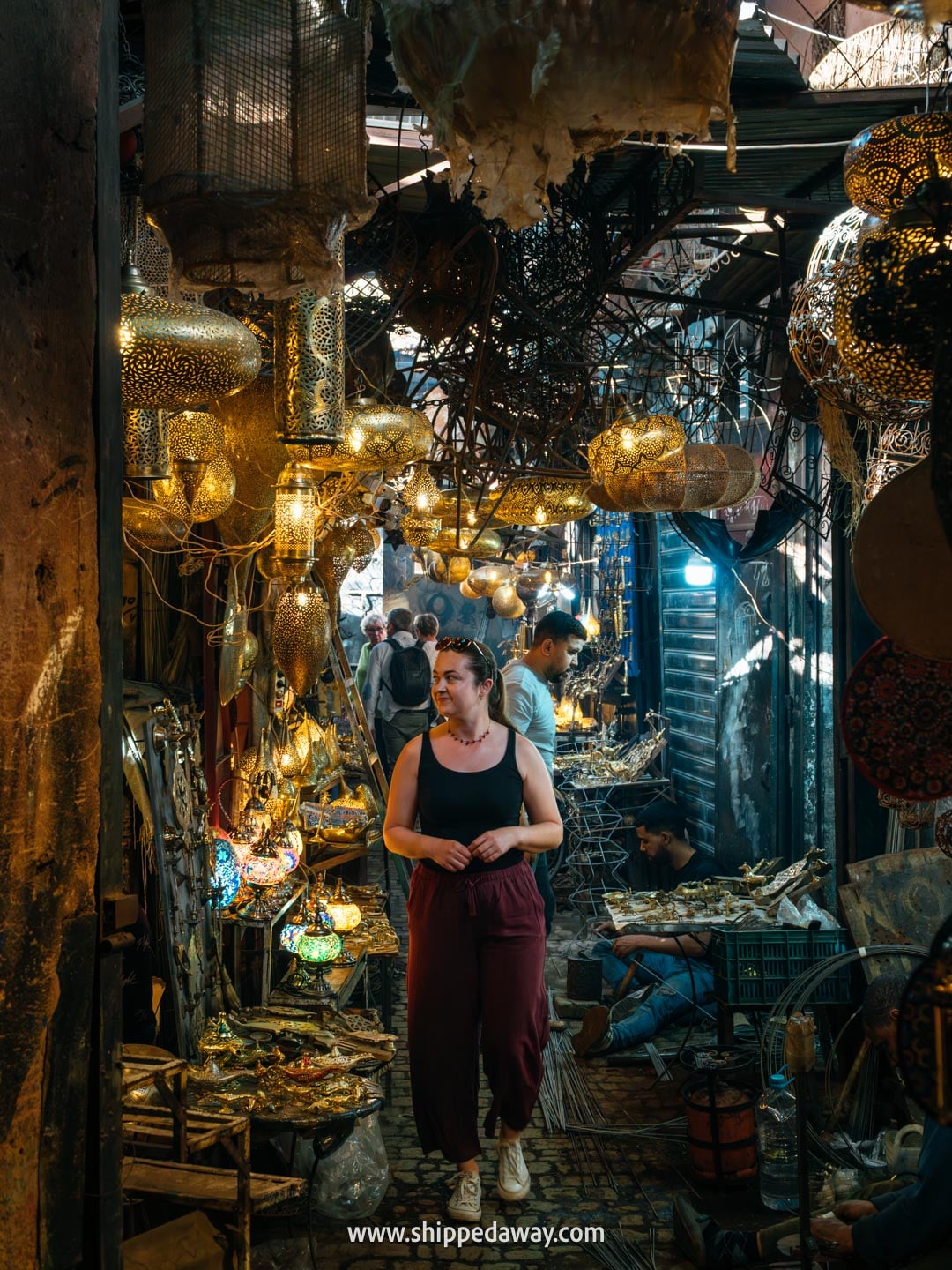
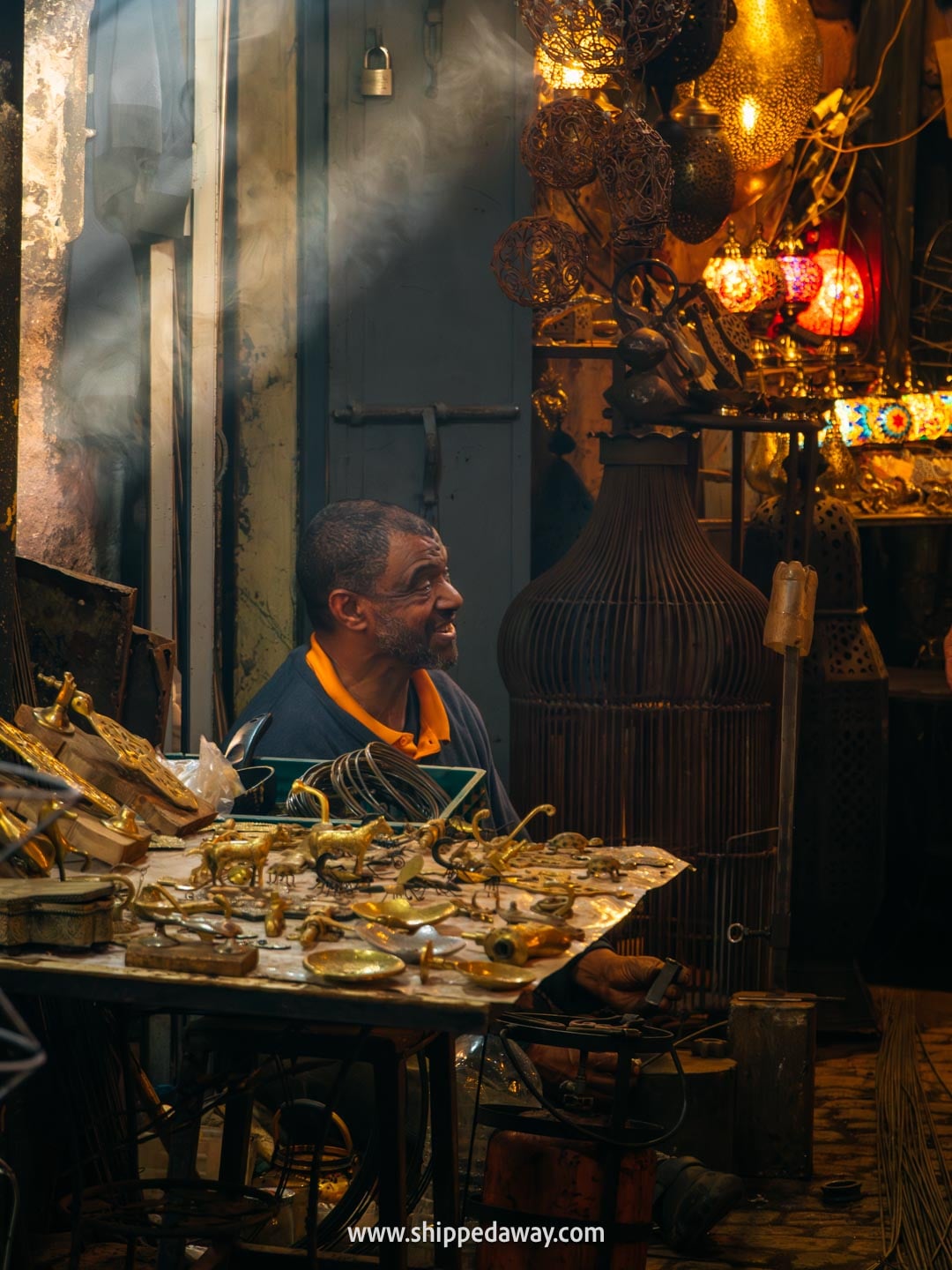
If you’re spending a few days in the city, it’s impossible to skip walking through a Souk, as they’re located along the main streets connecting different parts of the medina. This is great, as they’re easy to find.
However, for us, who stayed in Marrakesh’s medina for a week, by the third time we passed through the souks, it was already a bit tiring trying to get somewhere through the crowded streets.
So we chose alternative routes around the medina to avoid the souks when we just wanted to go for a meal or drink somewhere. 😅

4. Madrasa Ben Youssef
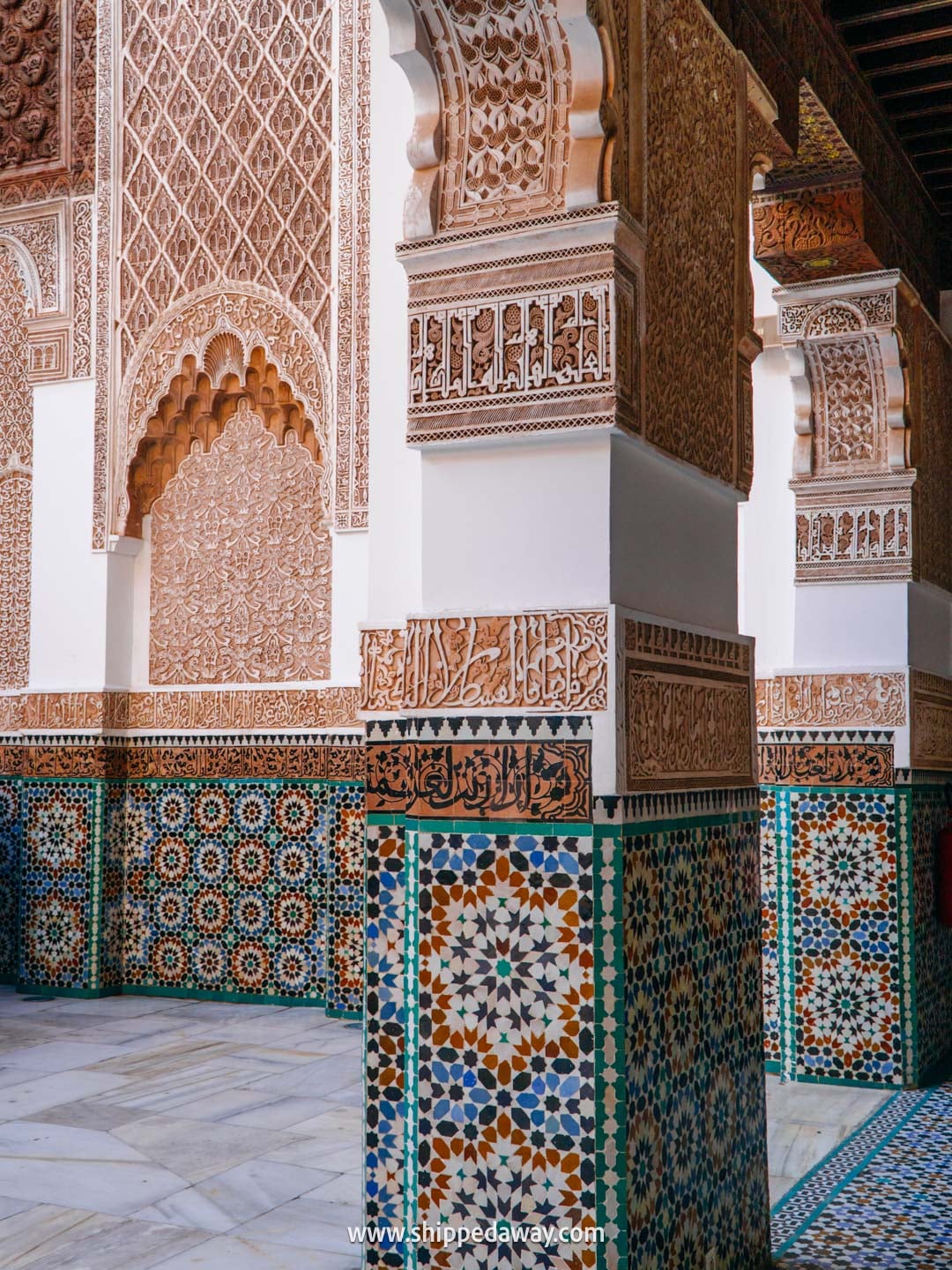
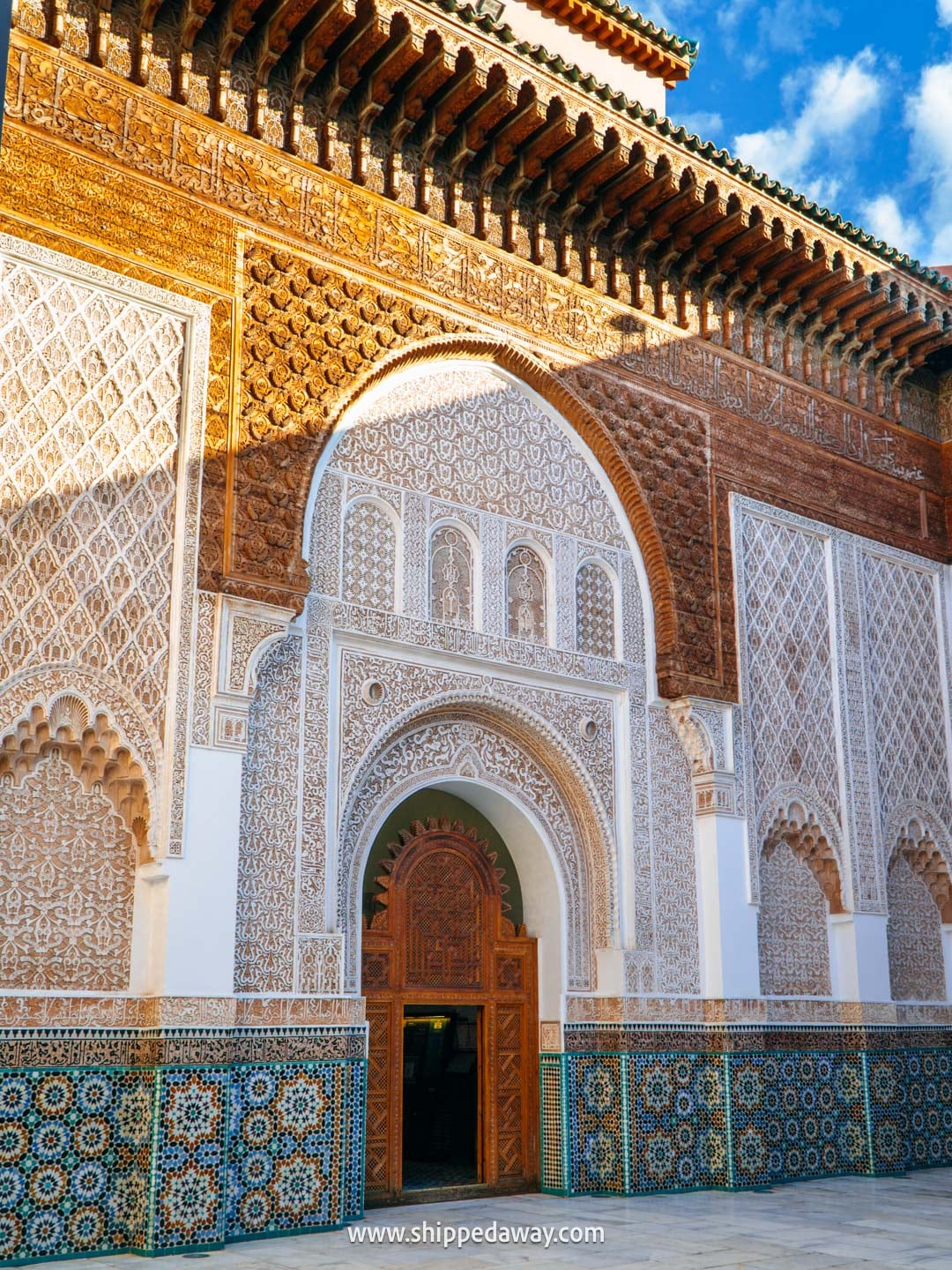
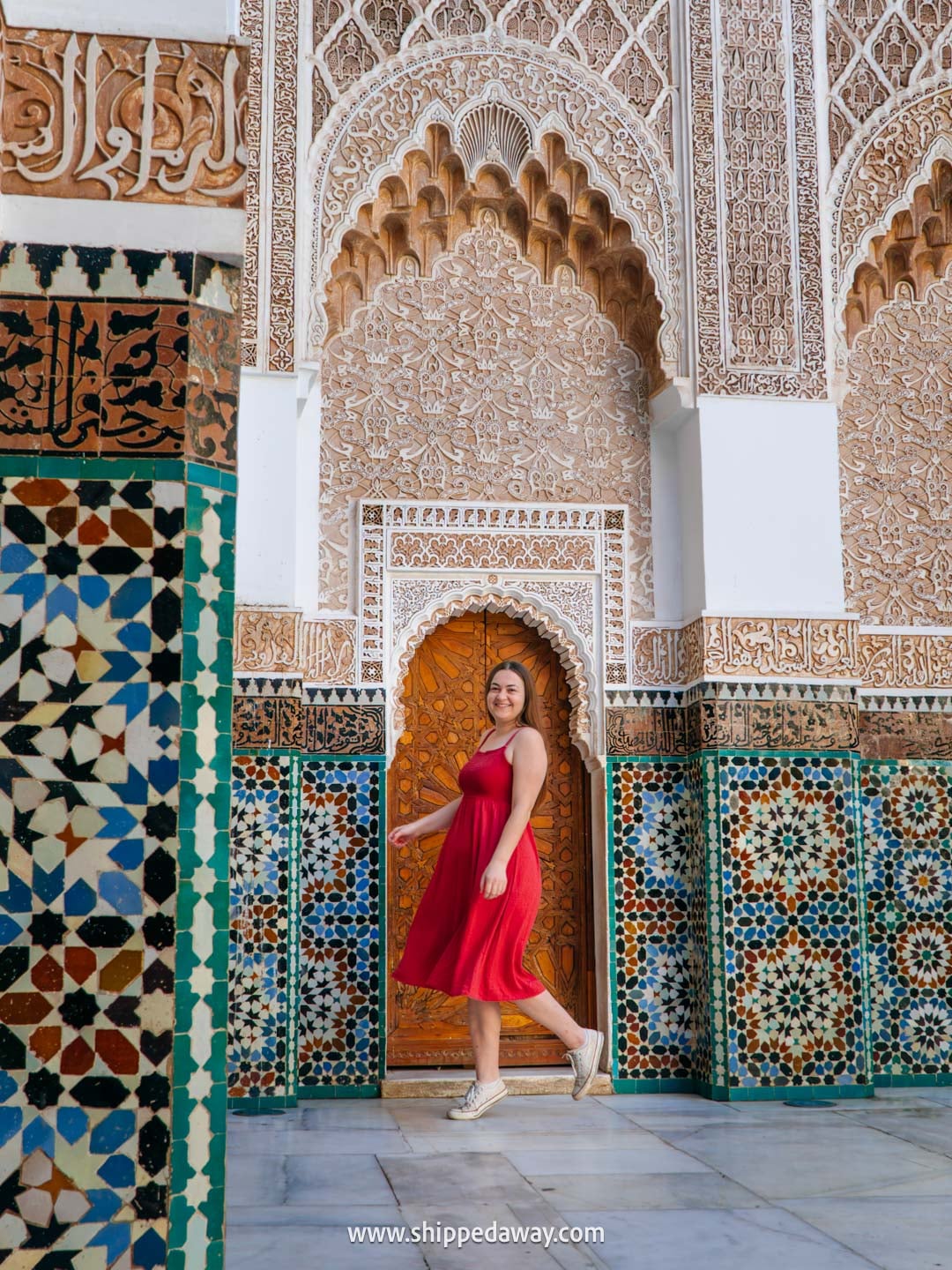
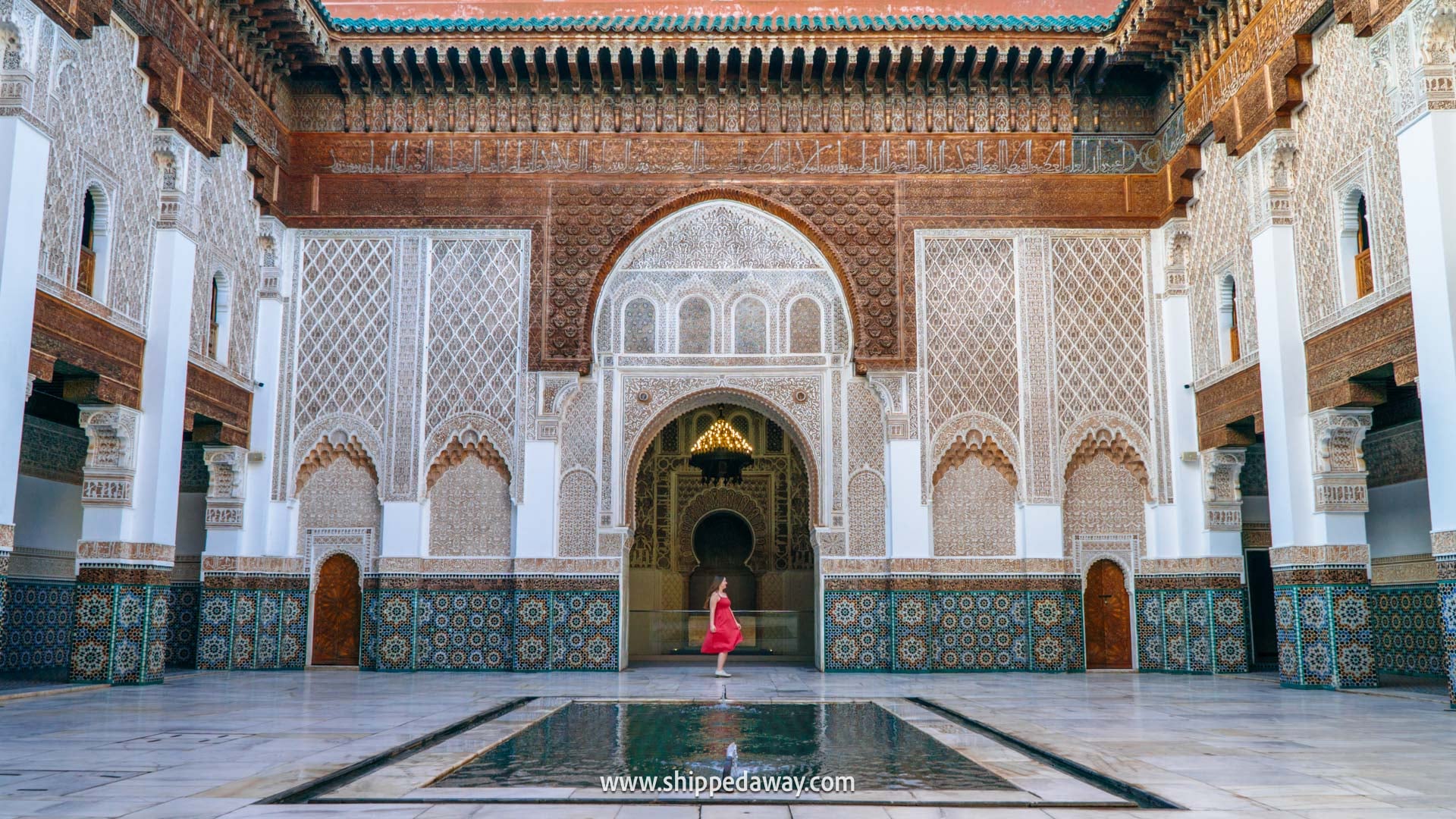
The most famous and visited attraction in Marrakesh is the Madrasa Ben Youssef, once the largest Islamic college in the Western Islamic world, also known as Maghreb or the Arab West.
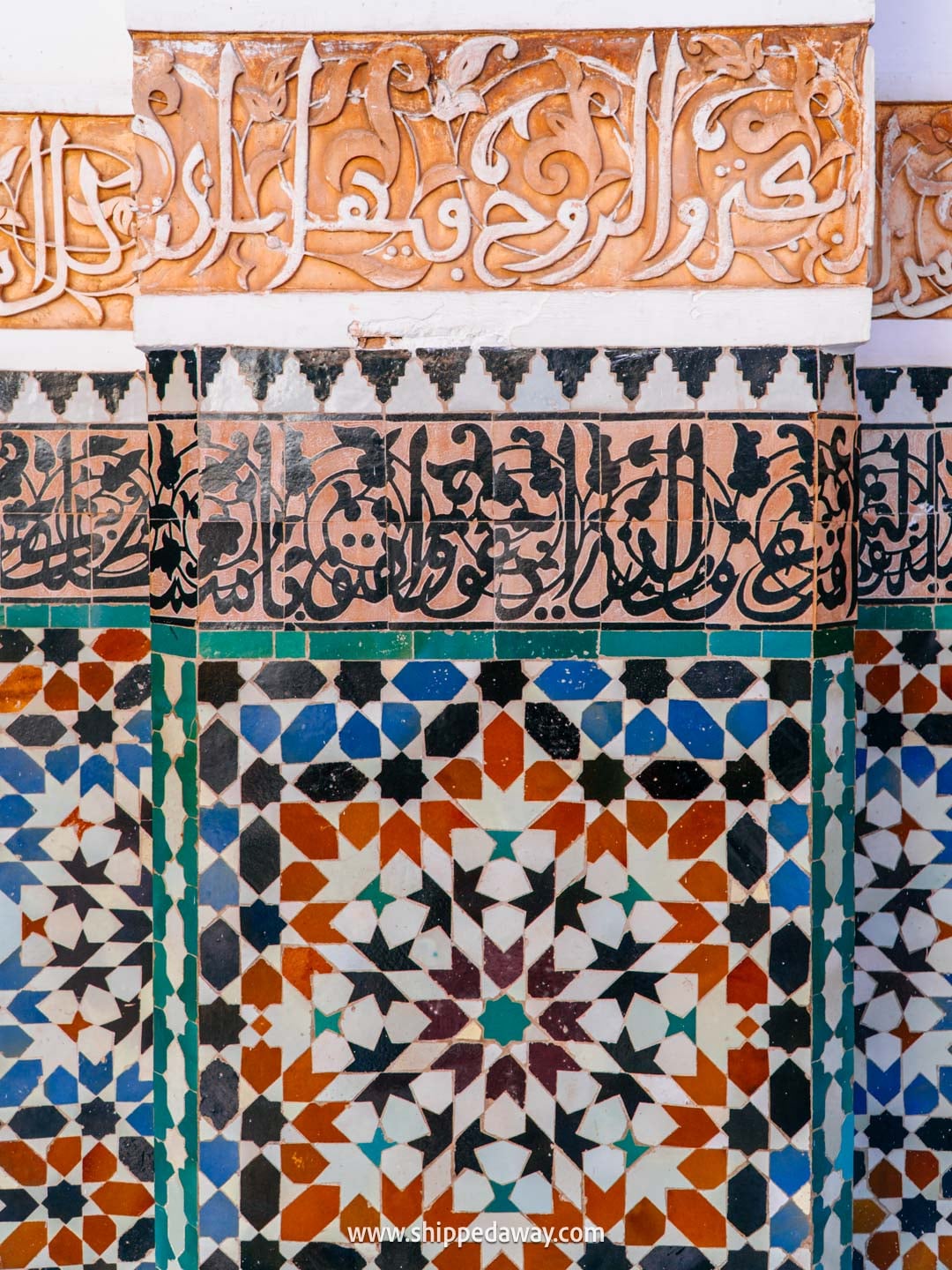
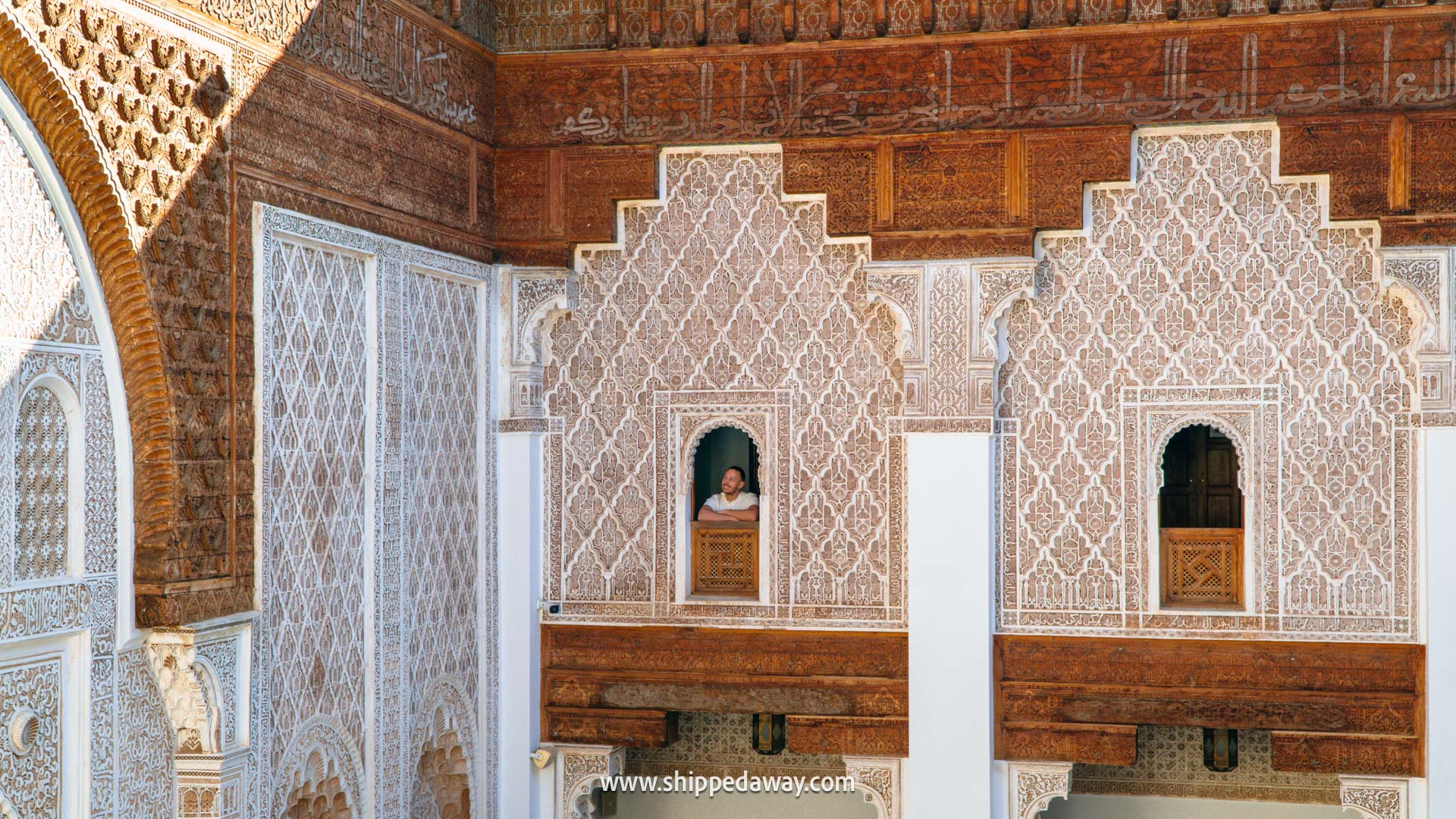
What we loved most in Marrakesh’s Ben Youssef Madrasa was the architecture, which is truly spectacular. The tilework, carvings, and other details were exceptional.
Visiting info
- Opening hours: 9 AM to 7 PM (closes at 4:30PM during Ramadan)
- Price: 50 dirhams
The Madrasa is easy to explore. However, if you’d like to learn more about the Madrasa’s history and importance, you need to visit with a guide, as there’s very little information presented inside.
Make sure also to walk upstairs and explore the corridors leading to the rooms, where Madrasa’s students stayed. It’s a great place to explore and take beautiful photos.
Travel Tip: If you’re looking to explore the Madrasa without crowds, come right at opening, as otherwise it’s quite overcrowded. It’s really not that big, and many groups visit it.
That’s why, unless you’re coming in the winter when Marrakesh is less busy, get there for opening. We visited at the end of March, came 10 minutes before opening, and were the first to walk inside, but a large group followed right behind.
5. Le Jardin Secret
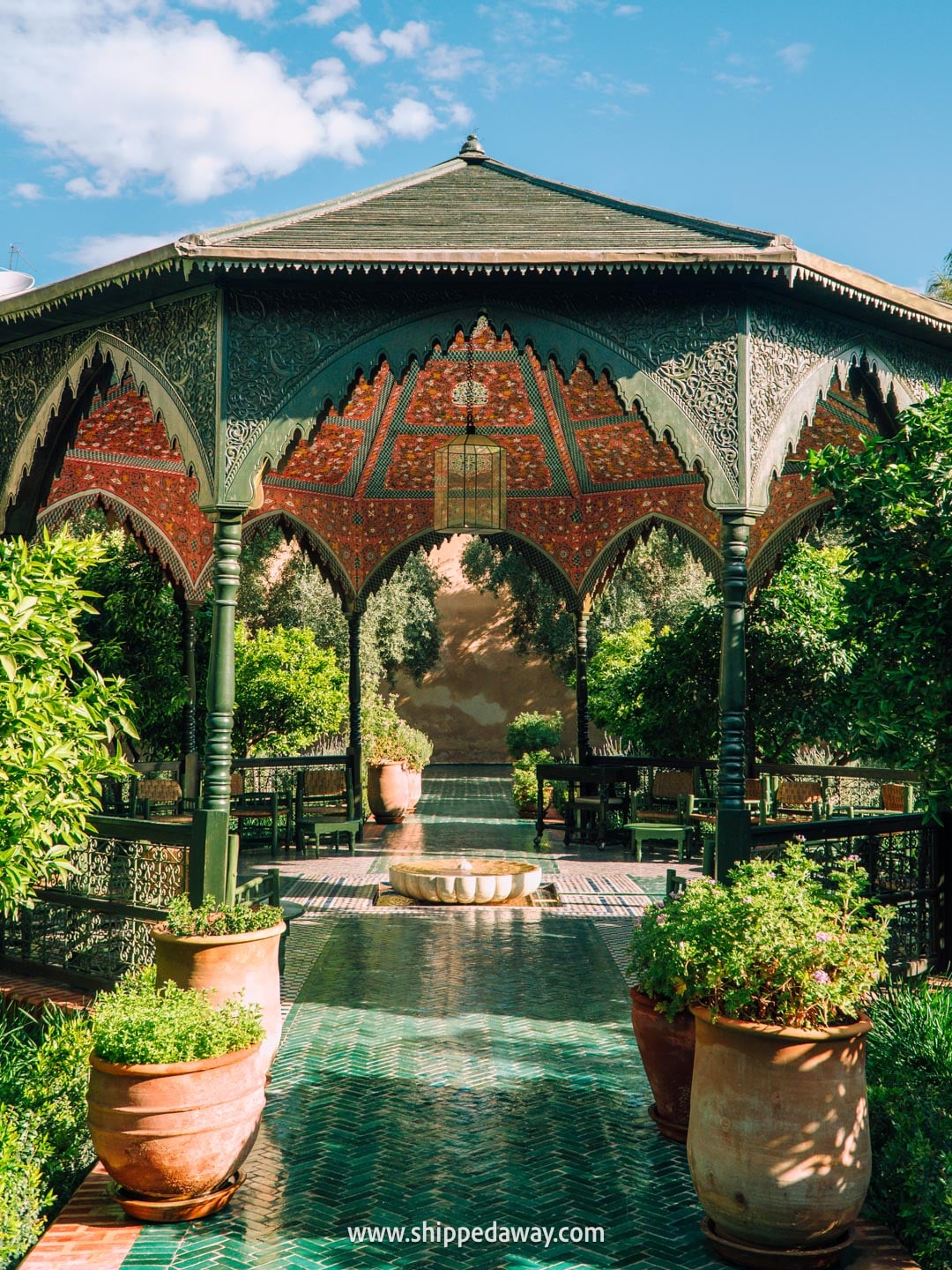
While we don’t necessarily agree with the naming of Le Jardin Secret (meaning secret garden), it’s definitely a fantastic place to visit while in Marrakesh’s medina.
It’s the only such garden located right in the heart of the old city.
- Opening hours
- February and October: 9:30 am – 6:30 pm
- From March to September: 9:30 am – 7:30 pm
- From November to January: 9:30 am – 6:00 pm
- Month of Ramadan: 9:30 am – 4:30 pm
- Price: 100 dirhams entrance, and 40 dirhams tower
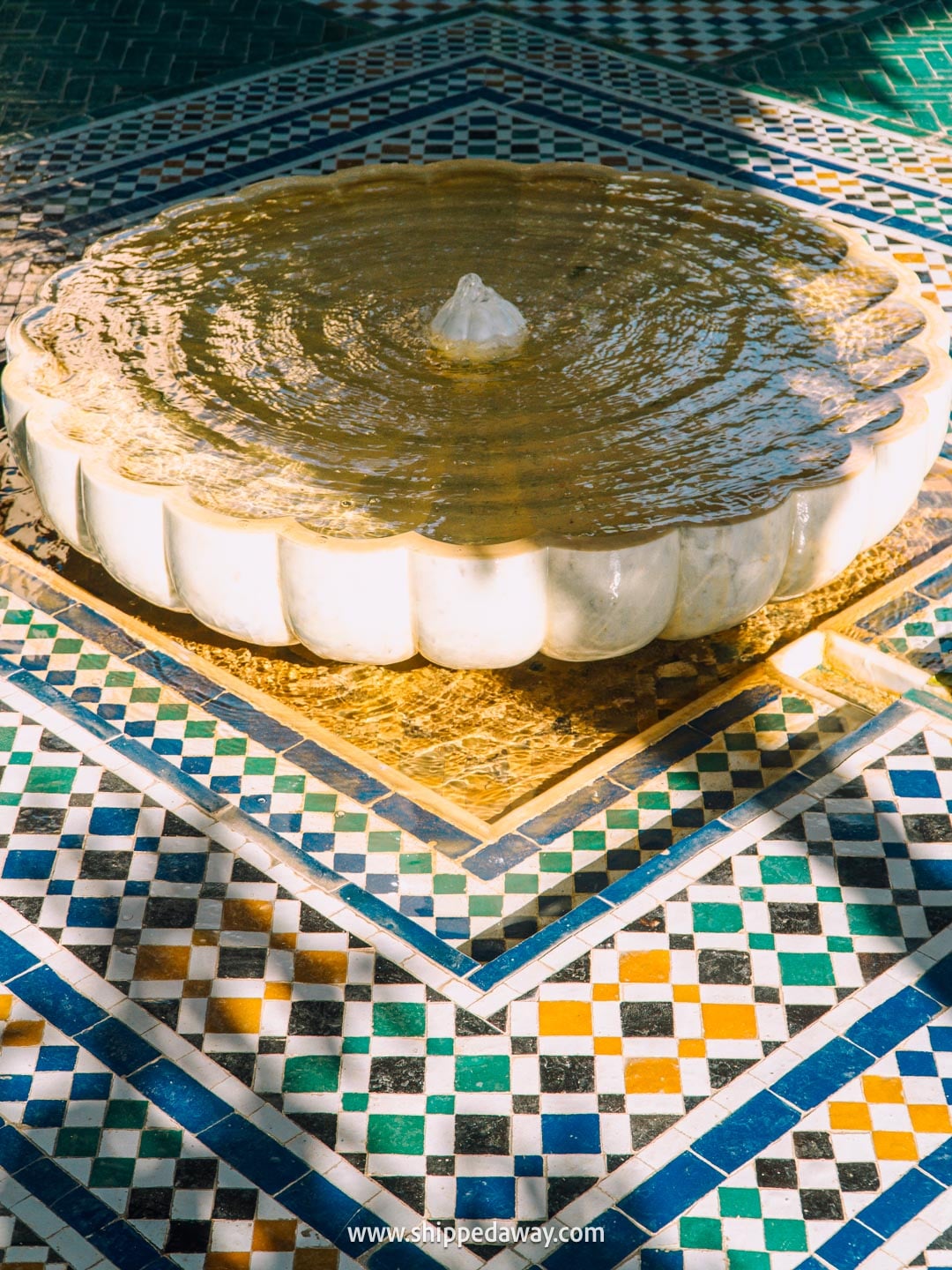
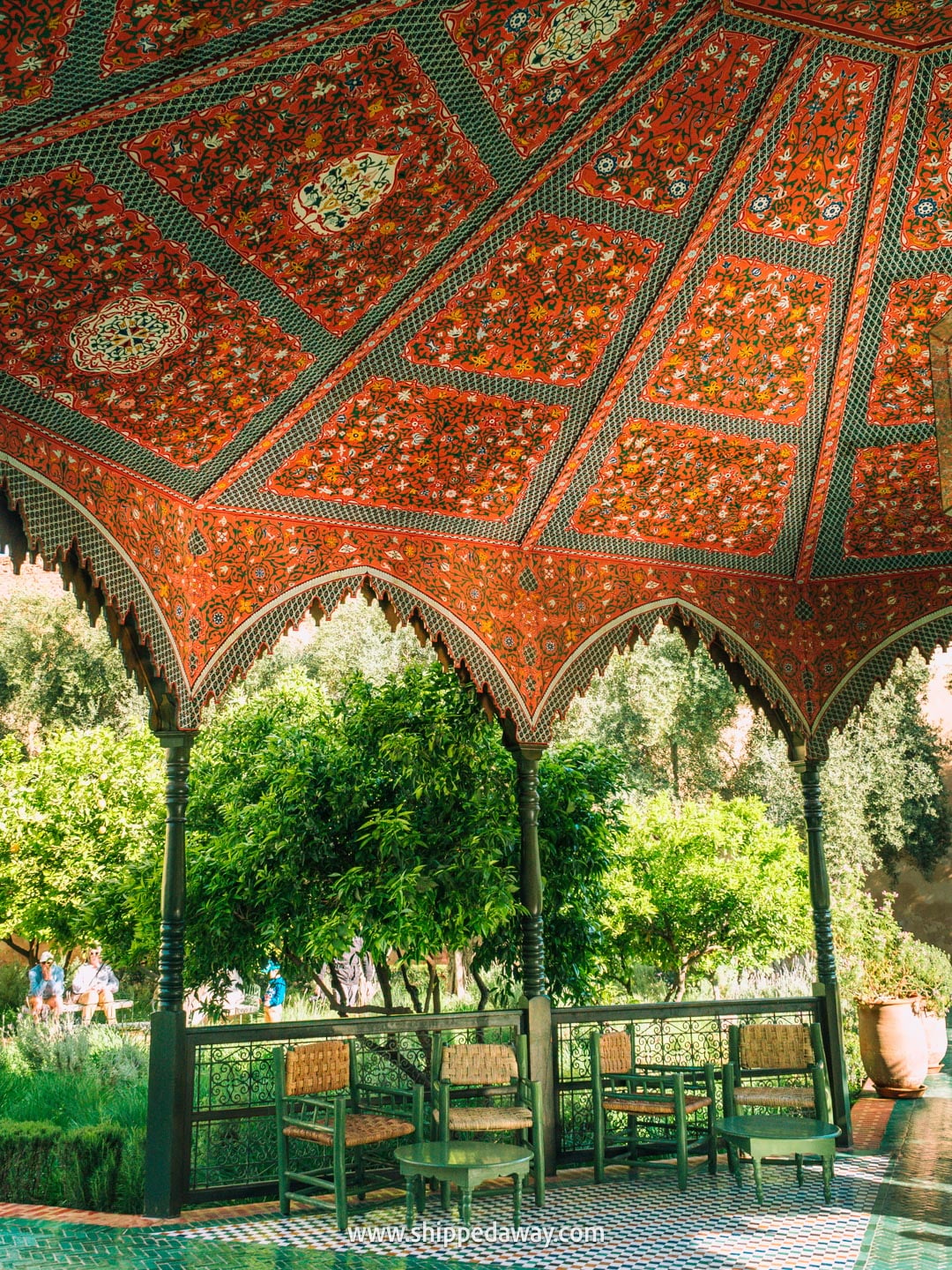
Inside Le Jardin Secret, there are many interesting plants and flowers, which we enjoyed walking past and observing. For the best view of the garden, walk up the stairs to Cafe Menzeh. We sat there for a drink, as it’s such a great spot. They also serve food, but there are better restaurants elsewhere.
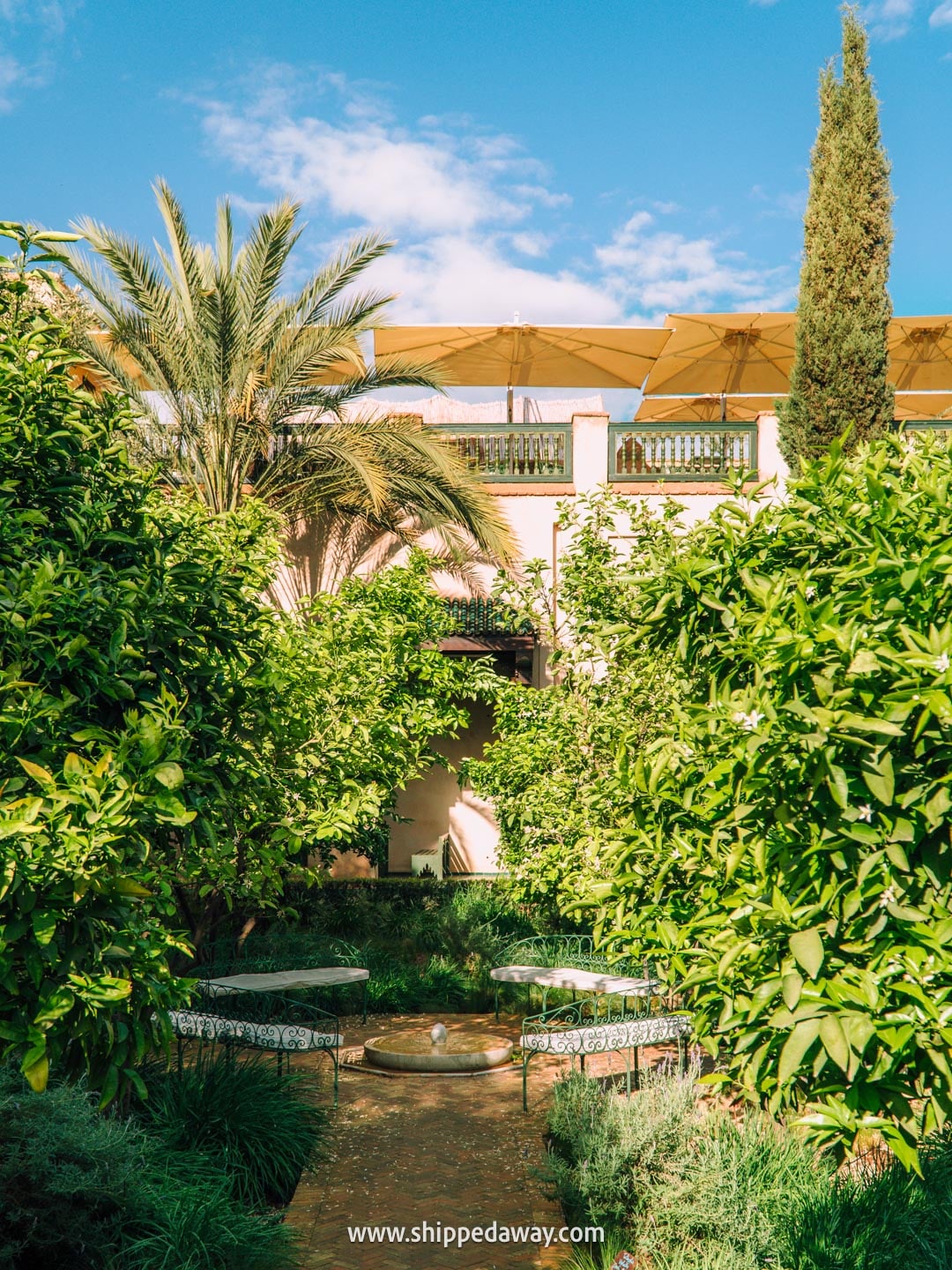
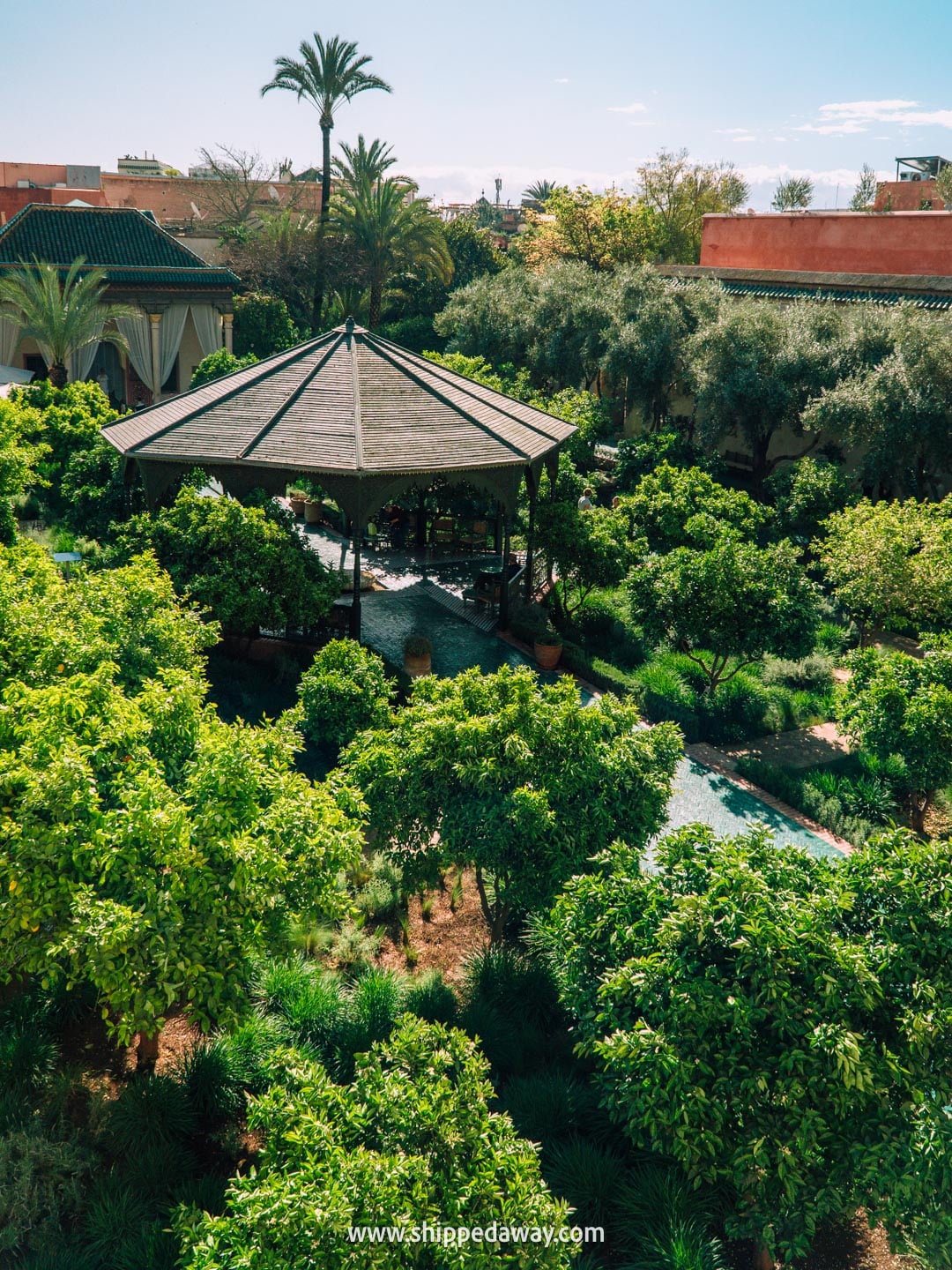
The Secret Garden is a much better place for garden lovers than the much bigger, more famous Jardin Majorelle outside the medina. More on that soon…
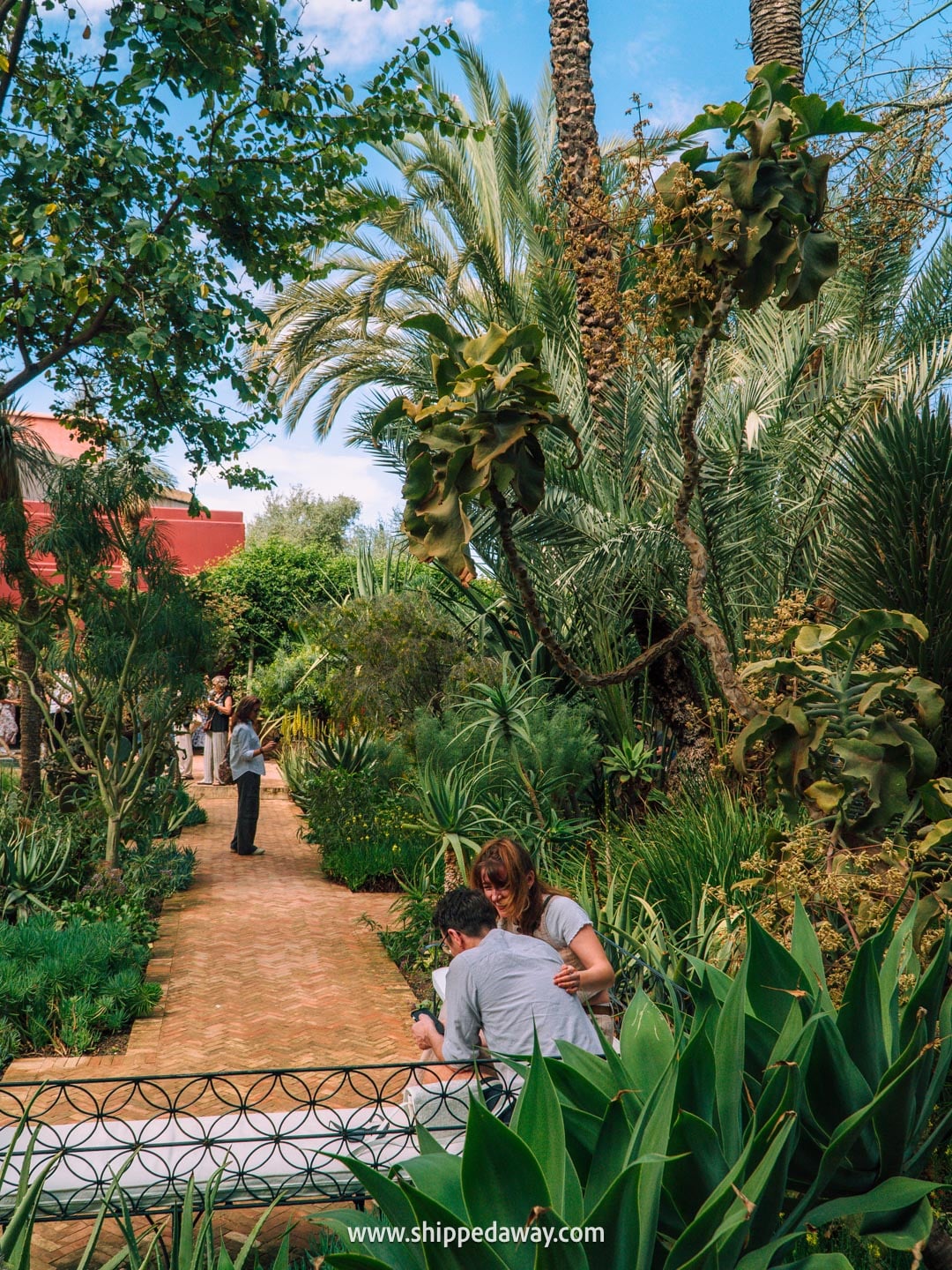
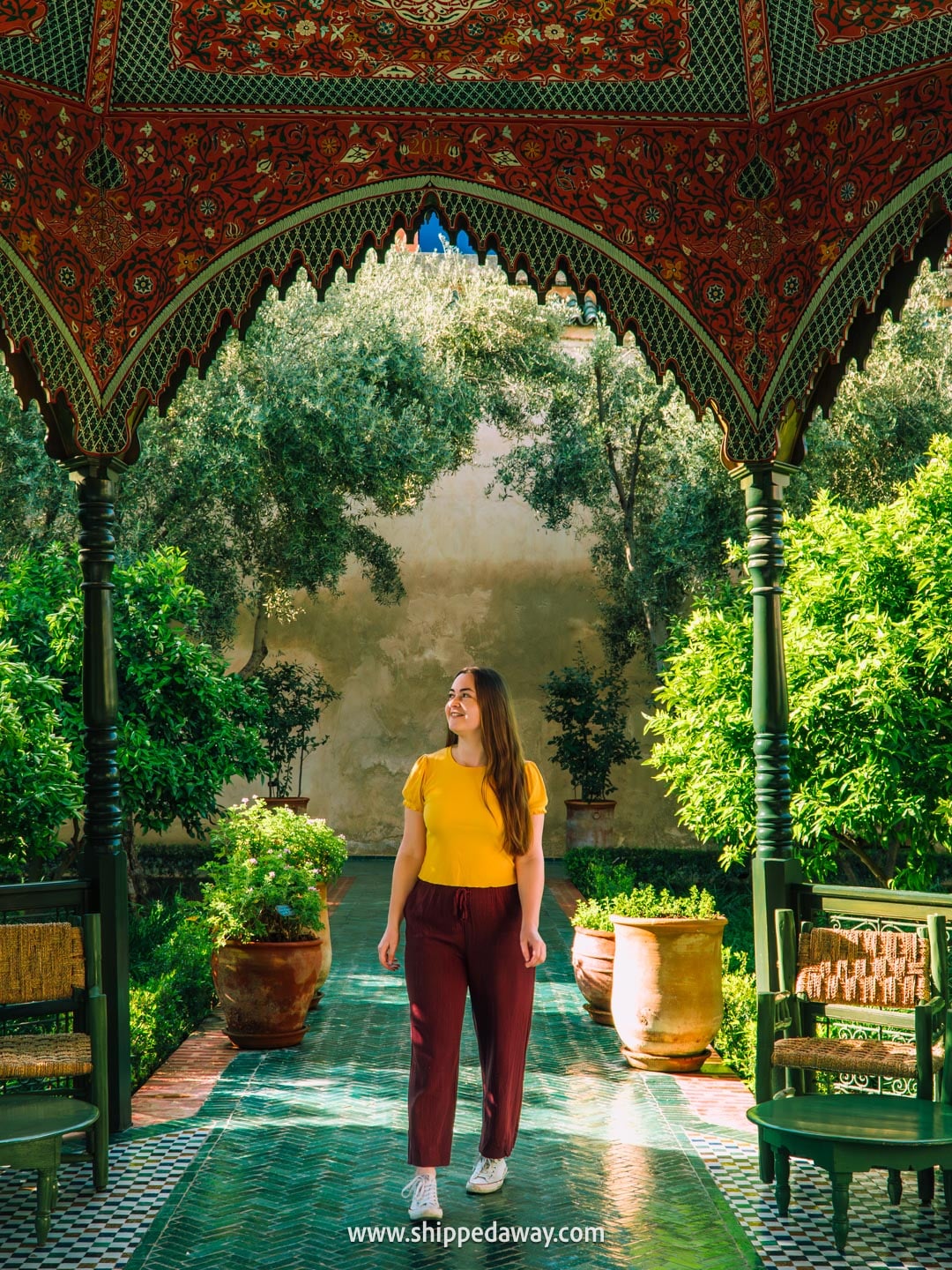
Like at the Madrasa, we were the first to enter Le Jardin Secret at opening time and had a pleasant time with very few people for about 20 to 30 minutes before it became quite busy.
Luckily, it wasn’t as crazy busy as we first expected it would be, and we still managed to sit on a bench and chill.
6. Jardin Majorelle
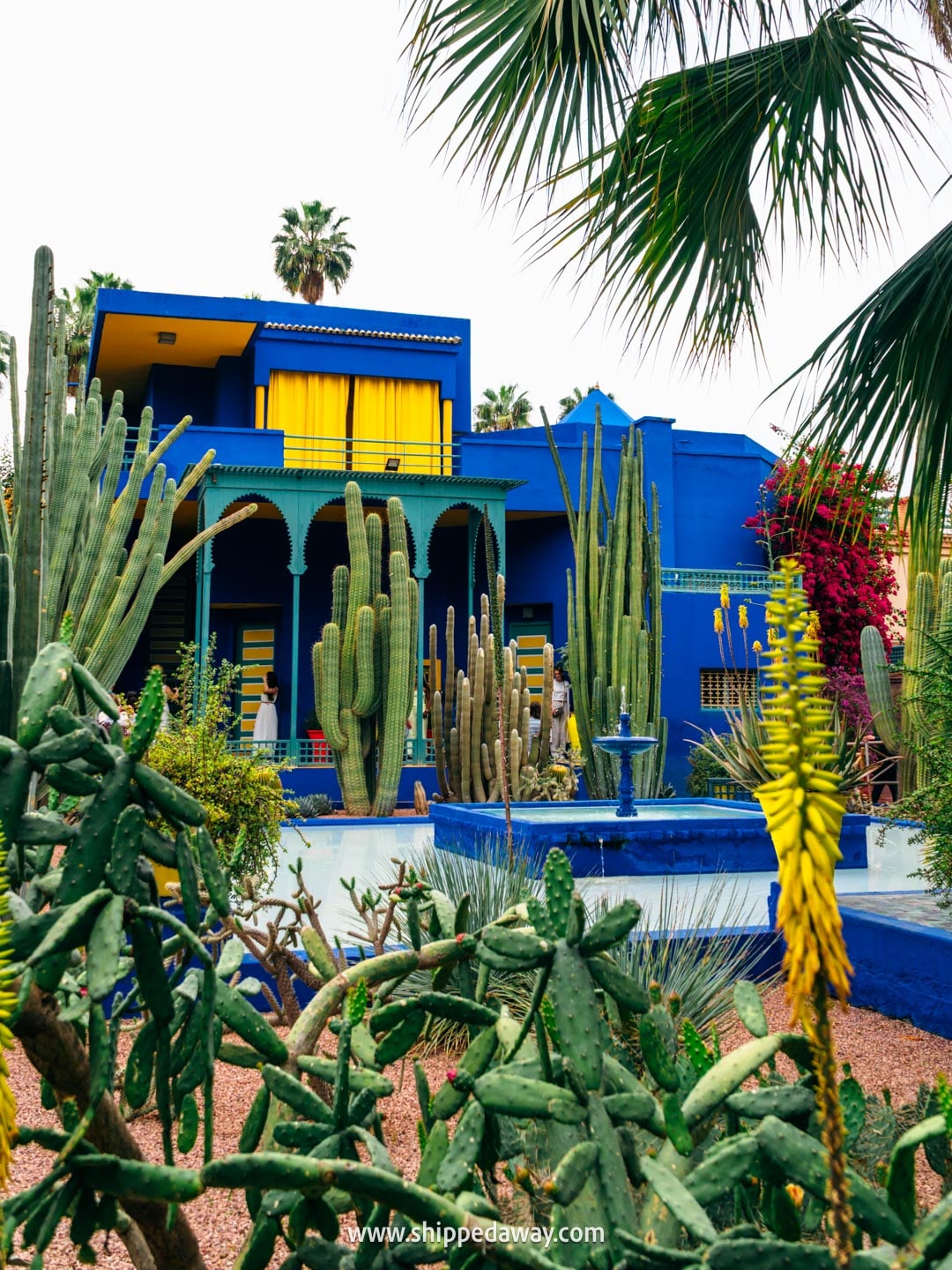
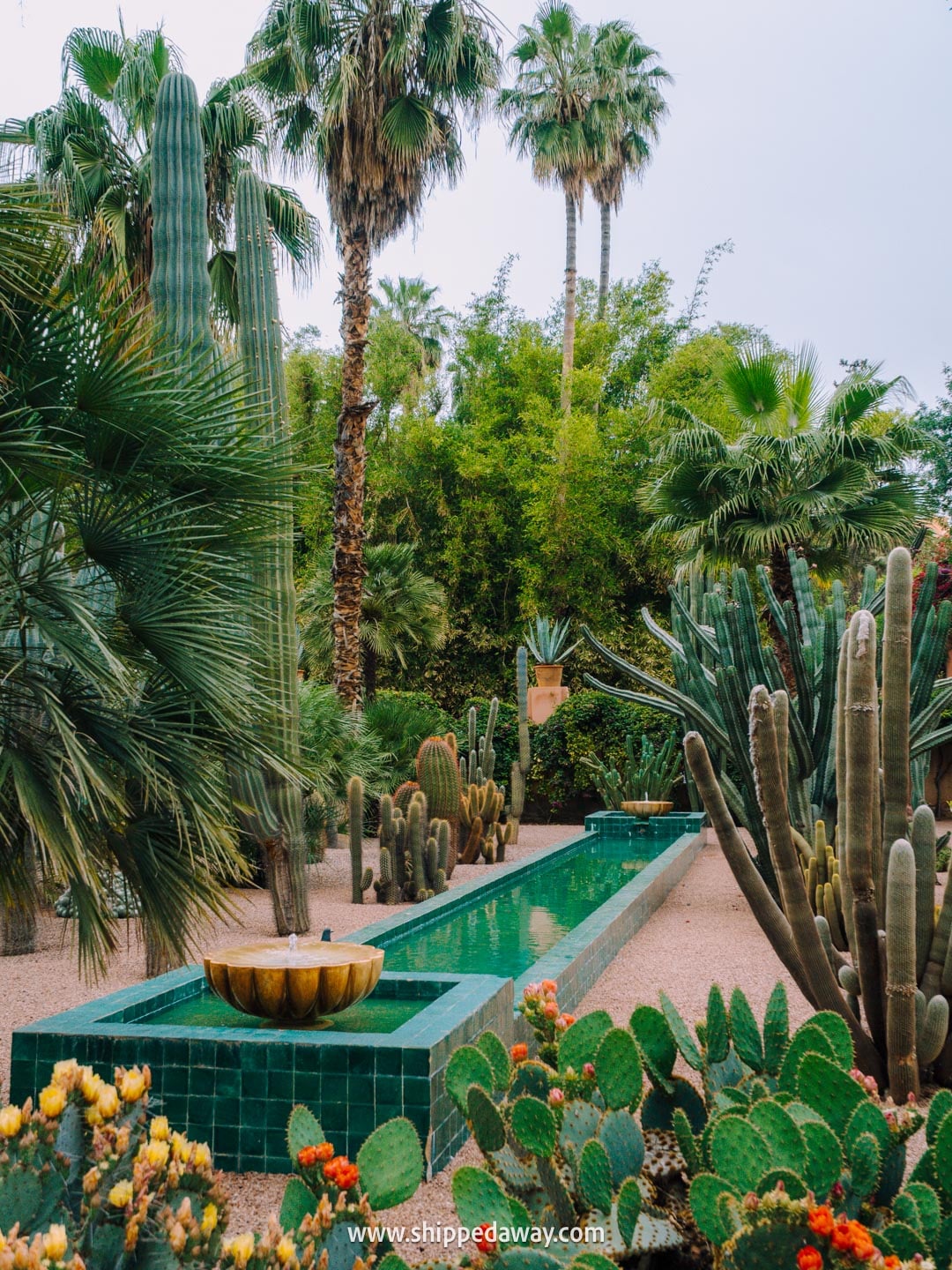
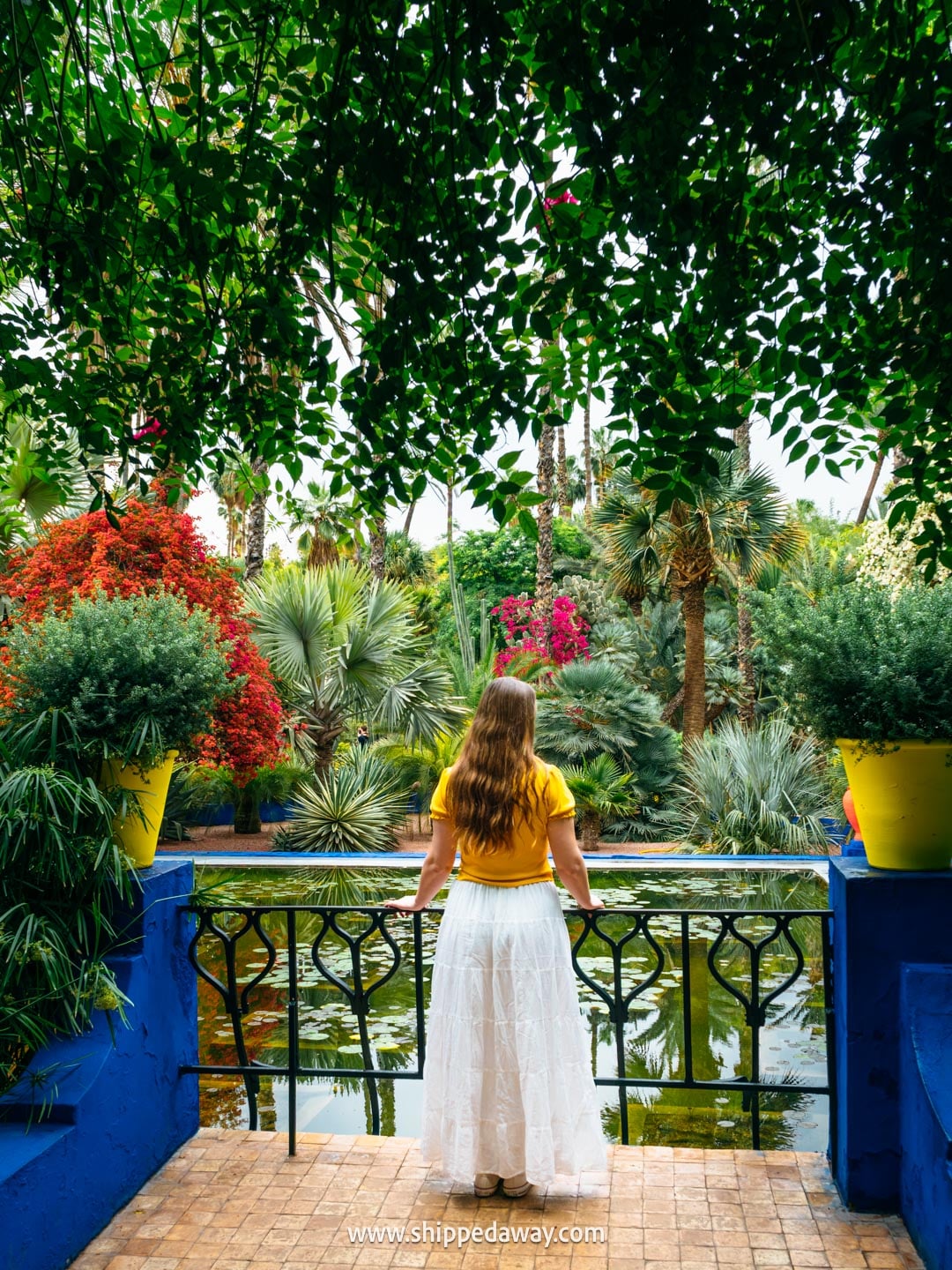
About a 30-minute walk from the central part of Marrakesh’s medina, you can visit the Jardin Majorelle, a world-famous garden, known for being super picturesque.
To be completely transparent, the secret garden in the medina is a much better place for actual garden lovers. So if that’s what you’re interested in, choose Le Jardin Secret if you only have time/budget for one.
Inside Jardin Majorelle, you follow a set route around the garden, and you can’t walk around whichever way you’d like. This means you have to walk in a line with everyone else, with no option to choose your own route.
Visiting info
- Opening hours: 8 AM to 6:30 PM (last entry 6 PM)
- Price: 170 dirham and 140 extra for the museum
There is a slot system for visiting Jardin Majorelle, and you need to book yours in advance online.
We visited Jardin Majorelle at the end of April, in the earliest slot at 8:00, and were the first to enter the garden, which helped us enjoy it more, as there weren’t that many people in the first slot. However, when we left, it was already extremely busy, and the queue in the front looked endless.
You can get your tickets on the official website, and if all slots are full for your planned day, check the ticket sales here, as they usually have some more available.
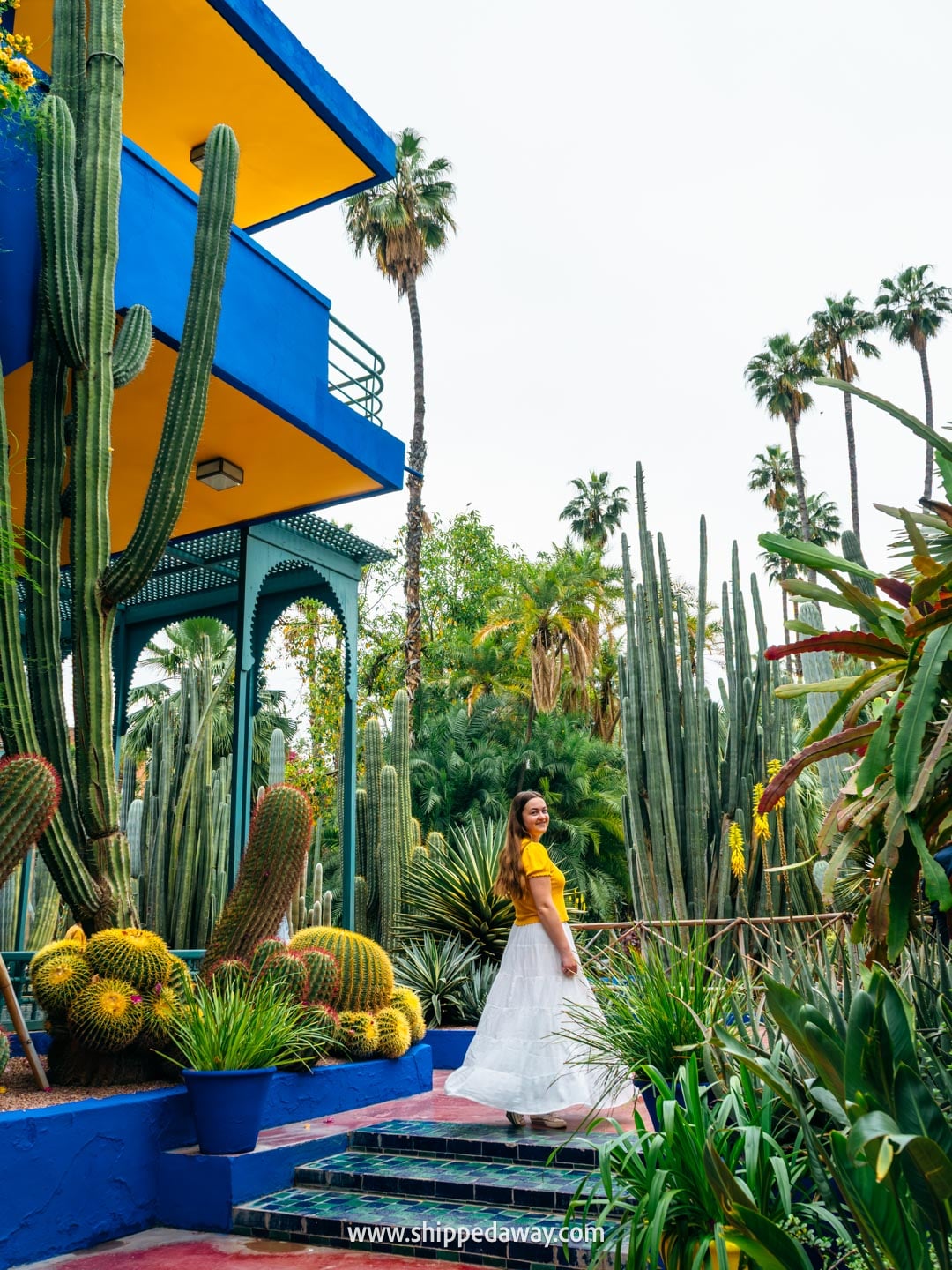
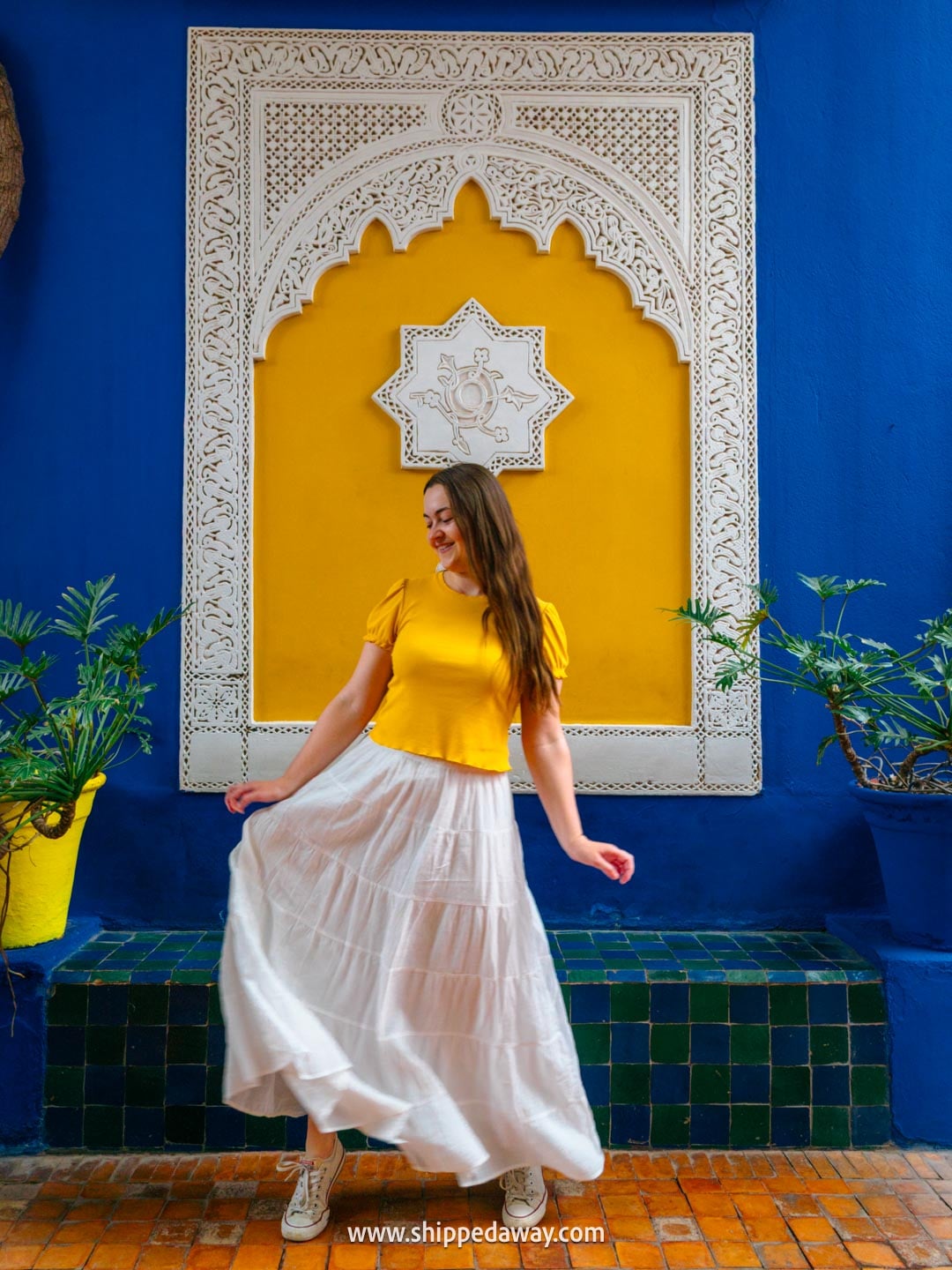
We treated our visit to Jardin Majorelle for what it honestly is – taking great photos in its many photogenic spots.
Although after visiting other great attractions in Morocco and elsewhere, we just can’t justify the price of Jardin Majorelle, which costs 17 euros, and around 30 euros if you also visit the YSL museum.
It is beautiful, but for the price, you’d expect something more. For example, in Dubrovnik, for 40 EUR you get the Dubrovnik Pass, which includes free city transport and lets you walk the entire city walls, visit a fortress, and a bunch of museums.
7. El Badi Palace and Bahia Palace
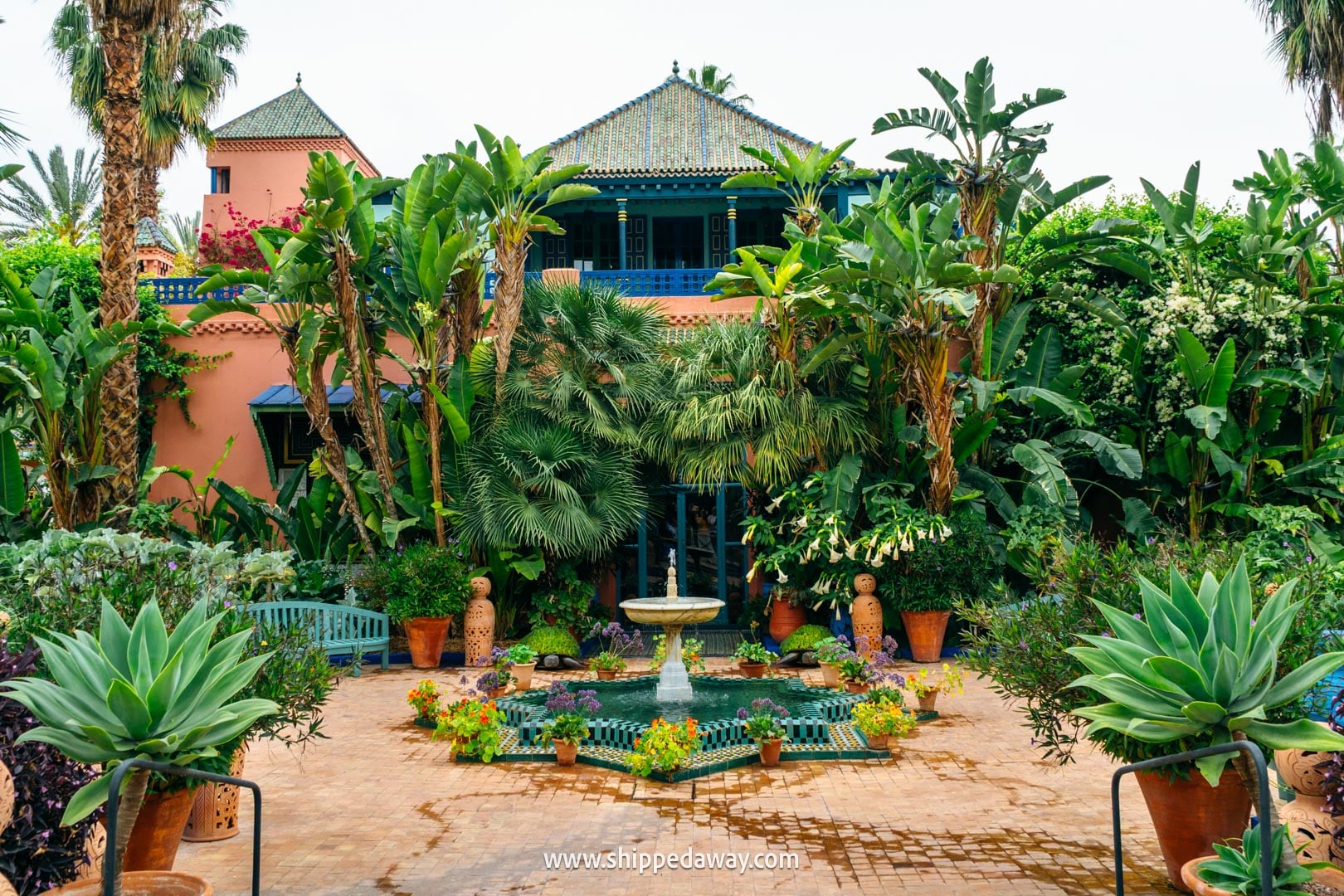
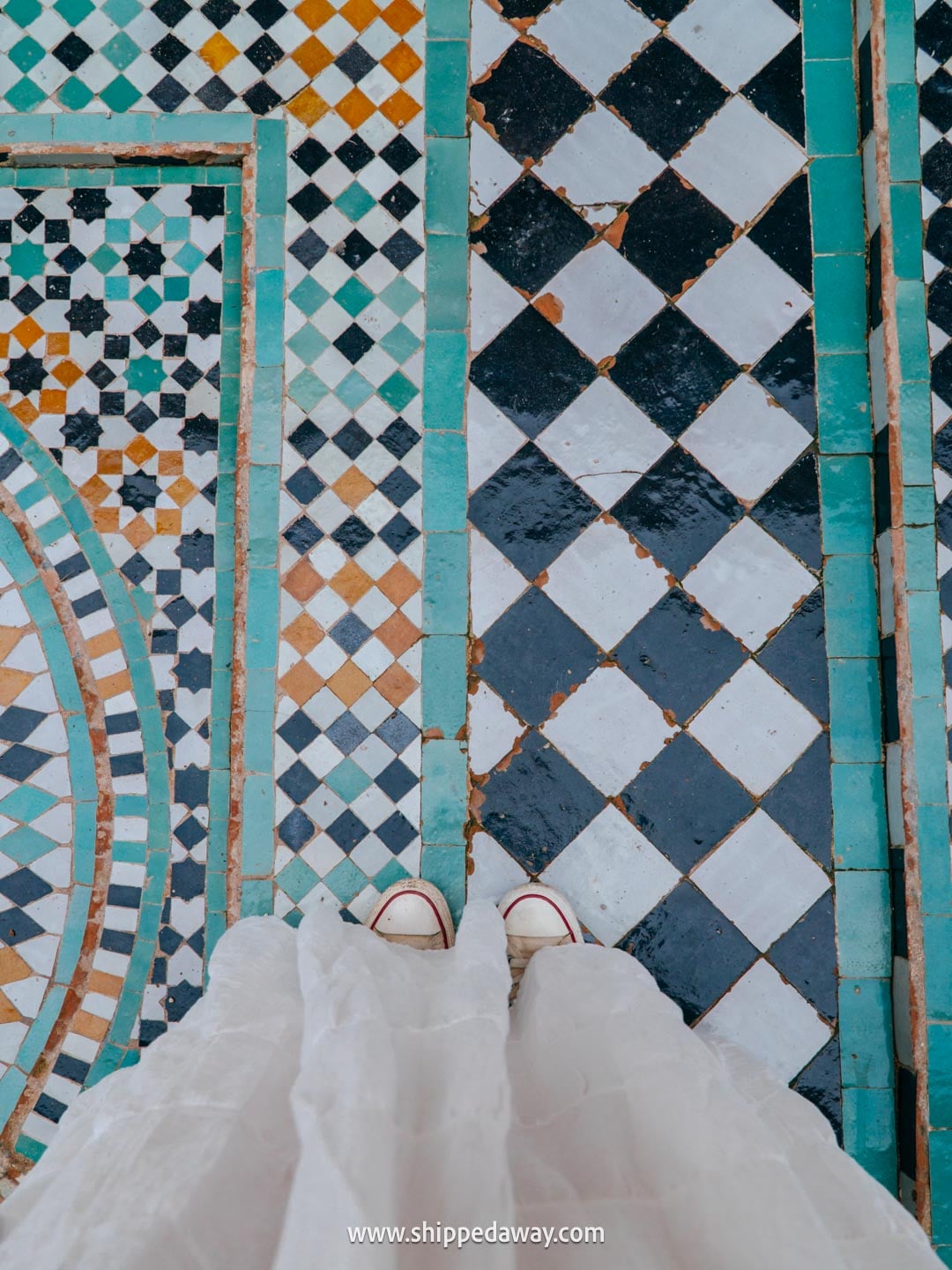
There are two main palaces worth visiting in Marrakesh: the larger El Badi Palace and the smaller but more complex Bahia Palace, with beautiful mosaics and other stunning details.
El Badi Palace is known for its beautiful tiles, orange orchard with many orange trees, reflecting pools of water, and the storks that nest above on the high parts of the palace’s walls.
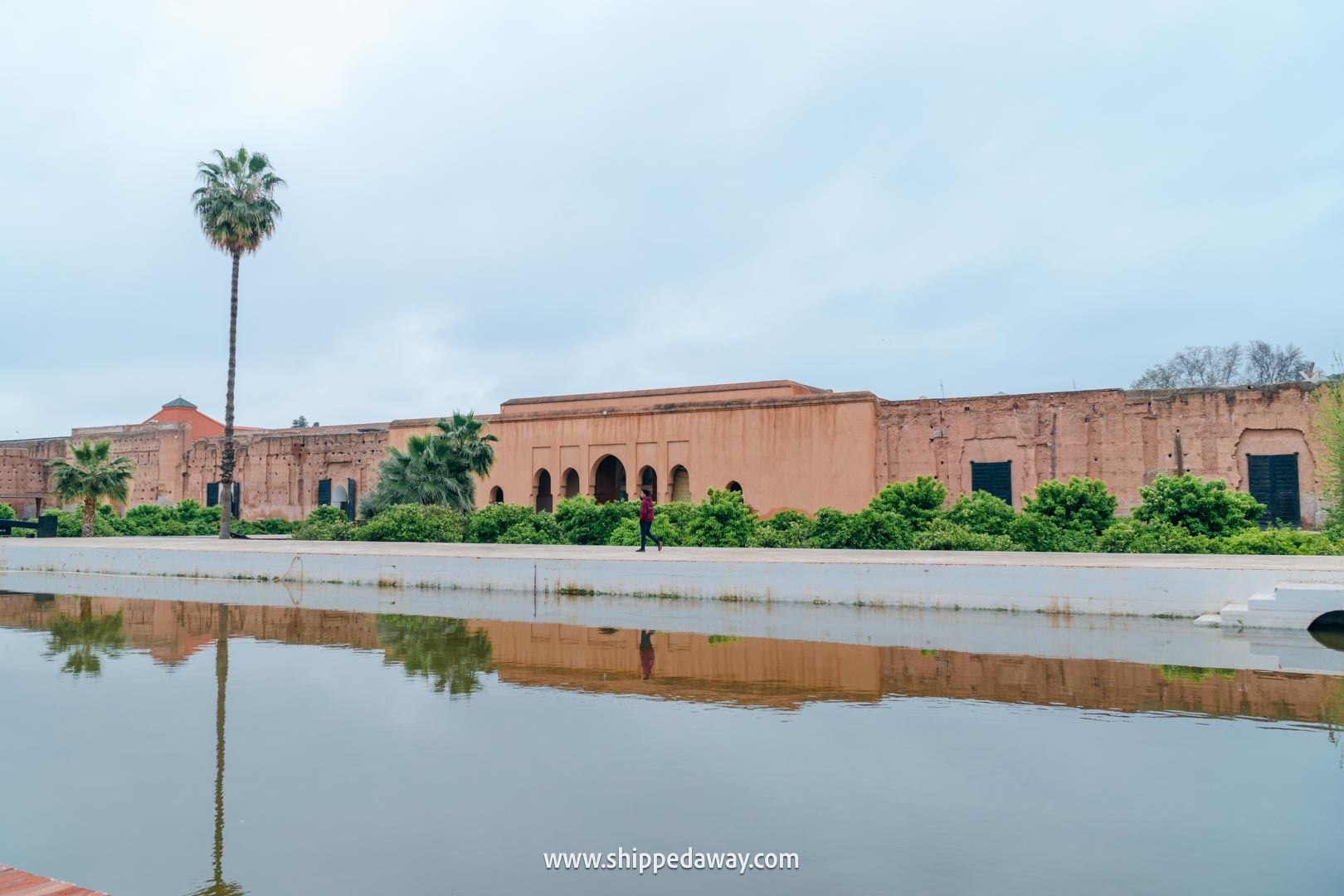
Visiting info
- El Badi Palace: 9 AM to 5 PM, 100 dirham
- Bahia Palace: 9 AM to 5 PM, 100 dirham
Unfortunately, we only visited the El Badi Palace during our Marrakesh trip because major restoration work was underway at the Bahia Palace, and it wasn’t really worth visiting for us.
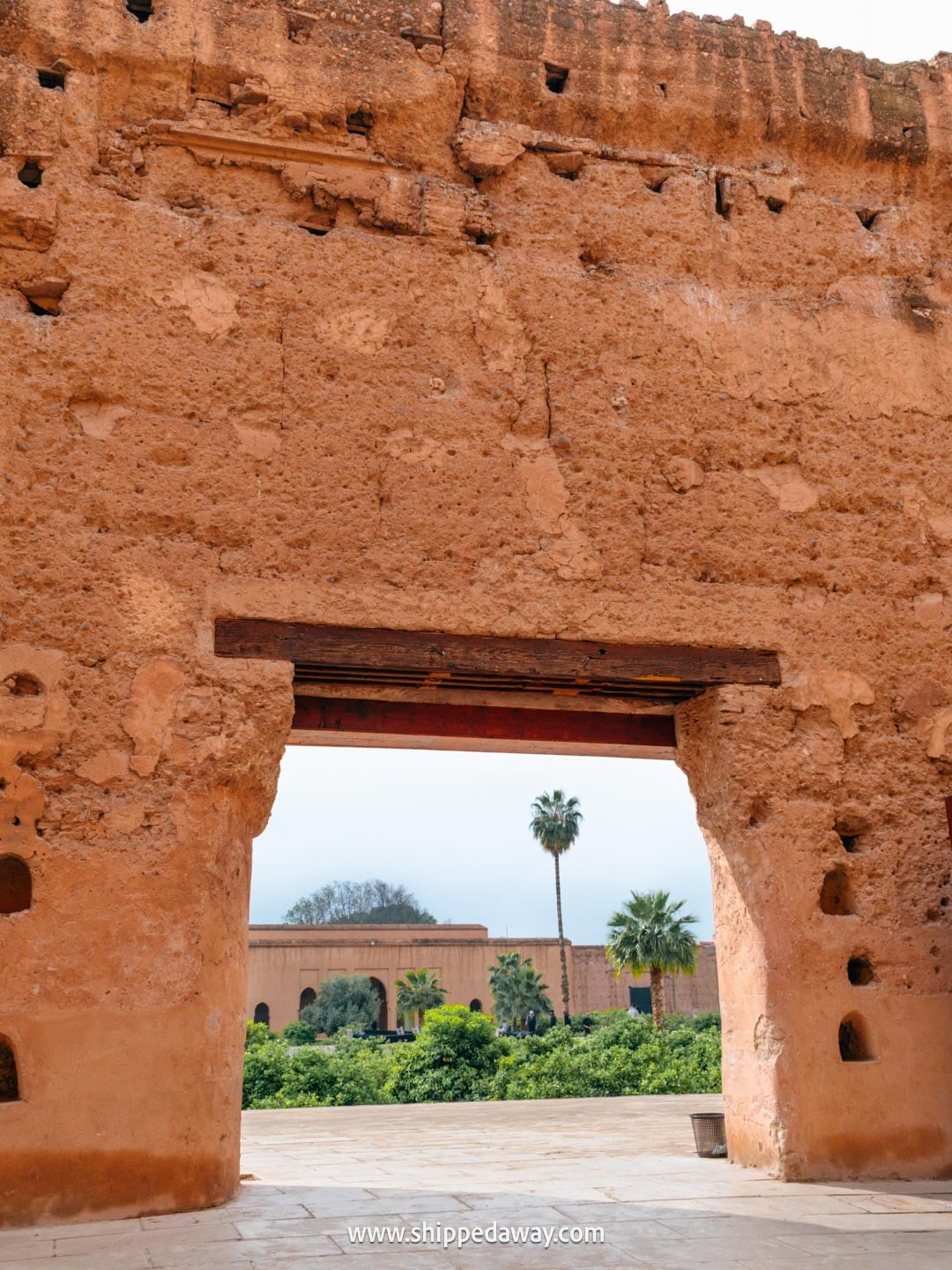
Both palaces are straightforward to explore on your own, but like at the Madrasa, if you want to learn more about their history or anything beyond what is written on a few boards, we recommend going with a guide.
There’s only one part of the El Badi Palace that’s better preserved (the one with the colorful tiles). It’s where you can get the best photos, and also see stork nests on top of the walls.
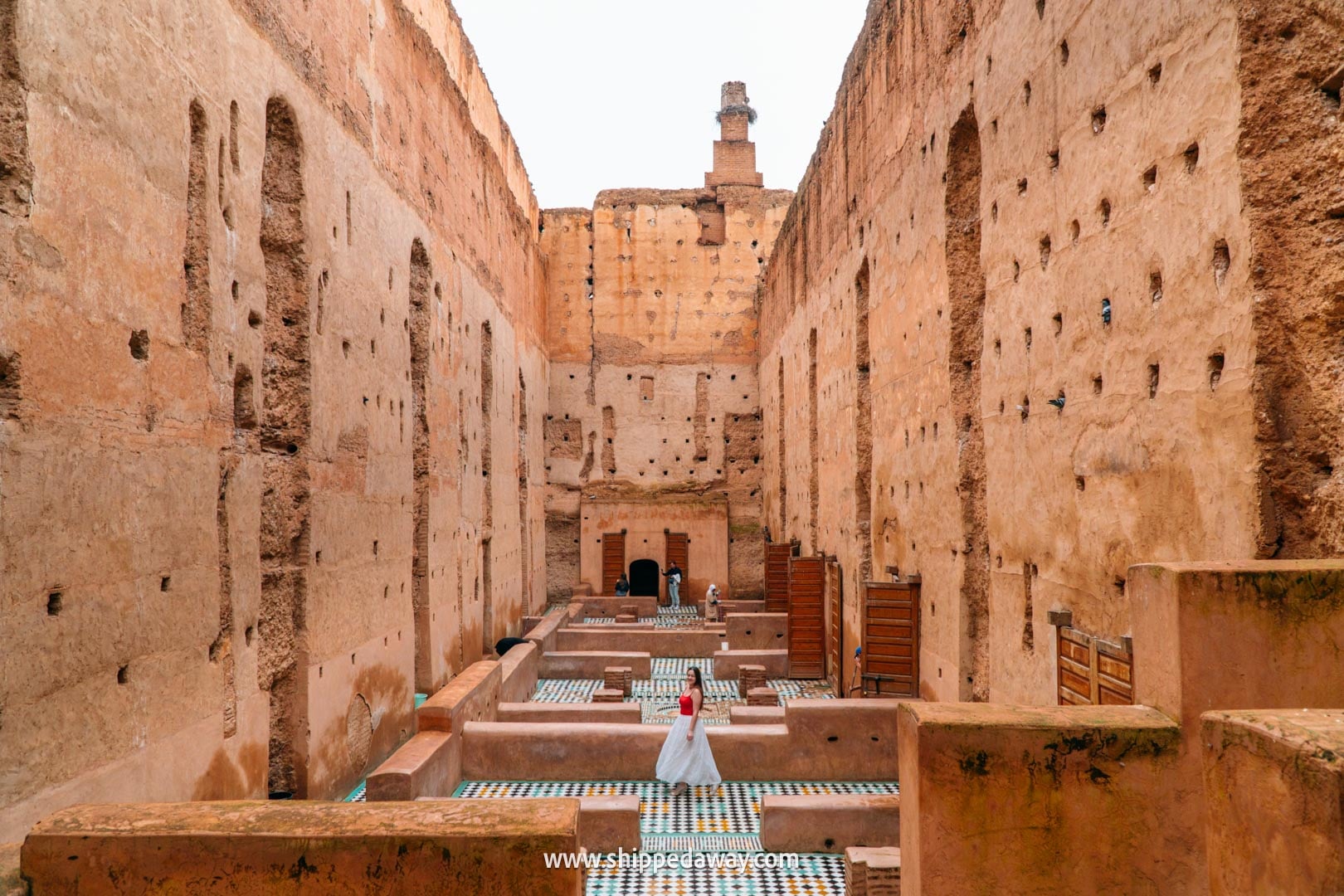
Before the earthquake that struck Marrakesh a few years ago, you could also go to a higher spot in the El Badi Palace, which gave you views of the palace itself and a bit of the rest of the city. We were sad we couldn’t do that anymore, and that only the lower part is accessible.
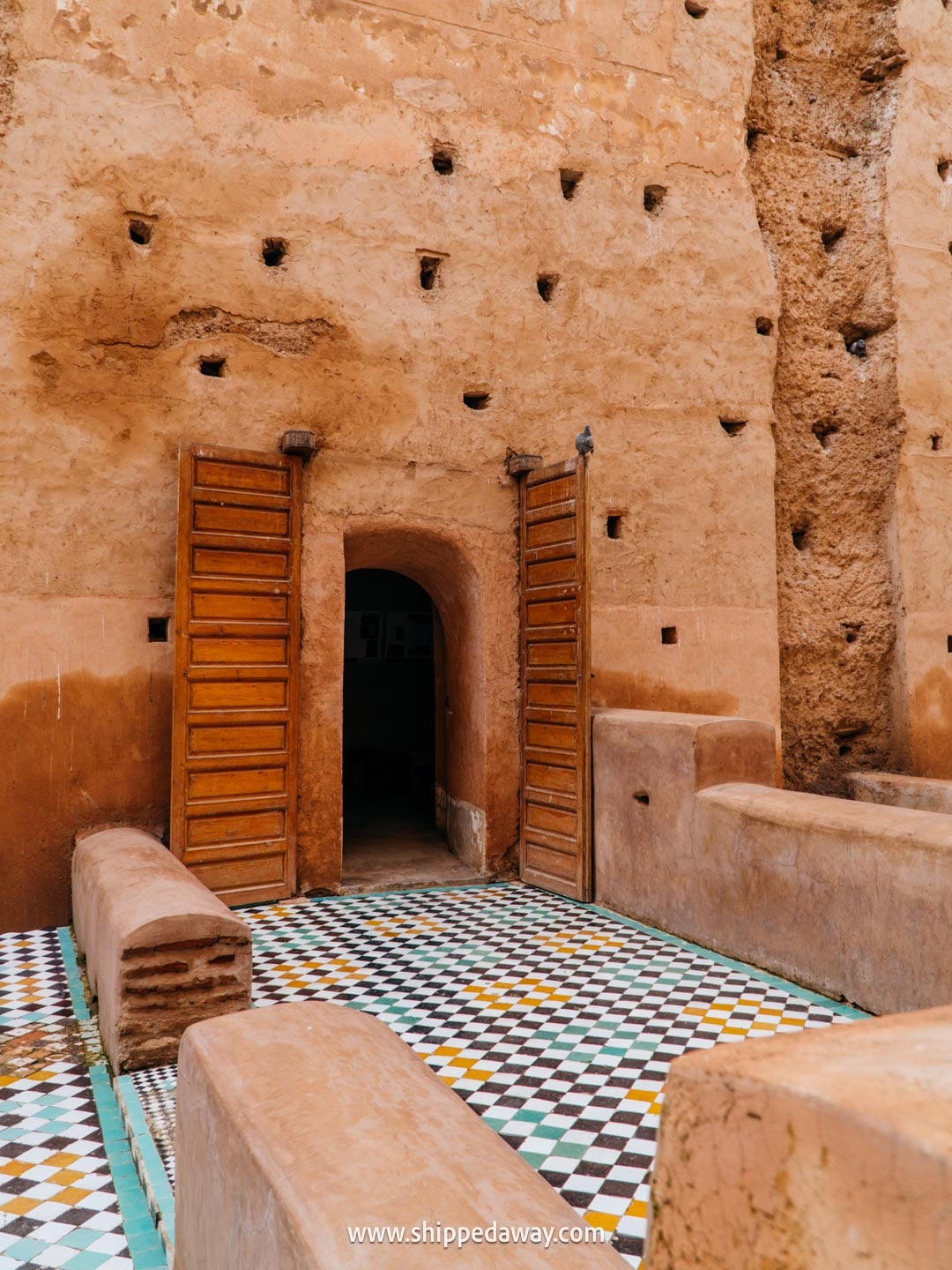
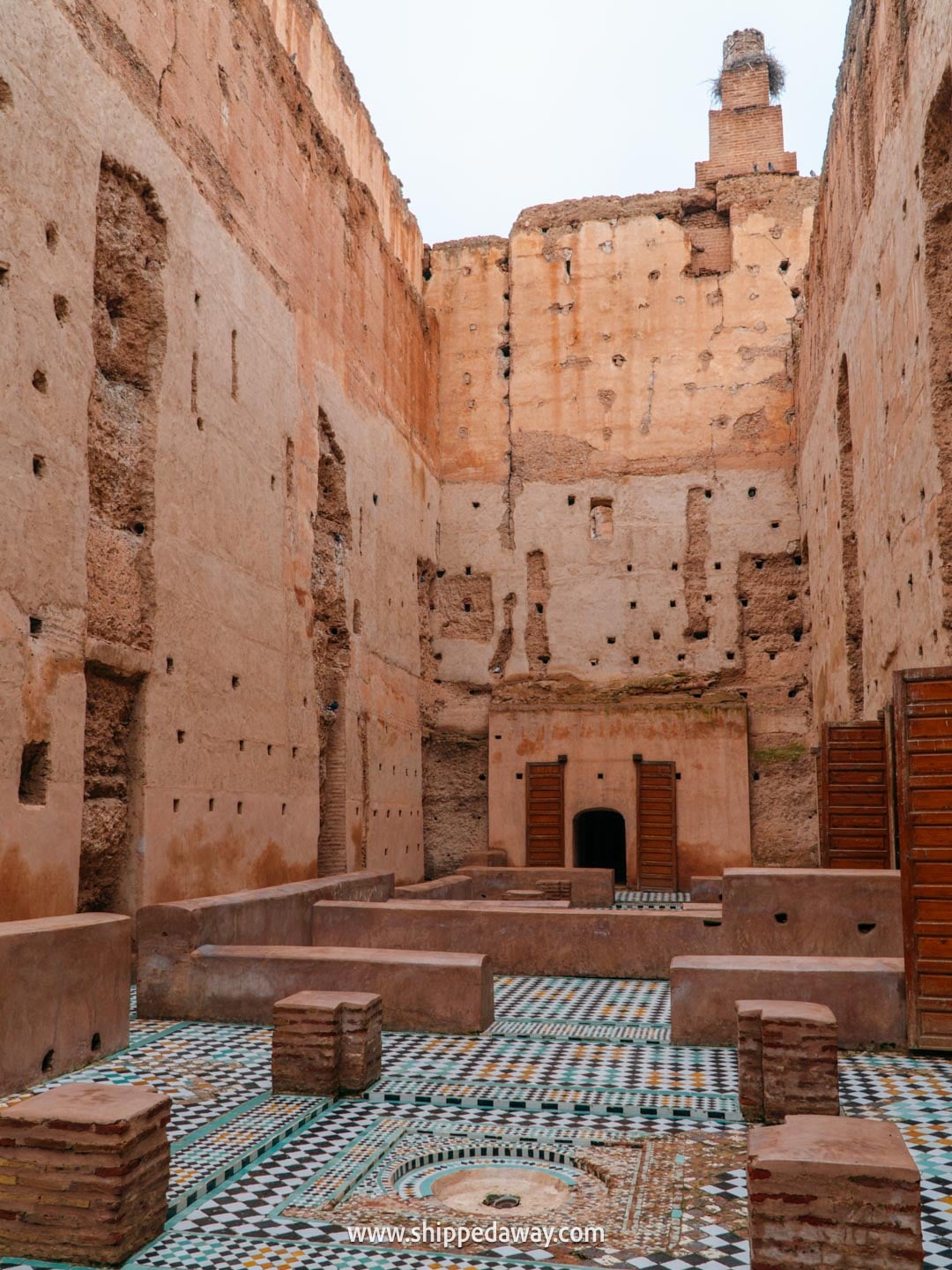
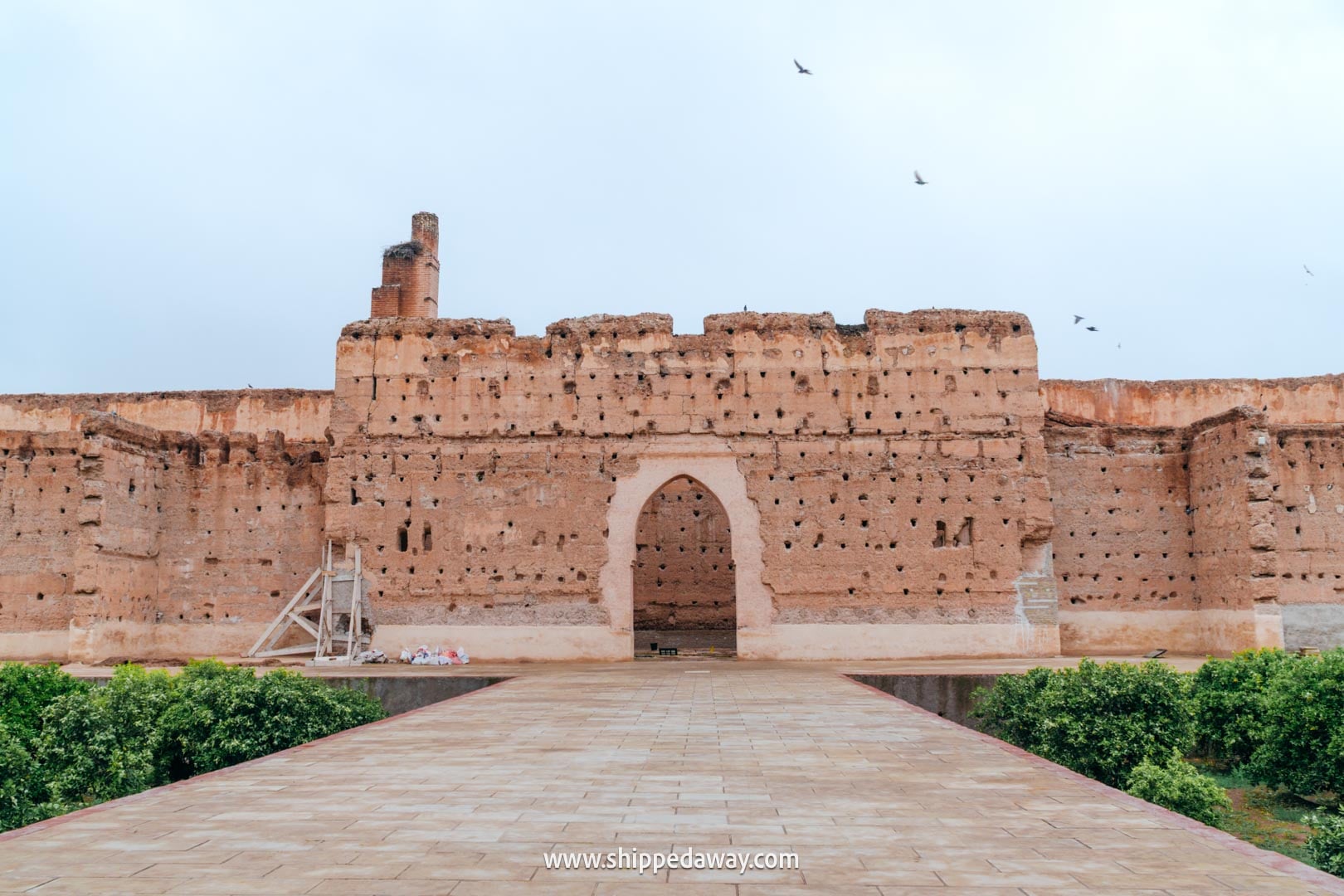
Good to know: El Badi Palace is frequently used for events such as concerts, fashion shows, and similar. We recommend checking the latest reviews to see what you can expect.
We honestly don’t understand the logic behind that. Having to pay the full ticket even when half of the palace is possibly taken over by a large pavilion, tents, and similar temporary constructions seems absurd.
During our visit, they just started the construction of a temporary runway above the pool of water for a fashion show (confirmed by the workers). We are happy that they were only starting.
Quick Food Tip
If you’re looking to grab a quick breakfast without sitting down and waiting in a restaurant, check out dairy Ghita, a small street food restaurant not far from the palaces.
They serve bread and traditional pancakes, which you can fill with salty or sweet things like cheese spread, eggs, Nutella, banana, honey, butter, and similar.
8. Saadian Tombs
One of the attractions we didn’t have time to visit in Marrakesh is the Saadian Tombs, a mausoleum and burial site.
However, although the architecture looks interesting, based on recent reviews we read, we are okay with not visiting. It seems very small and crowded, and the 10 EUR ticket is quite expensive for what you see.
From what others have experienced, you also supposedly need to wait in a long queue for up to 30 minutes in the sun to see the main room.
So while we put the Saadian Tombs on this list, we wouldn’t really say it’s a must-do. But since it’s so popular and a must-do for others, we at least had to mention it. You can make up your own mind and decide whether it’s for you. 😁
Good to know: Some people are uploading photos of the El Badi Palace to the TripAdvisor page for the Saadian Tombs. Don’t get tricked.
Visiting info
- Opening hours: 9 AM to 5 PM
- Price: 100 dirham
9. Traditional food
No visit to Marrakesh and Morocco is complete without trying the traditional food, and while we had the best traditional Moroccan food outside Marrakesh, there are, of course, fantastic restaurants you can enjoy here.
For lunch or dinner, some dishes you must try while in Marrakesh include Tagine and Couscous (meat and veggie versions available), Harira Soup, Moroccan salad, and a Berbere omelet.
An important thing to know about traditional food in Morocco is that dishes like Tagine and Couscous are slow-cooked fresh in traditional clay pots, so expect a 30 to 45-minute wait.
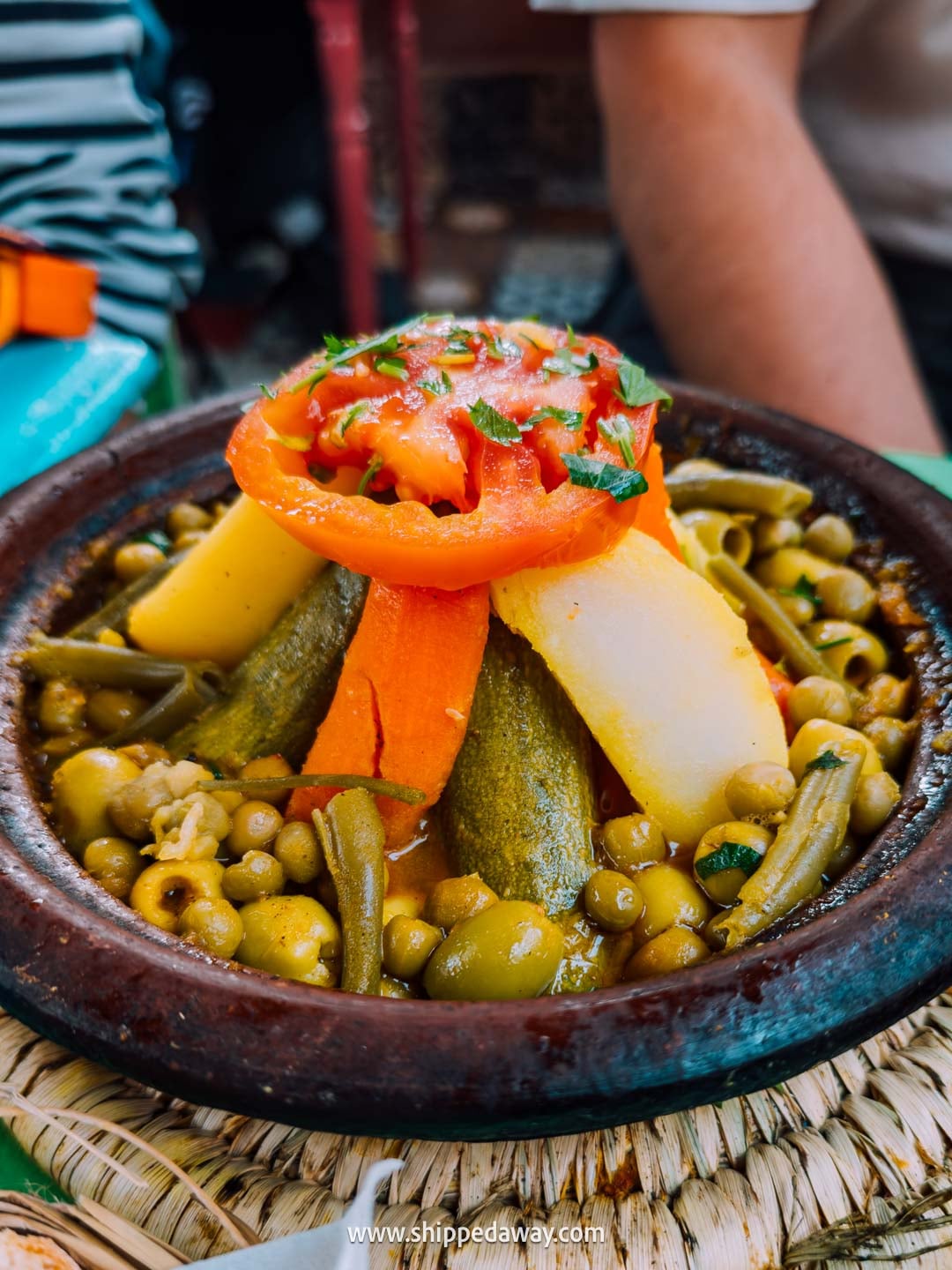
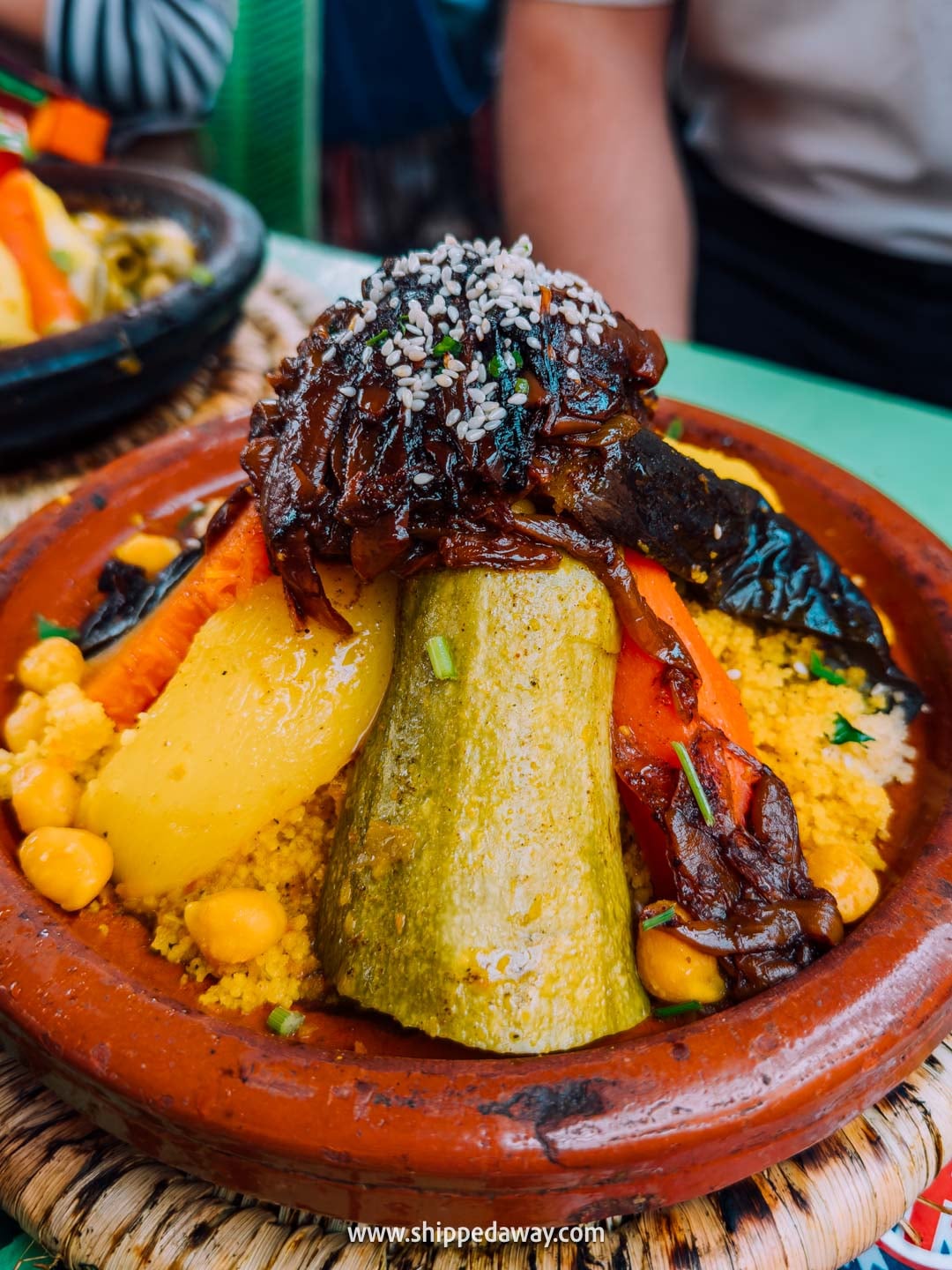
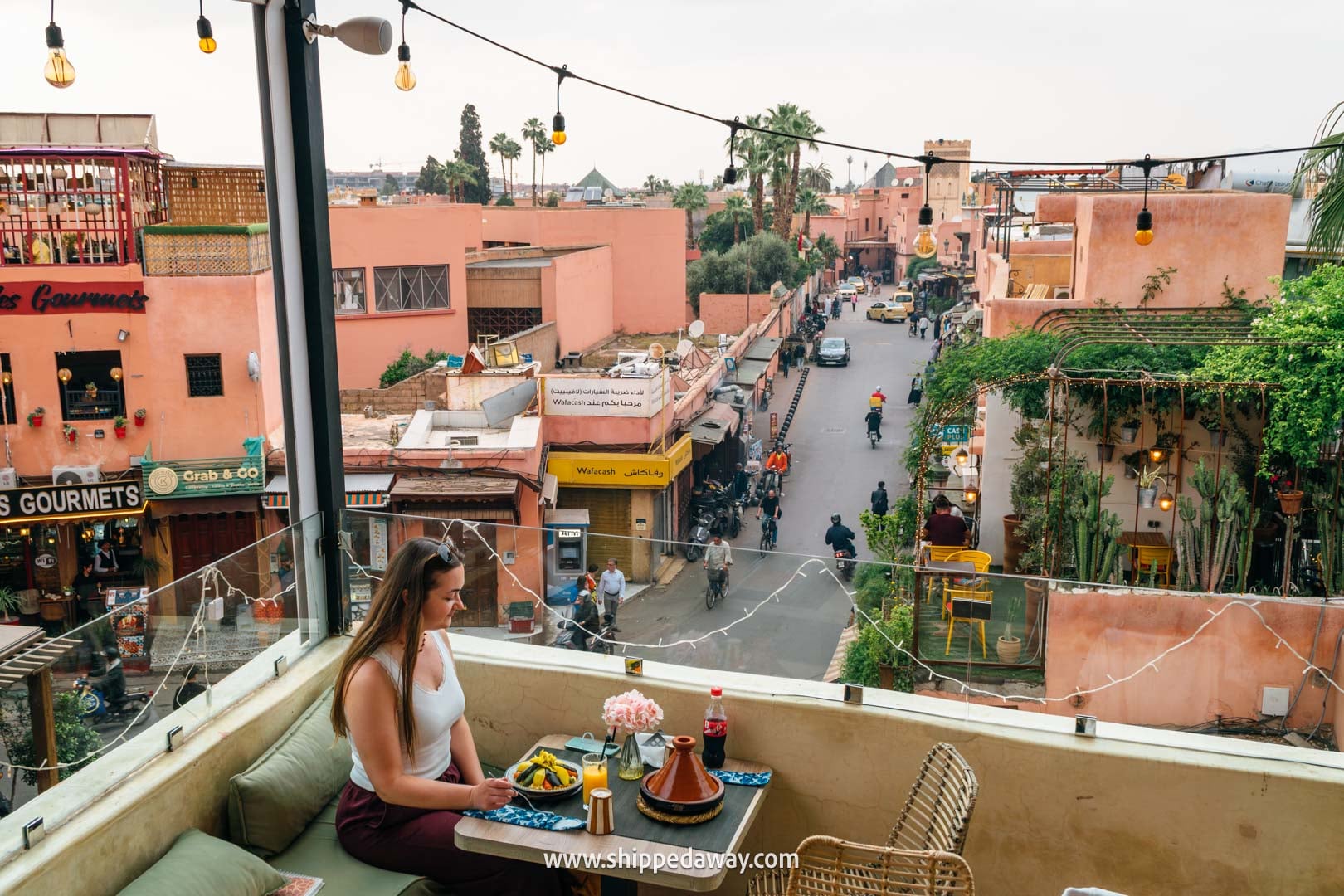
Short on time? You can explore Morocco’s cuisine on a street food tour. This one starts in the evening and introduces you to the best dishes.
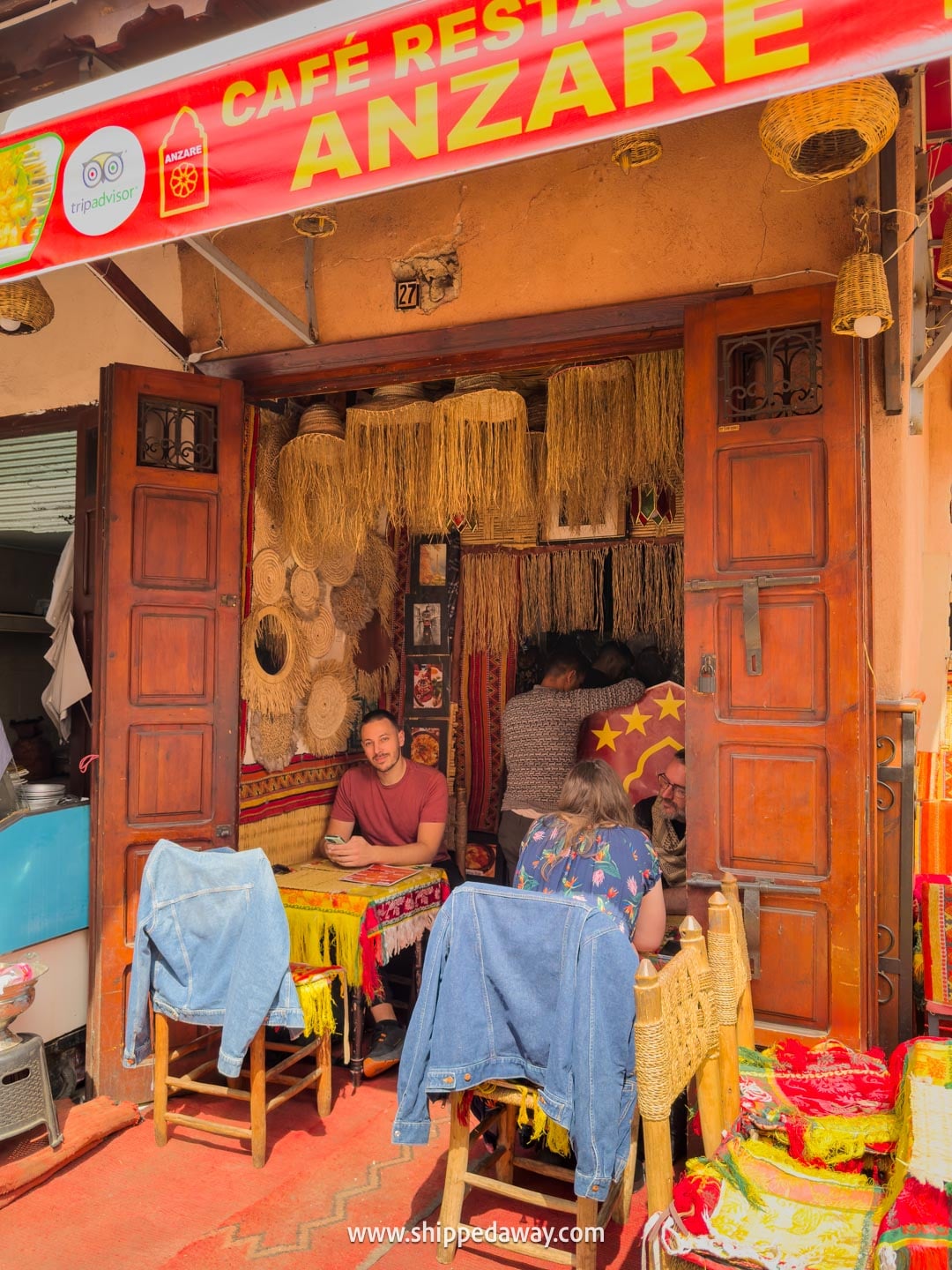
One of our favorite restaurants for traditional food was Anzar, a family restaurant with only a few tables in a busy market area near the Madrasa.
The portions were great, and most of all, everything we tried there was delicious and well-cooked. The guys are really doing a fantastic job.
We recommend coming right at opening, as you otherwise might need to wait a long time for a table to free up.
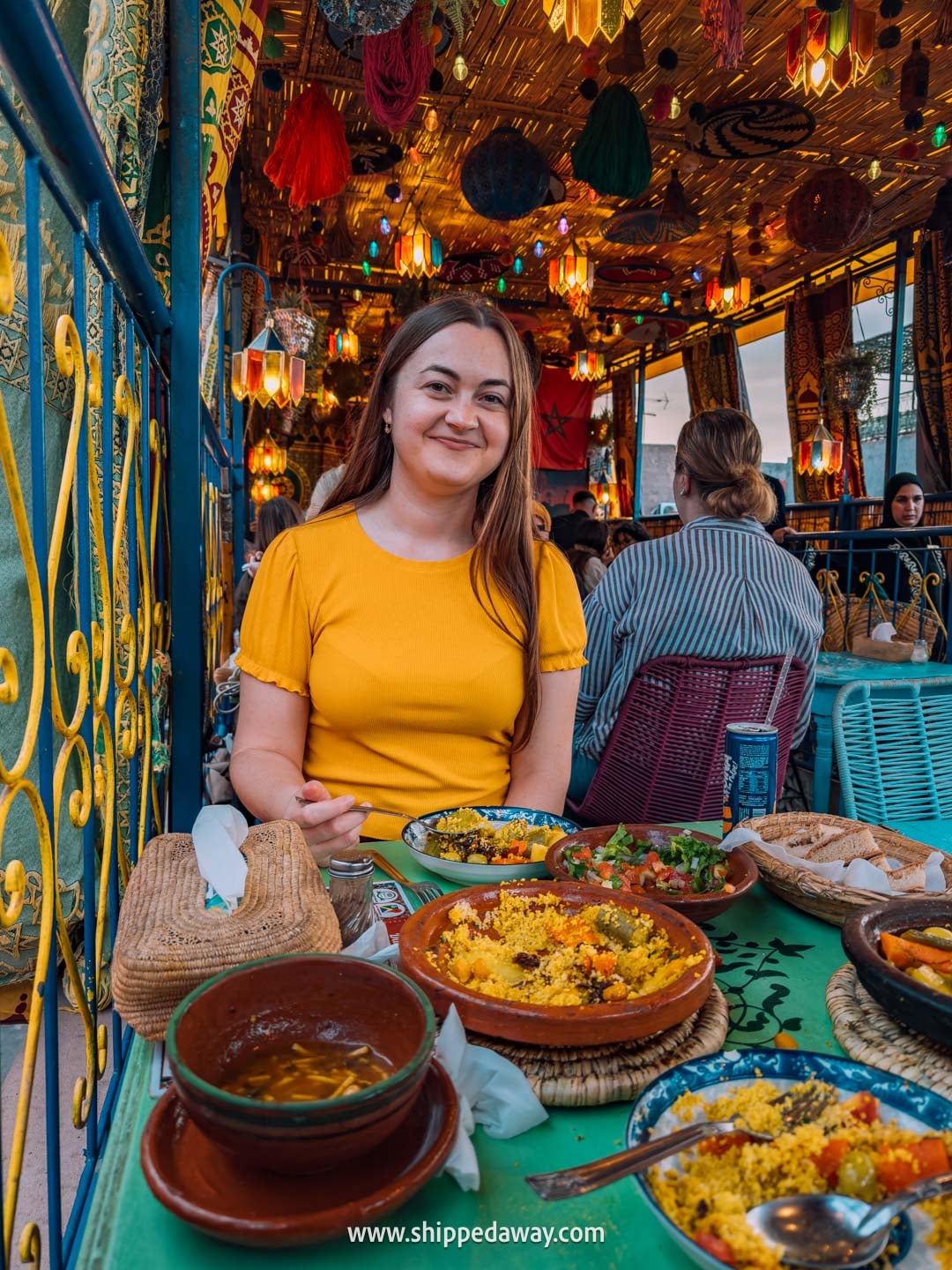
Another place where we had great traditional food in Marrakesh is Café Restaurant Dar L’hssira. It has a lot more tables, but be prepared to sit close to other people. It, of course, didn’t stop us from enjoying a lovely lunch. Again, the food was delicious! 🤤
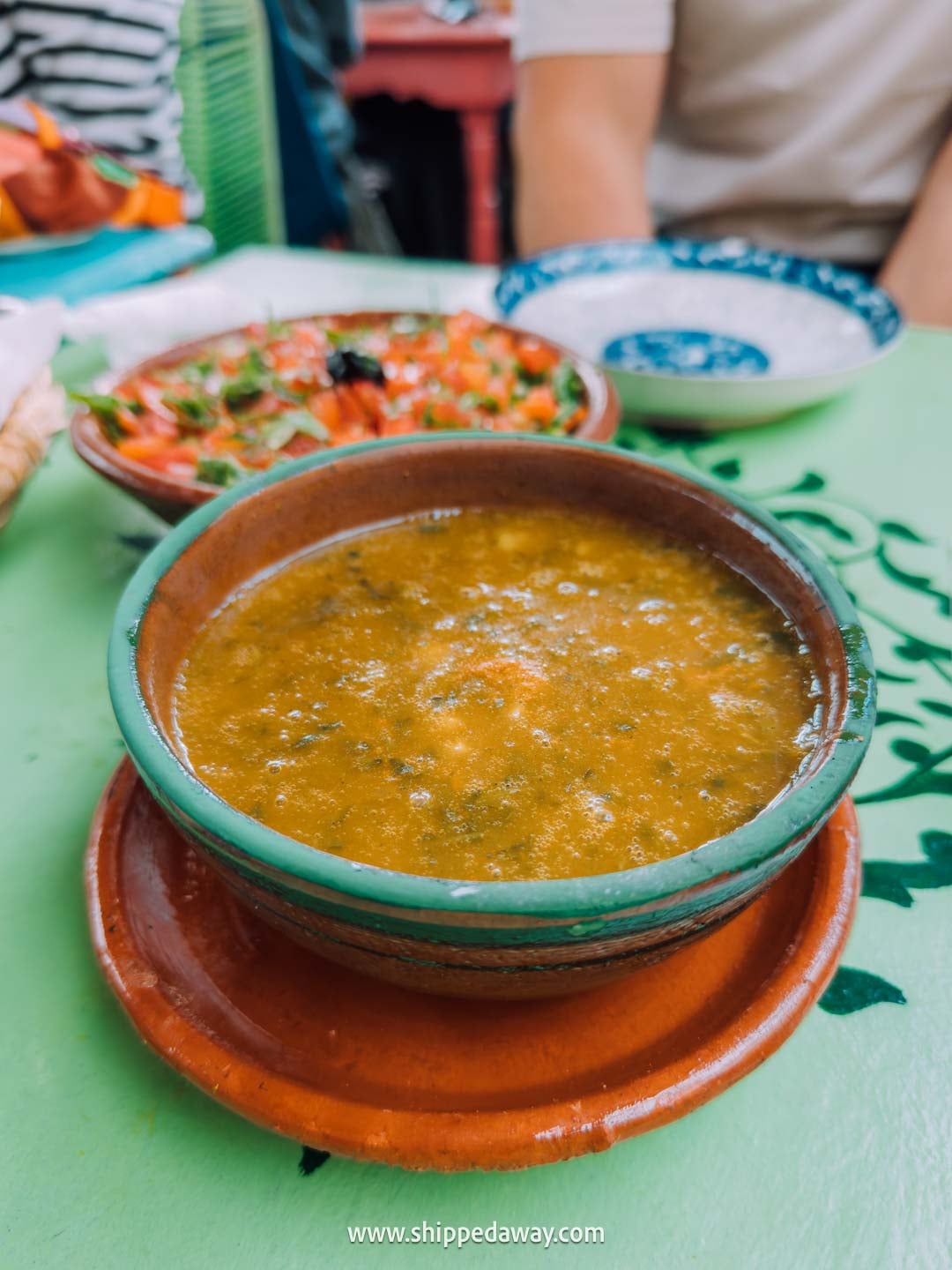
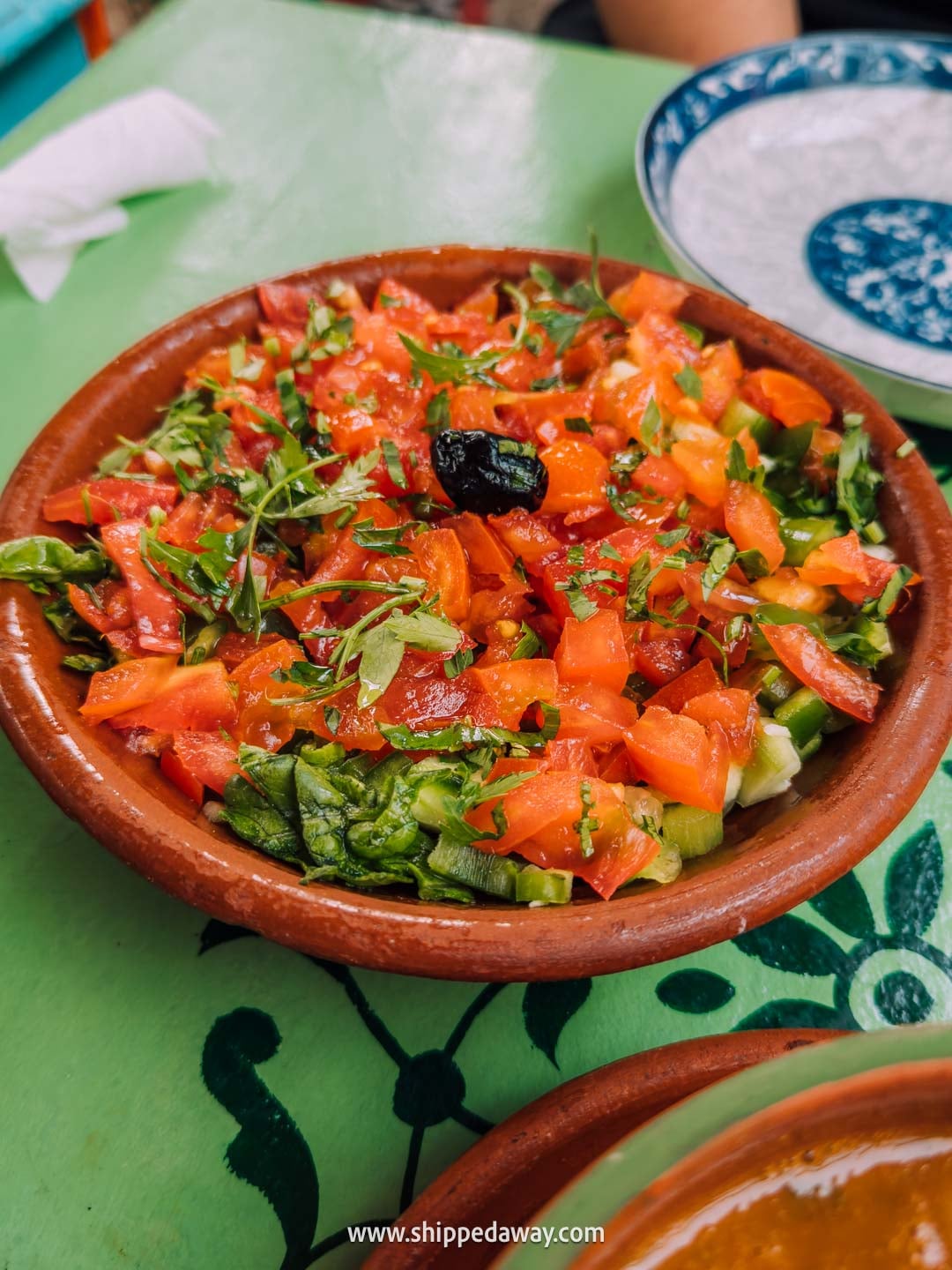
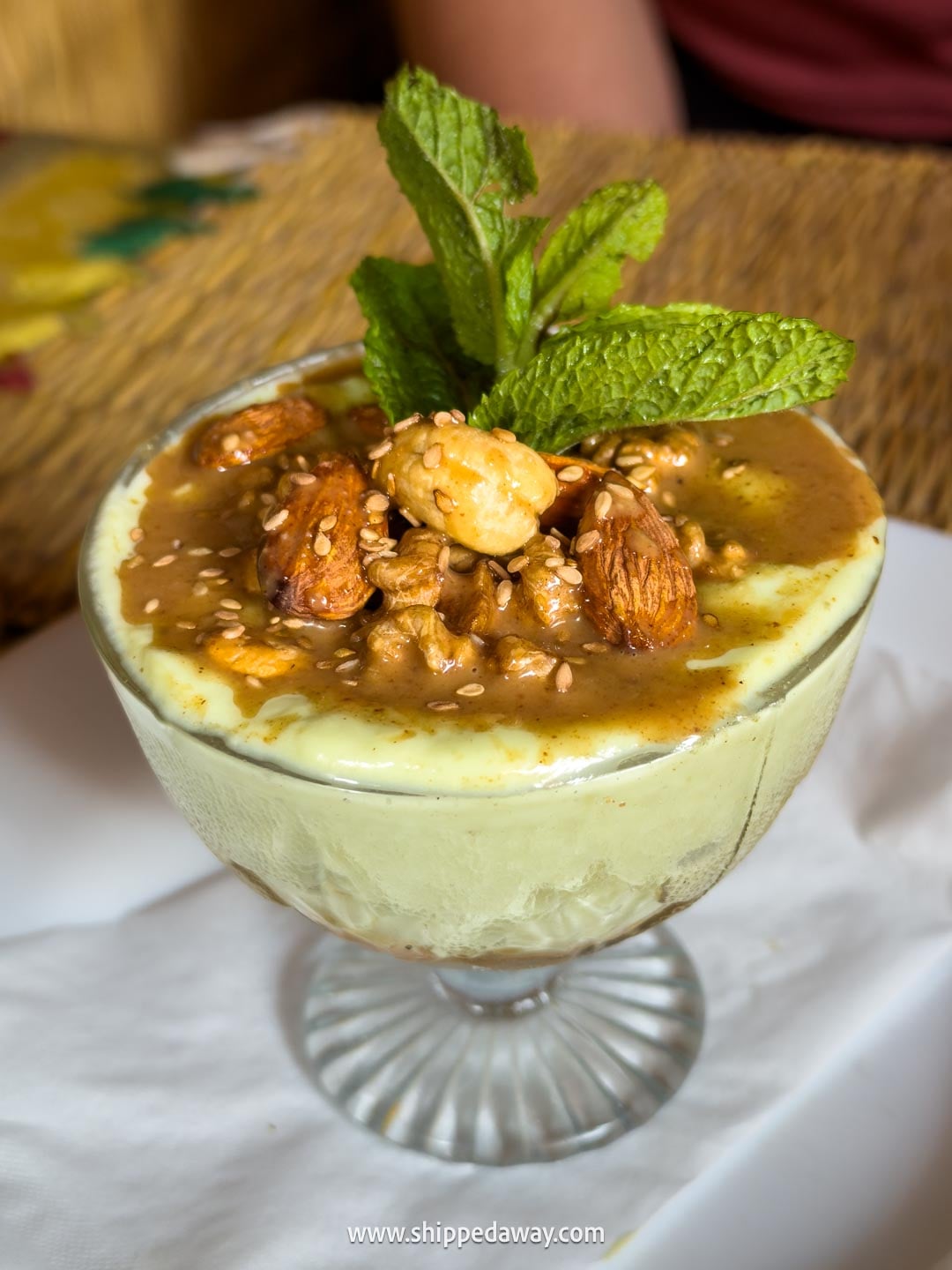
Dessert tip! If you find it on the menu, make sure to order Zaazaa (or Za3Za3), a delicious, creamy drink made of avocado and dates, topped with syrup, nuts, and fruit. Zaazaa is a typical treat during Ramadan for breaking fast, and honestly, we can see why! It’s delicious, and a calorie bomb.
10. Jemaa el-Fnaa
Like the souks, it’s impossible not to visit Jemaa el-Fnaa square while in Marrakesh.
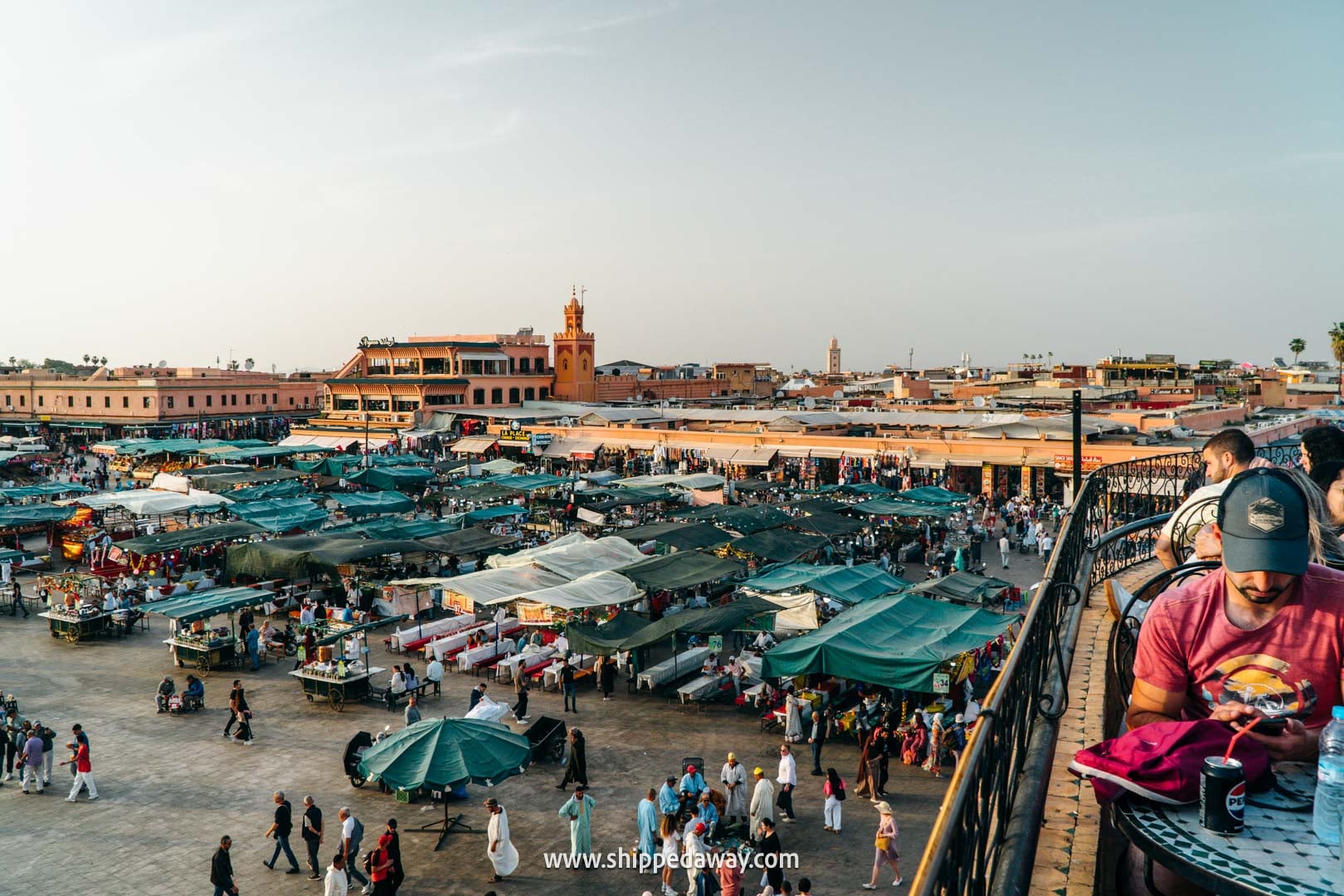
Historically, Jemaa el-Fnaa was the most important square and gathering point in Marrakesh. It’s full of everything and anything, from street food and smoothie stalls to small shops and performers, snake charmers, and various shows.
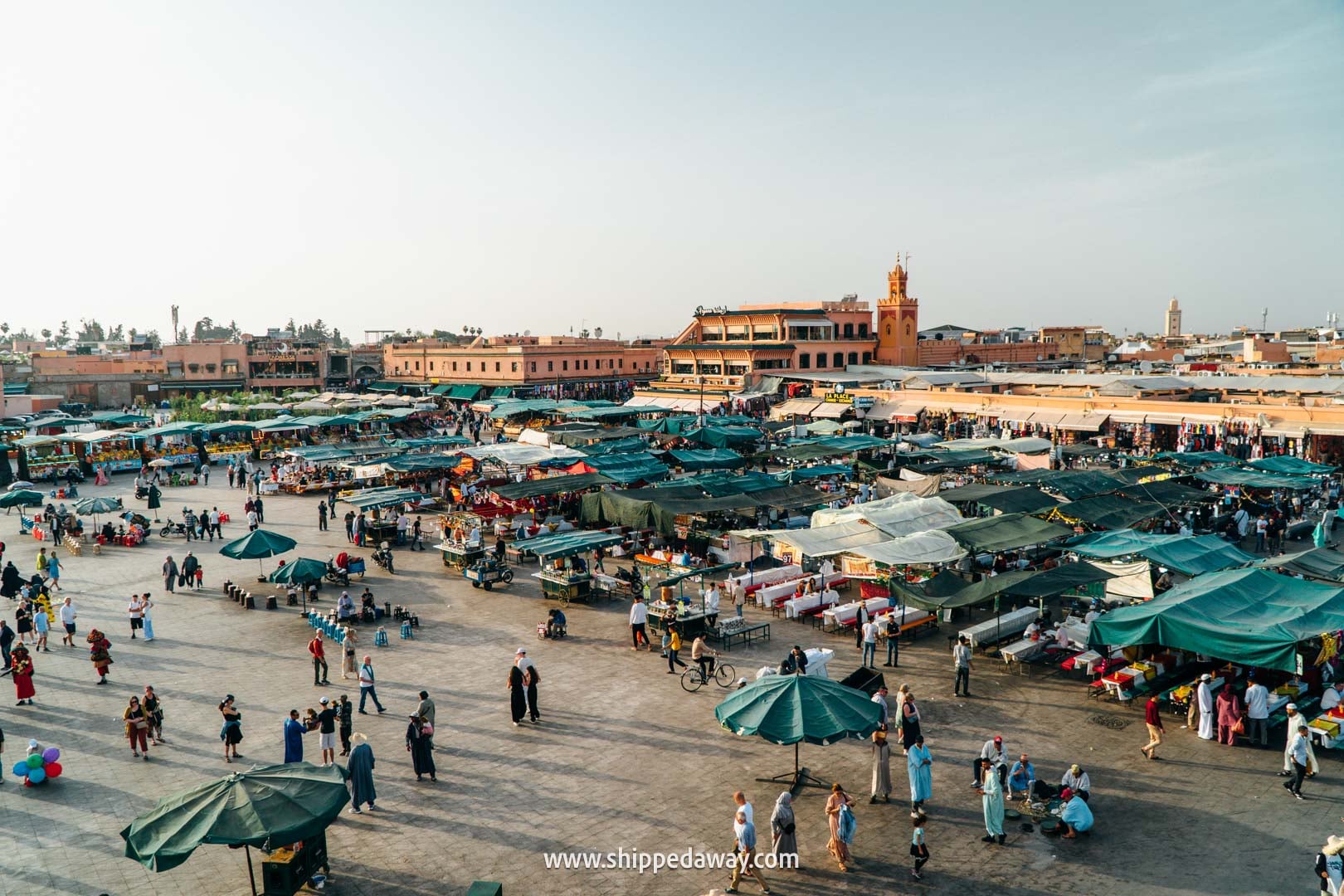
Jemaa el-Fnaa is active throughout the day, and at night it turns into a night market, with food as the main focus.
While other places in the city are bustling with life, they have nowhere near the amount of Jemaa’s activity.
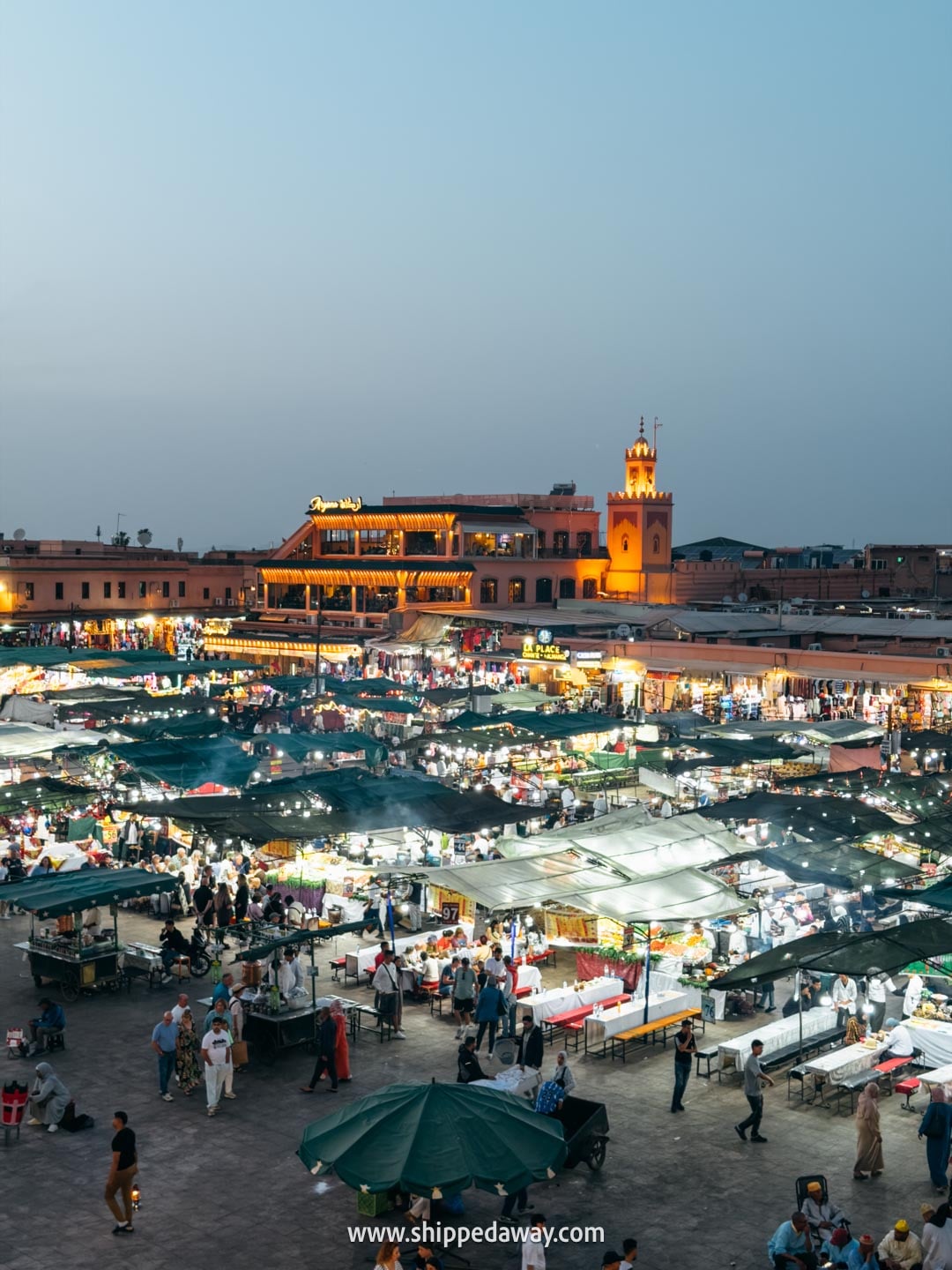
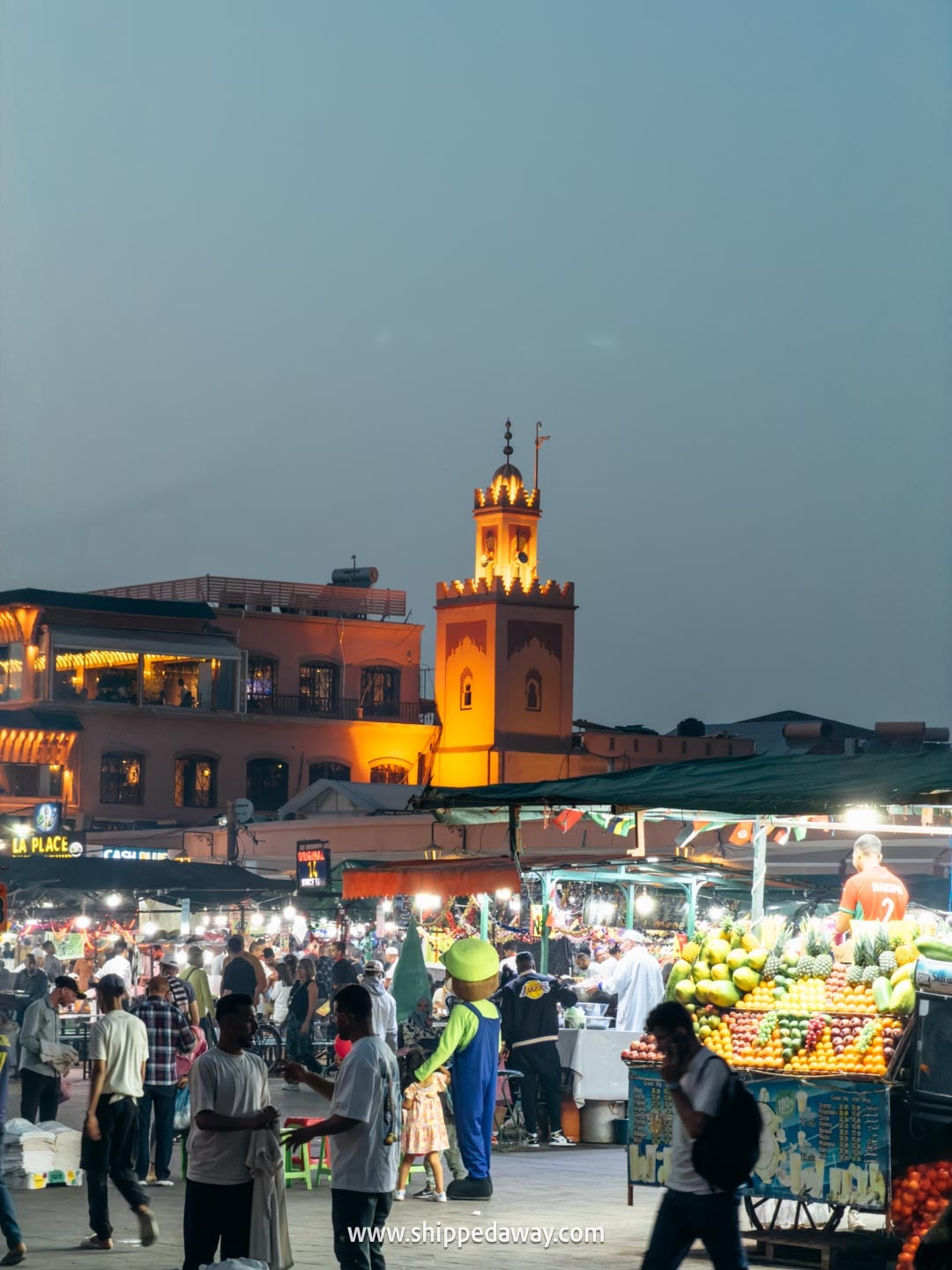
Personally, we did not enjoy our visit to Jemaa at all, as we simply couldn’t ignore the animal abuse, from the snake charmers to the many monkeys in dresses forced to take photos on top of people’s heads.
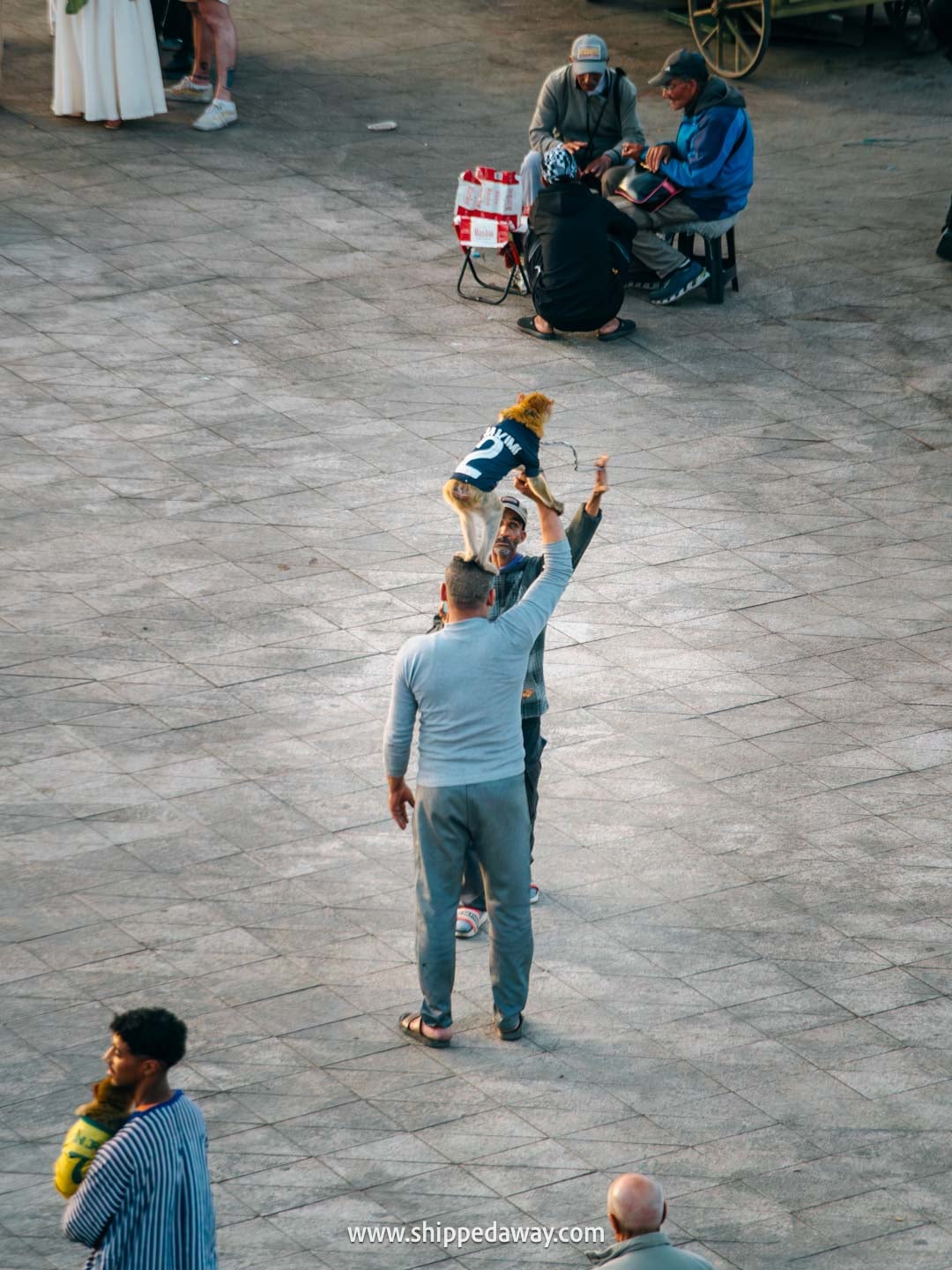
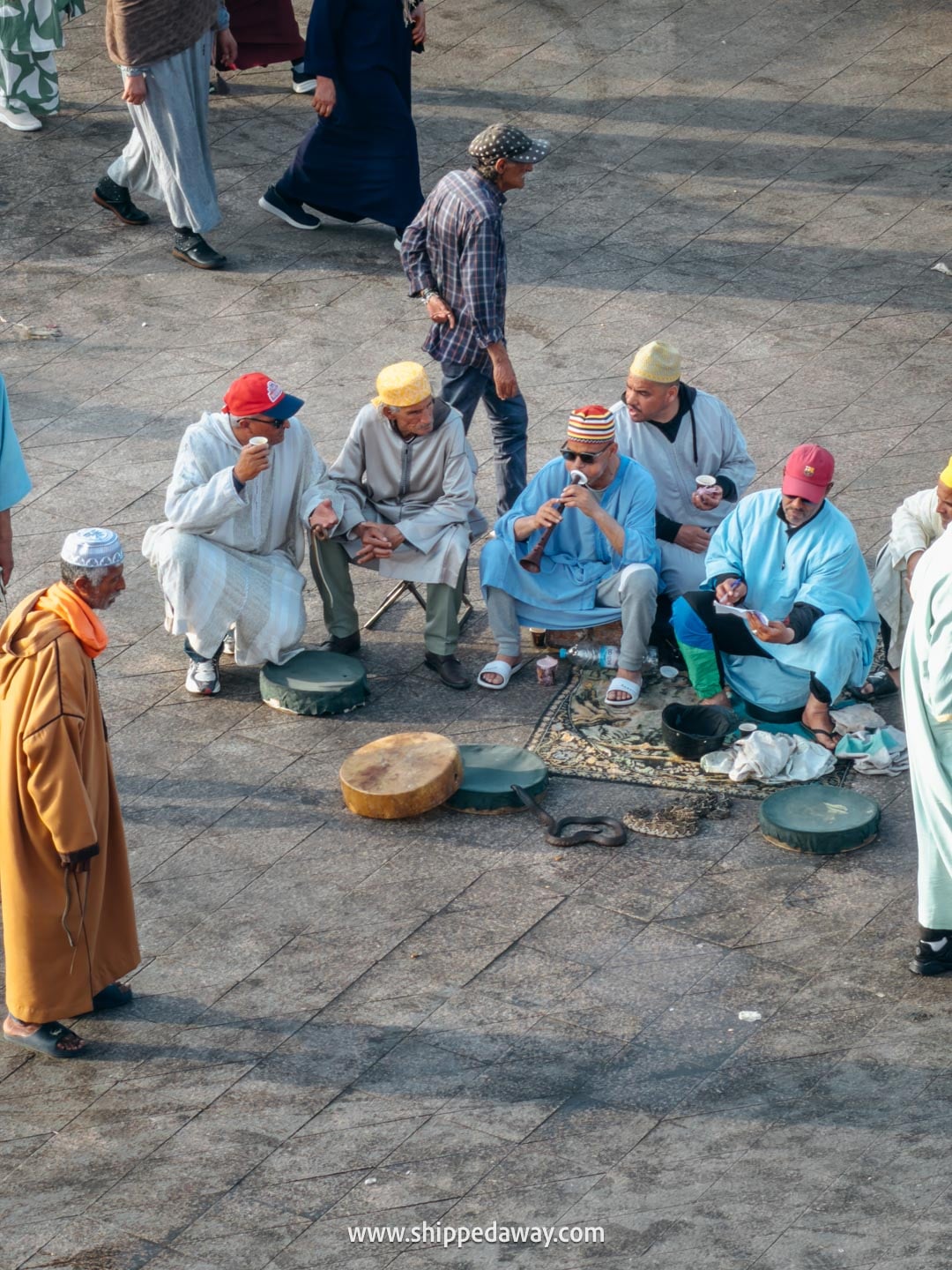
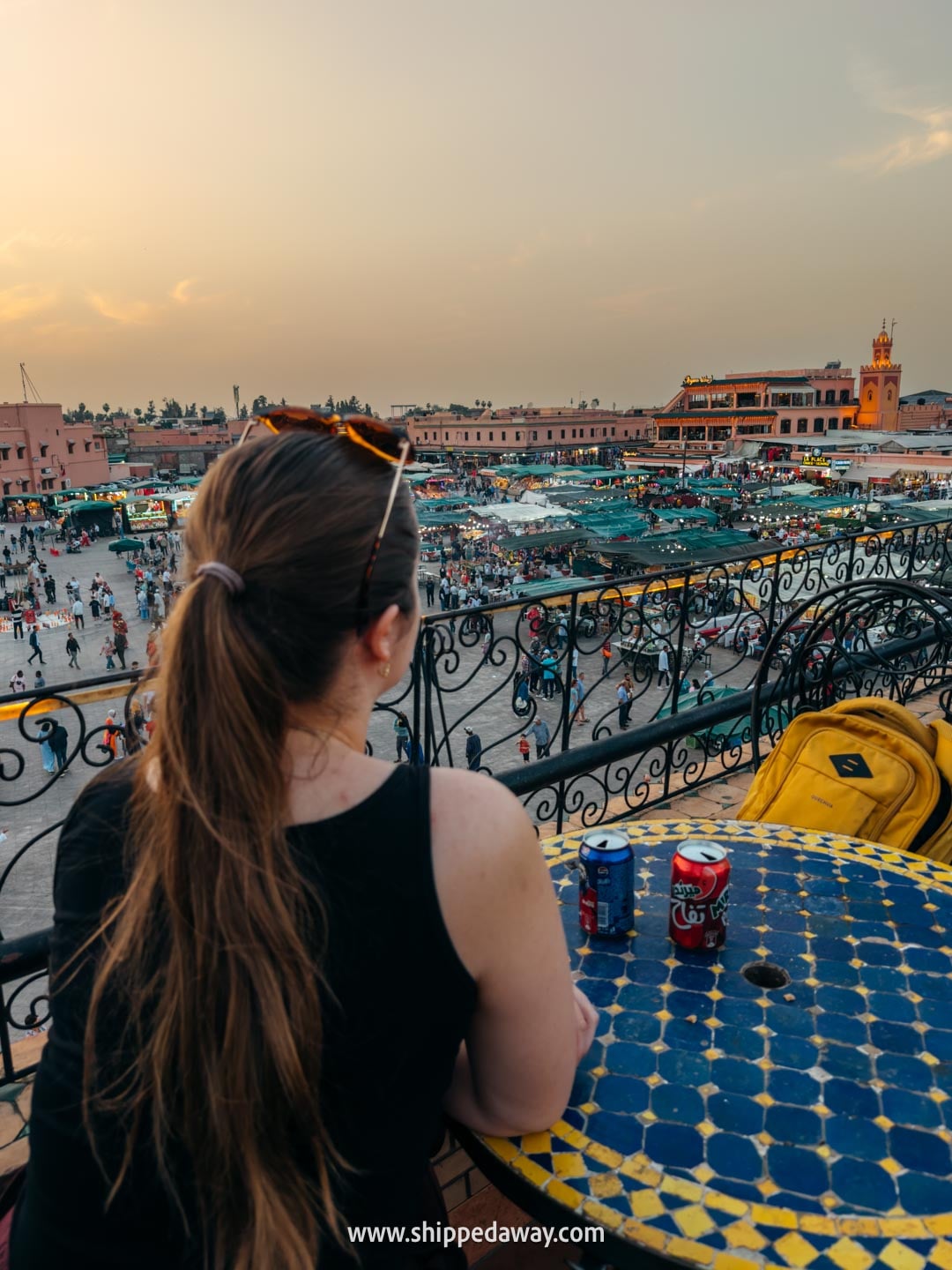
Since we wanted to avoid the square’s negatives as much as possible and observe it from afar, we decided to get drinks at the huge rooftop terrace of Cafe Glacier, the place with the best view of Jemaa el-Fnaa square.
We spent quite a lot of time there, and we could clearly see most of the square, especially the guys with monkeys and snakes who were right in front of us.
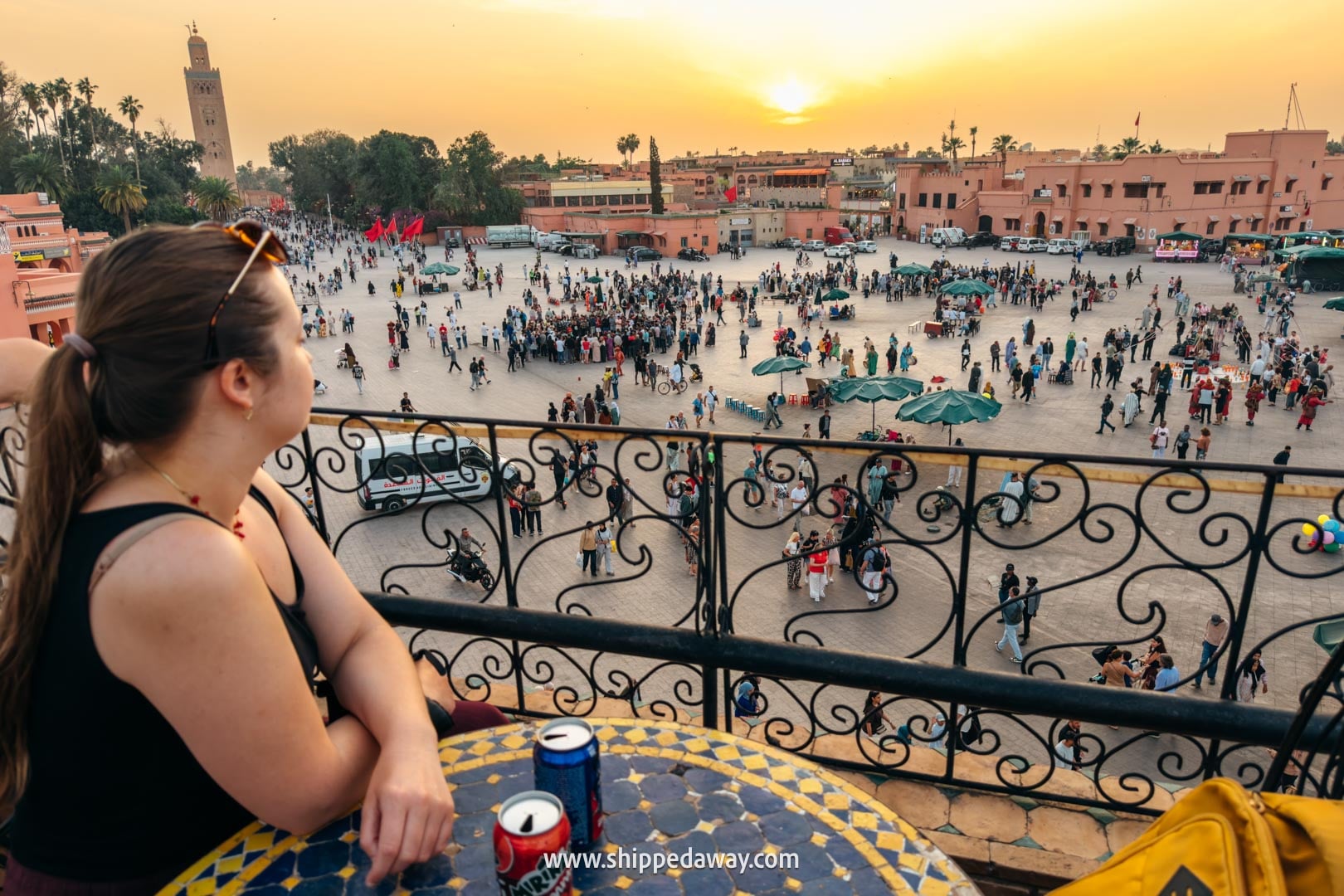
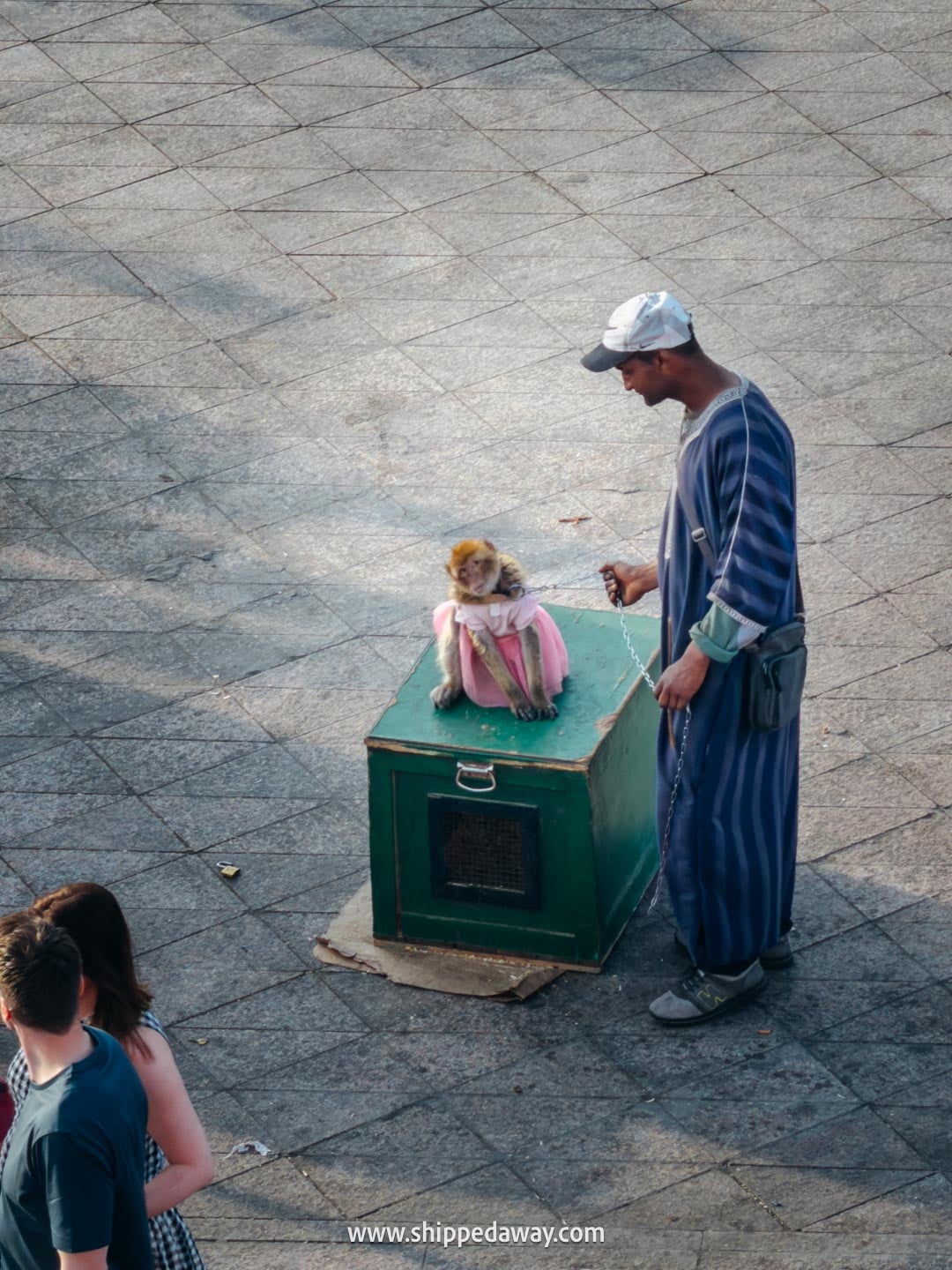
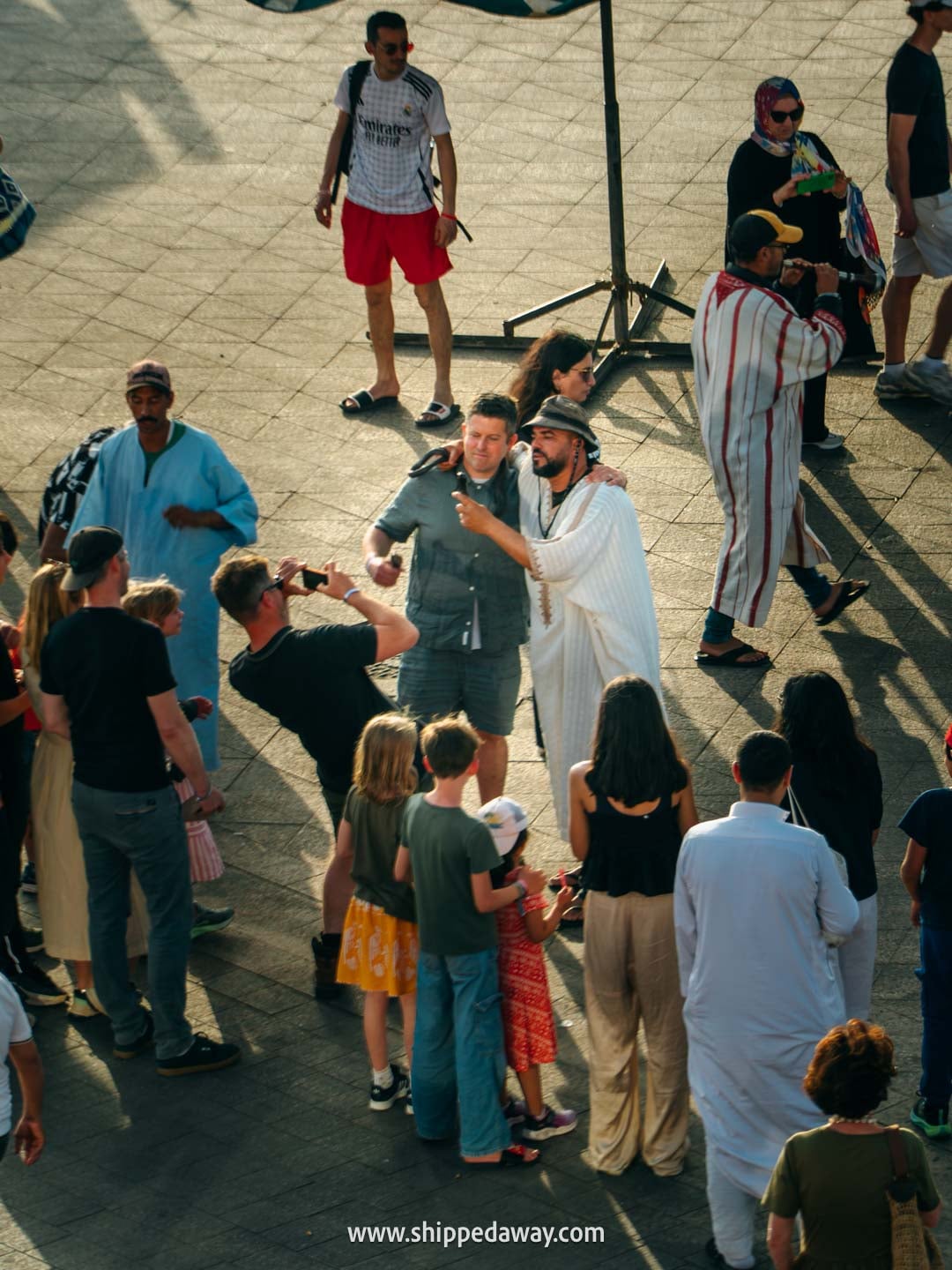
All in all, Jemaa el-Fnaa square is what you make of it. If you overlook the negatives, it can be a fun and exciting place.
But you do need to be alert at Jemaa, as there are endless numbers of hustlers/peddlers trying to sell you something, not always in the nicest way.
11. Koutoubia Mosque
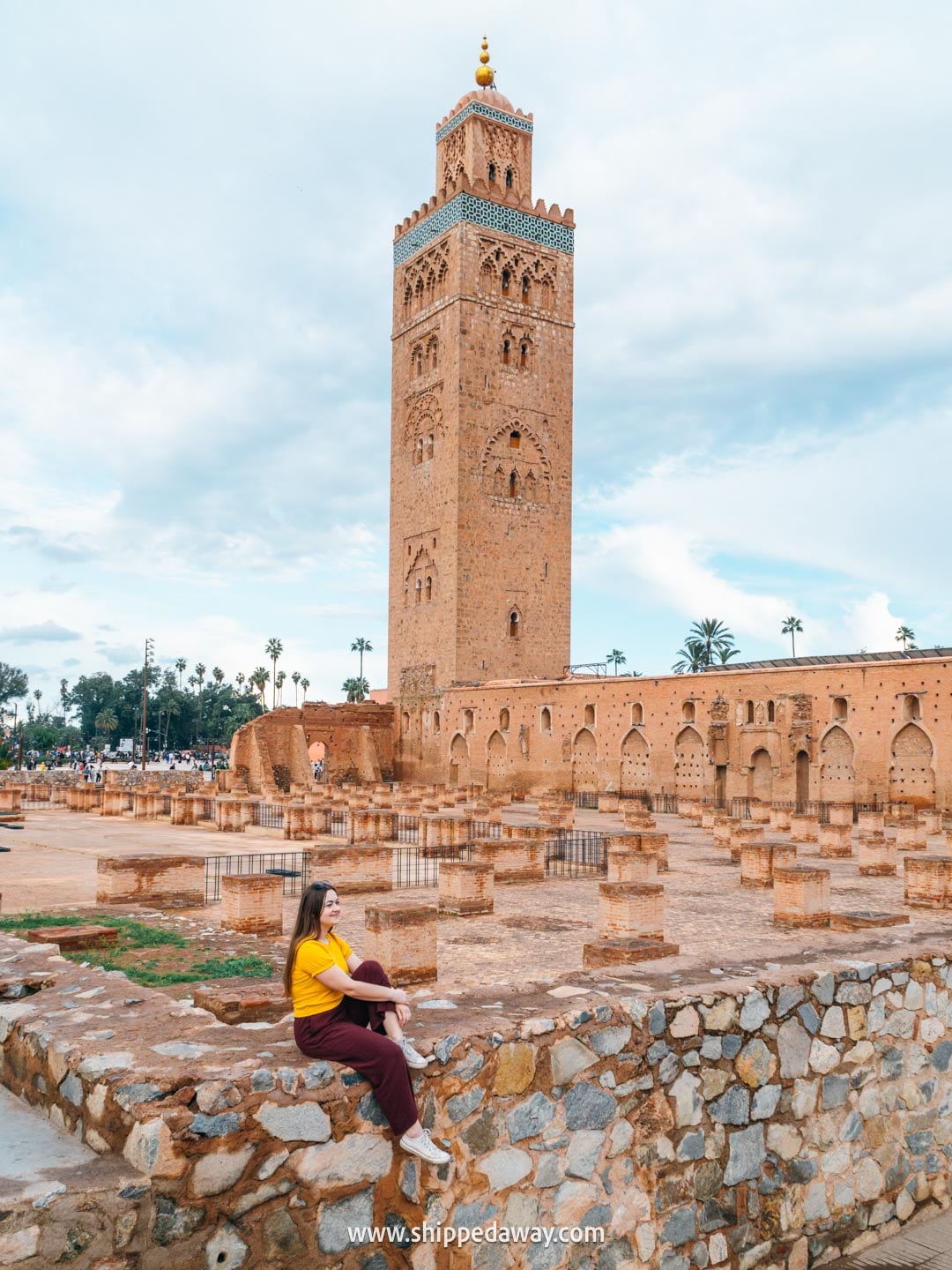
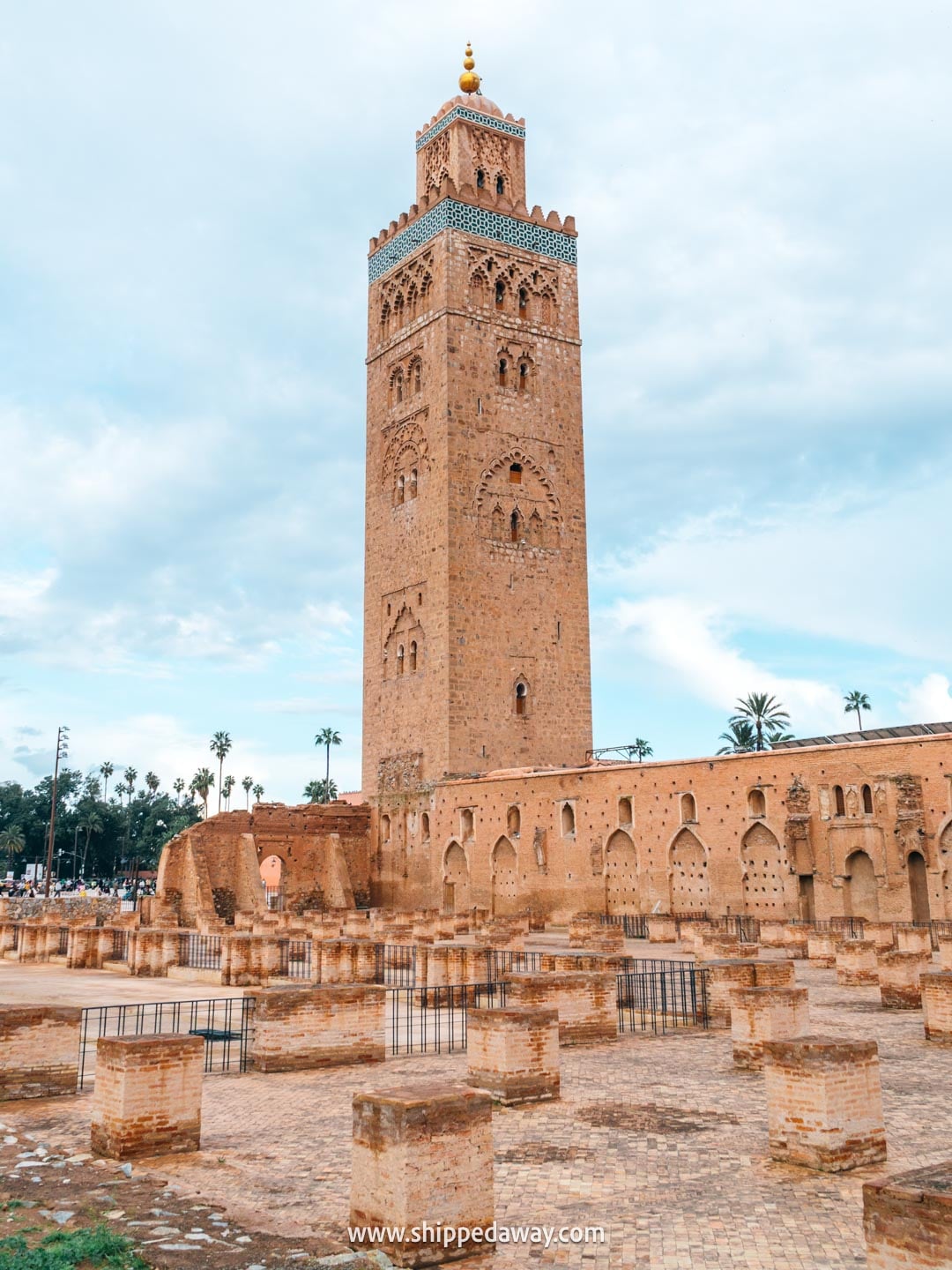
On the southwest side of the Medina, not far from the big Jemaa el-Fnaa square, is the Koutoubia Mosque, a symbol of Marrakesh with its high minaret tower.
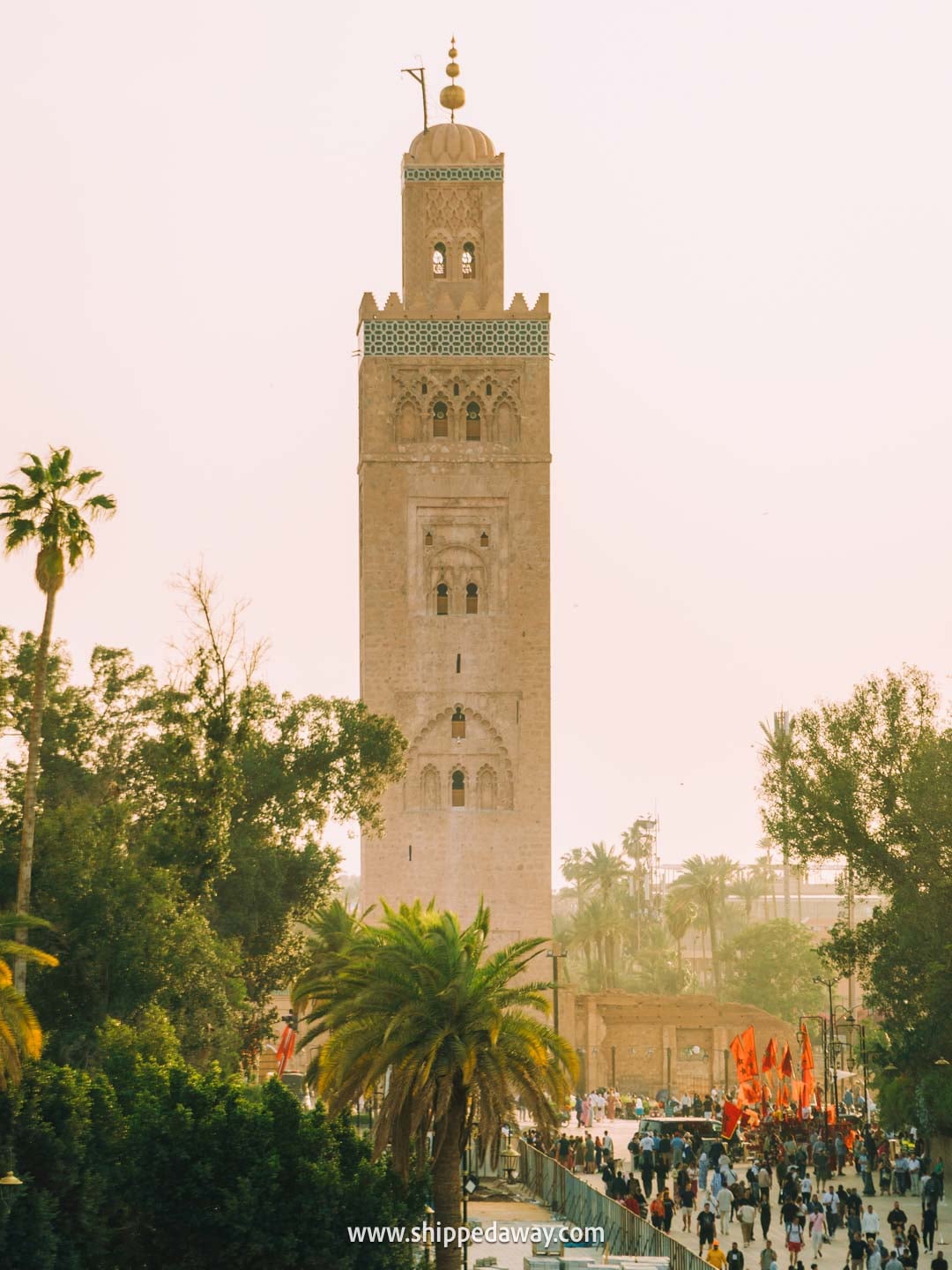
The minaret really is quite high compared to other buildings in the medina, and we saw it frequently from the rooftops we visited, and even from our Riad.
Since you can’t enter mosques in Morocco if you’re not muslim, you can only admire them from the outside (except the mosque in Casablanca).
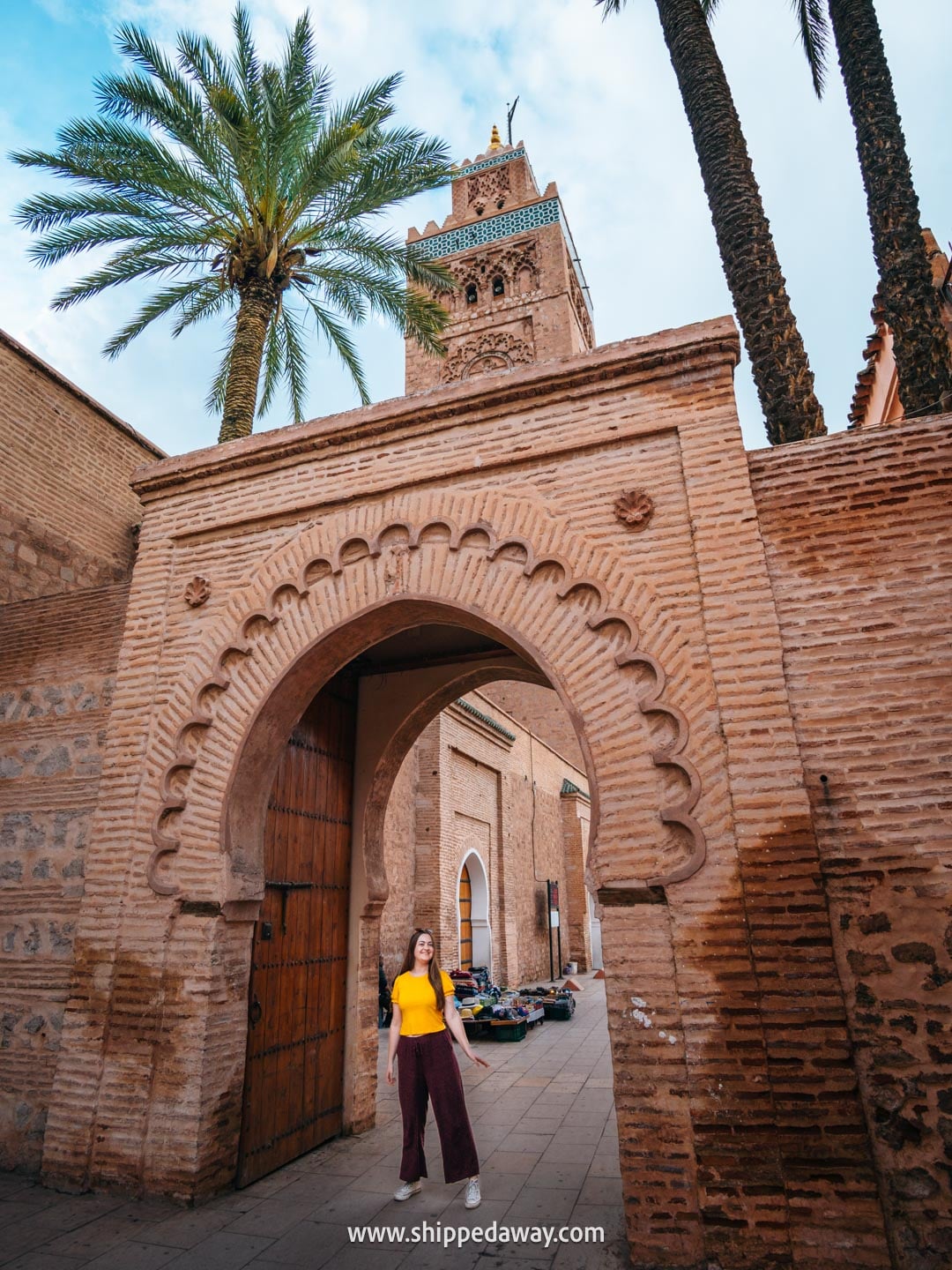
There’s a big open square in front of the mosque and multiple gardens behind it, and you can also walk around the ruins of the mosque that stood there before the current one.
The mosque looks great at night as well, so if you have time, walk by in the evening. For some reason, we completely forgot to do that, even though we were looking forward to it. Oops!
12. Hot Air Balloon Flight
An experience we really looked forward to on our visit was a hot air balloon flight above the outskirts of Marrakesh.
We went for a sunrise hot air balloon ride with a very early-morning pickup from the Medina. Though we weren’t lucky to get a fantastic sunrise, it was still a great way to see the area in a cool way from above, something we don’t do often.
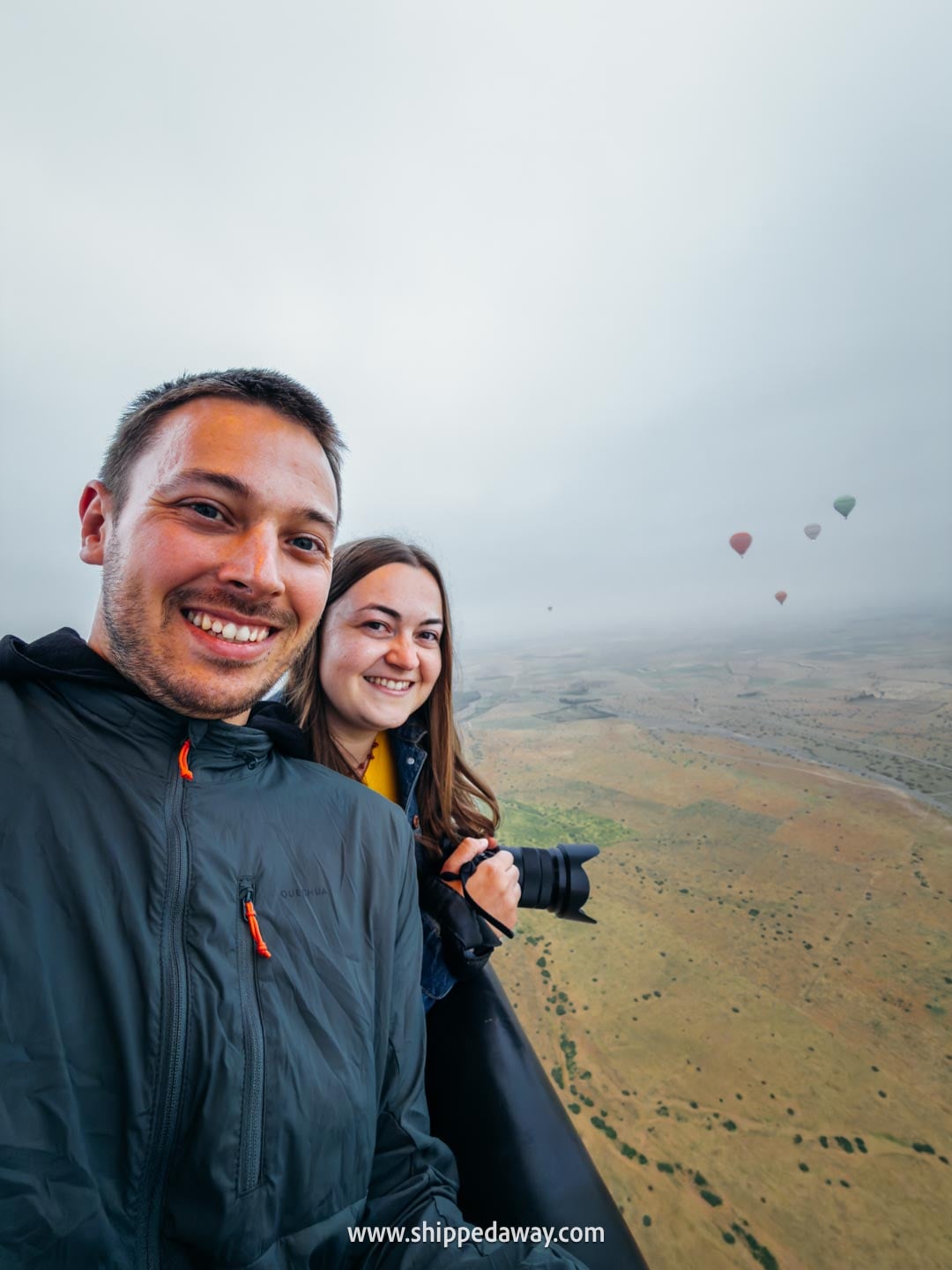
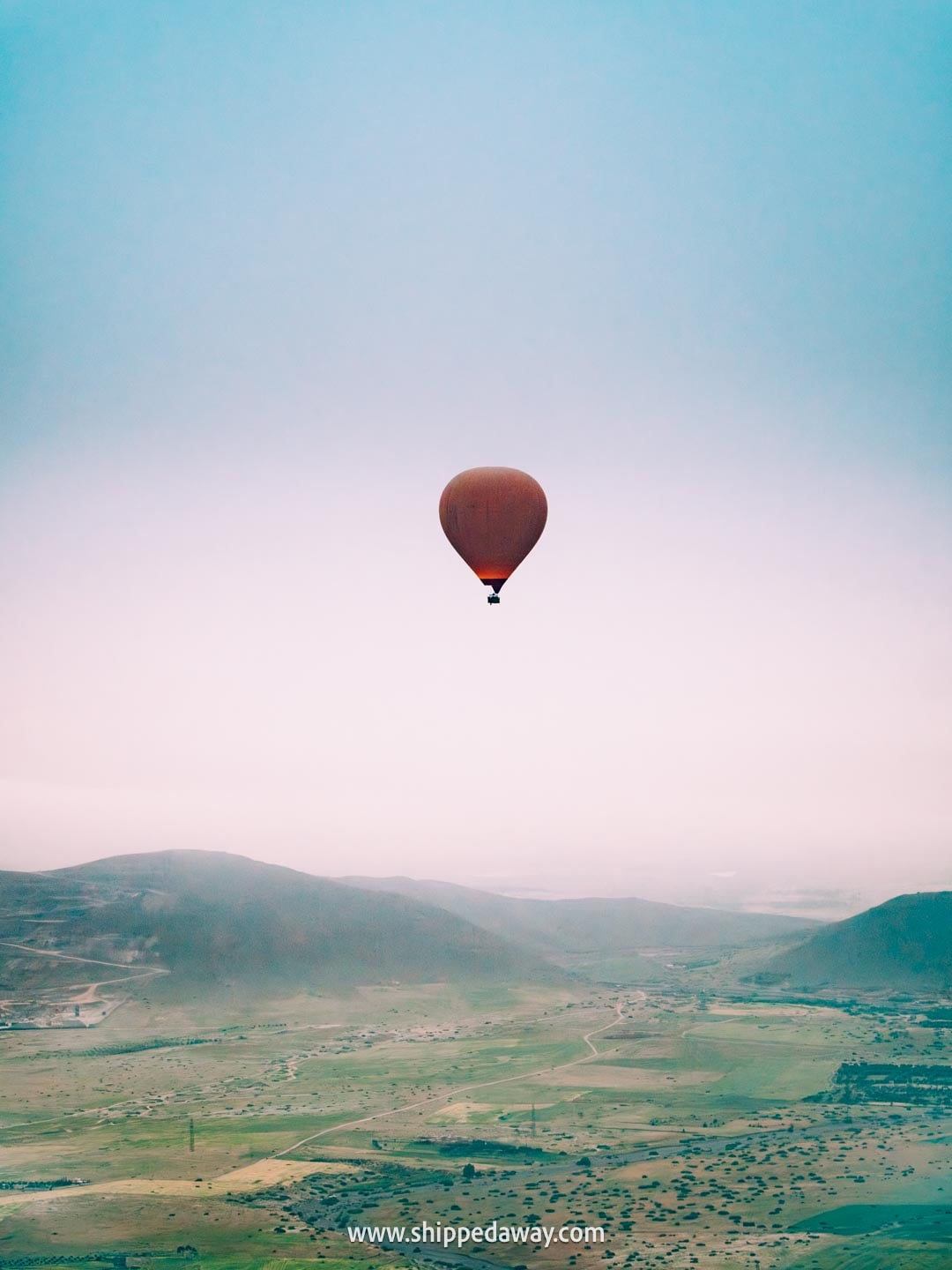
Hot air ballooning in Marrakesh is definitely not like it is in the world-famous Cappadocia, where we went for a flight a few years prior.
In Marrakesh, the number of balloons in the sky at once is under 100. According to our pilot, about 70, if we remember correctly. So the sky isn’t filled with balloons like in Turkey.
Still, you can get some great photos with other balloons in the distance on your flight, and from the ground before or after.

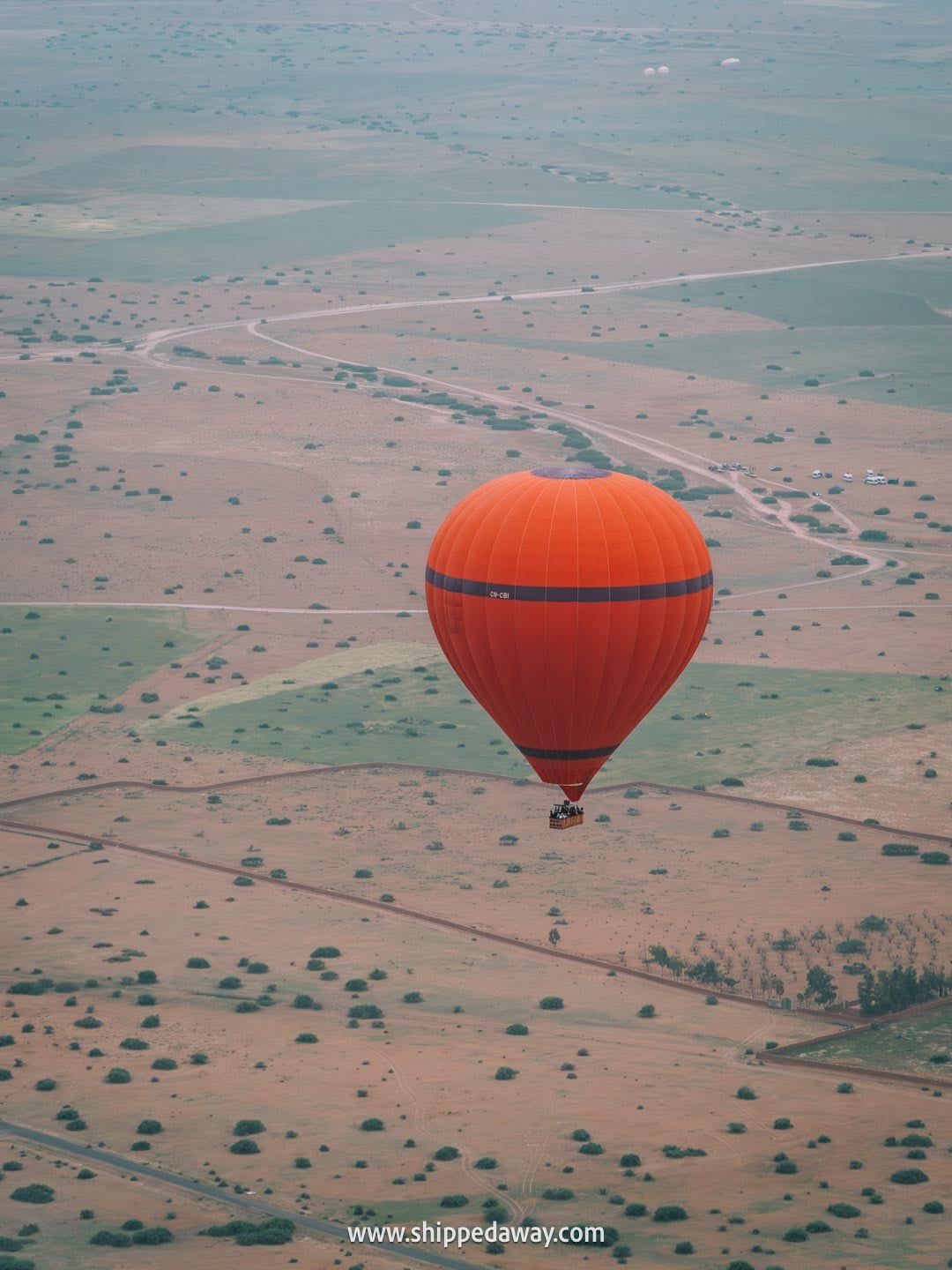
The process of going hot air ballooning in Marrakesh is pretty straightforward.
- First, you get picked up from the city – if your hotel is in the Medina, you need to walk to one of the roads around it (10-15 minutes max).
- Then, a 45-minute drive to the base of the ballooning company, where, after a safety briefing, you board a minivan or car and do a short drive to the liftoff spot.
- After just a few minutes, you enter the balloon basket and are in the sky in no time.
- You spend about 45 minutes to 1 hour in the hot air balloon, depending on the weather conditions.
Our flight was with Happy Ballooning Marrakesh, and the whole experience was great, from the pickup to the flight and the included breakfast that followed. Plus, we each got a flight certificate with our names written in Arabic, which was a cherry on top!


13. Rooftop cafes and restaurants
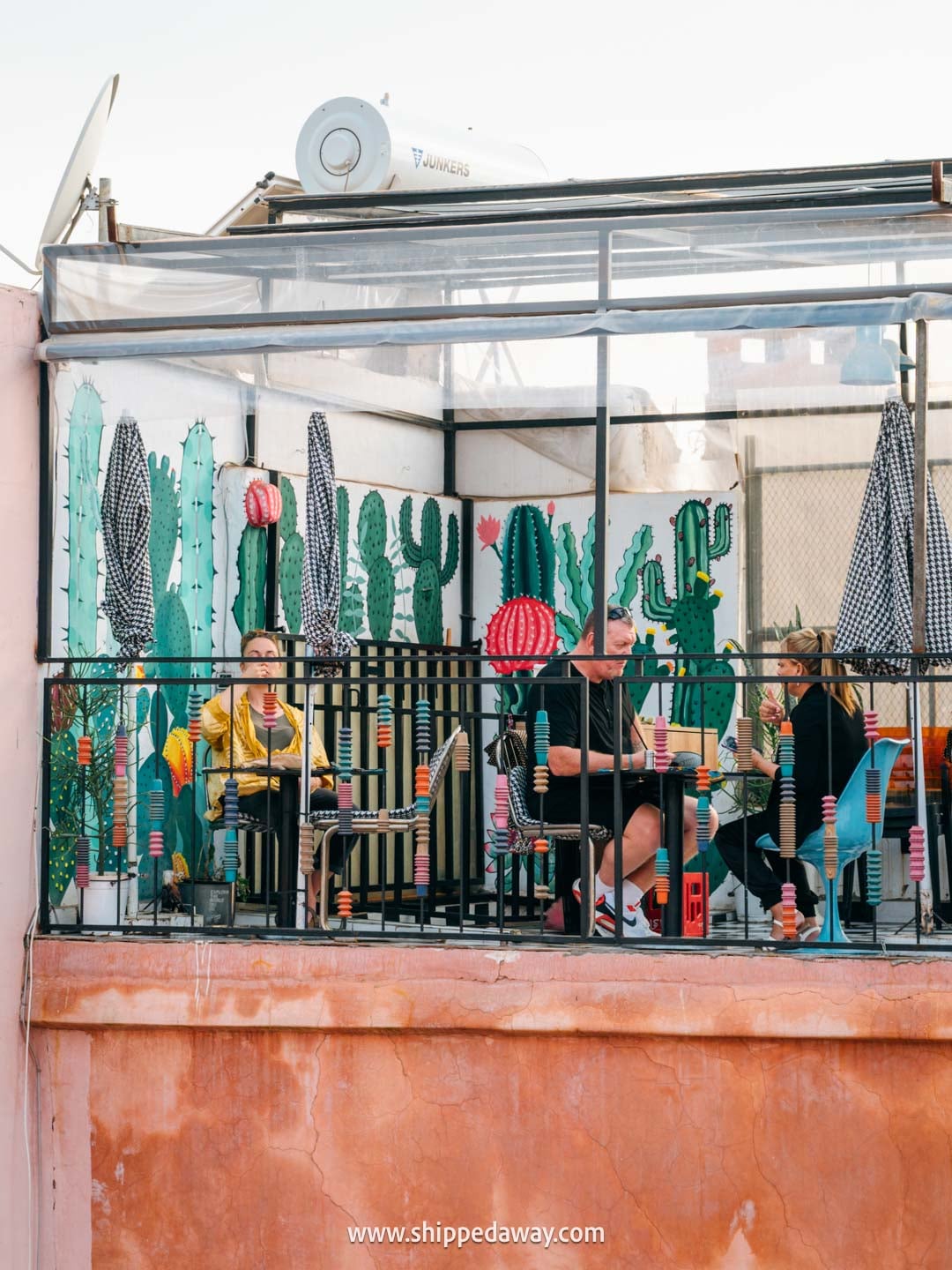
A very popular thing to do in Marrakesh is to visit the rooftop cafes and restaurants, and there are so many to choose from.
The way Marrakesh’s medina is built means there are no super-high multi-story buildings. But that doesn’t mean you can’t find great rooftops from which you can still get views of the medina.
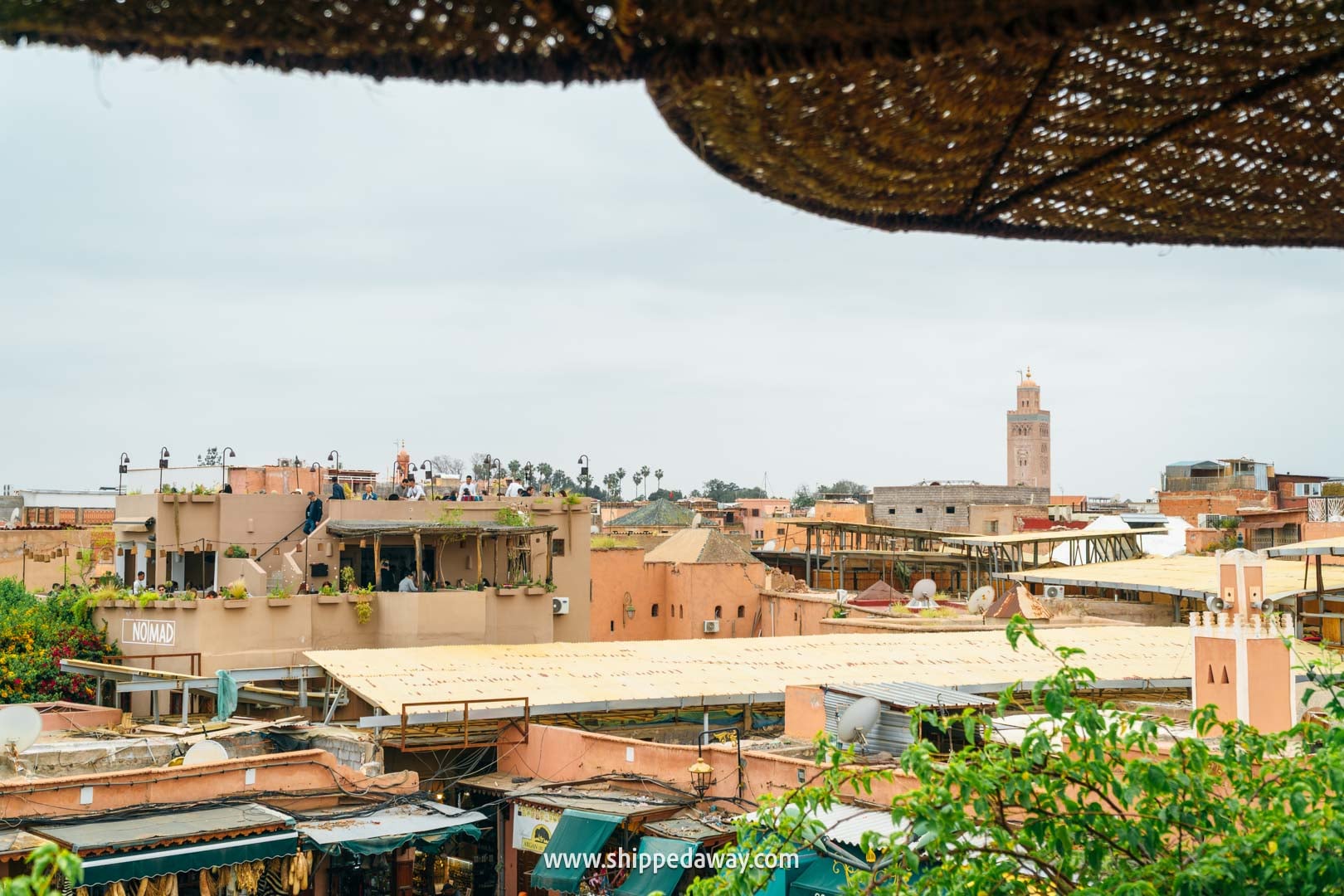
One of the rooftop places that’s super popular is the Café des Épices, which we already mentioned as a great spot for a Moroccan breakfast. Its terrace and even the floor below have views of a busy market in front.
In addition to the Cafe Glacier, which overlooks the whole of Jemaa el-Fnaa square, you can go to the other side of the square to the famous Zeitoun Cafe, which also serves food.
Best tours and experiences
- 🚶♂️ Souks walking tour
- 🍲 Food tour: introduction to Moroccan cuisine
- 📍 Medina tour
- 💆♀️ Hammam: spa and massage
- 🎪 Dinner show: the performance is the point, dinner is an extra
- 🎈 Sunrise hot air balloon ride
- 🌴 Palm Grove by bicycle: explore the palm oasis
Where to stay
The best area to stay in Marrakesh is definitely the old city (Medina), as that way you get to be close to all the attractions.
Alternatively, outside the Medina, the best place is Gueliz, where you can get a bigger room and maybe even a pool. It’s the new town, also known as the expat area, with many international restaurants and shopping options.
- Medina
- Traditional hotel: Riad Tizwa and Riad Adore
- Budget room: Bahia Budget Apartment
- Gueliz
- Residence Eden: comfy studios and apartments, swimming pool
- Gueliz Two-bedroom Apartment: mid-range
Best restaurants
- Café Restaurant Dar L’hssira – traditional food
- Anzar – traditional food
- Café des Épices – Moroccan breakfast
- Le 150 – burger and taco (we loved the tacos!)
- Limoni – Italian
- dairy Ghita, – a small street food restaurant (traditional pancakes with various fillings)
- Naranj – Lebanese
Best time to visit
Marrakesh is a year-round destination that you can visit anytime, even in winter.
But the absolute best time to visit Marrakesh is March to May, in the spring, when the temperature isn’t boiling, and the city is at its best for exploring.
We visited Marrakesh at the end of March and also at the end of April, and had a great time. Spring in Marrakesh is also perfect for day trips outside the city, especially to natural spots.

Continue planning your Morocco trip
- Merzouga Travel Guide: Our trip review with tips for planning the best desert experience
- Fes Travel Guide: The old capital, known for tanneries and a more “authentic” feel
- Ait Benhaddou Guide: The historic Ksar, a UNESCO site, is a fortified town like no other
- Ouzoud Waterfalls visiting tips: A fascinating set of waterfalls, accessible as a day trip from Marrakesh (it’s even pictured on a banknote!)
- Iminifri Natural Bridge: If hidden gems are still a thing, this is absolutely one!
- Dades Gorge and Monkey Fingers: A typical stopover on a bigger Morocco itinerary (unique rock formations)
- Todra Gorge: Narrow gorge with a nearby oasis, and a stunning hike