



First, it’s important to understand that Bangkok’s Chinatown is a larger historic neighborhood with temples, shops, markets, restaurants, and residential streets (read our full guide to the area here).
The Chinatown Night Market is mainly the street-food scene along Yaowarat Road and nearby streets, which comes alive in the evening.
Our experience
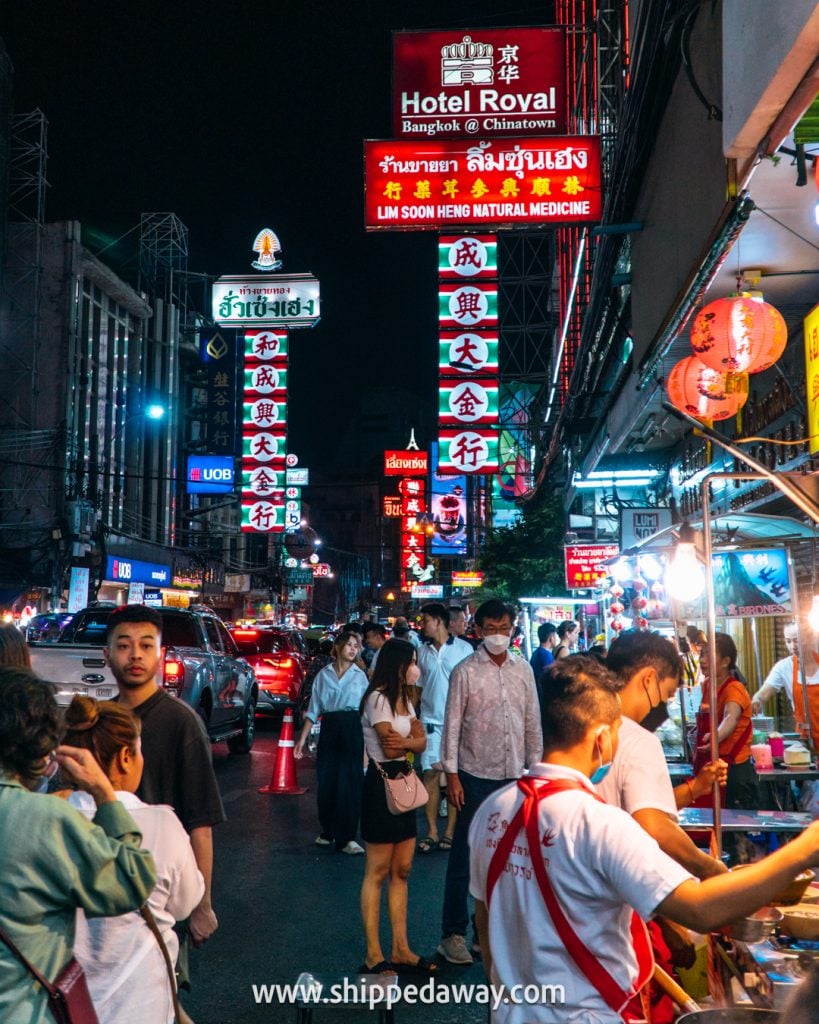
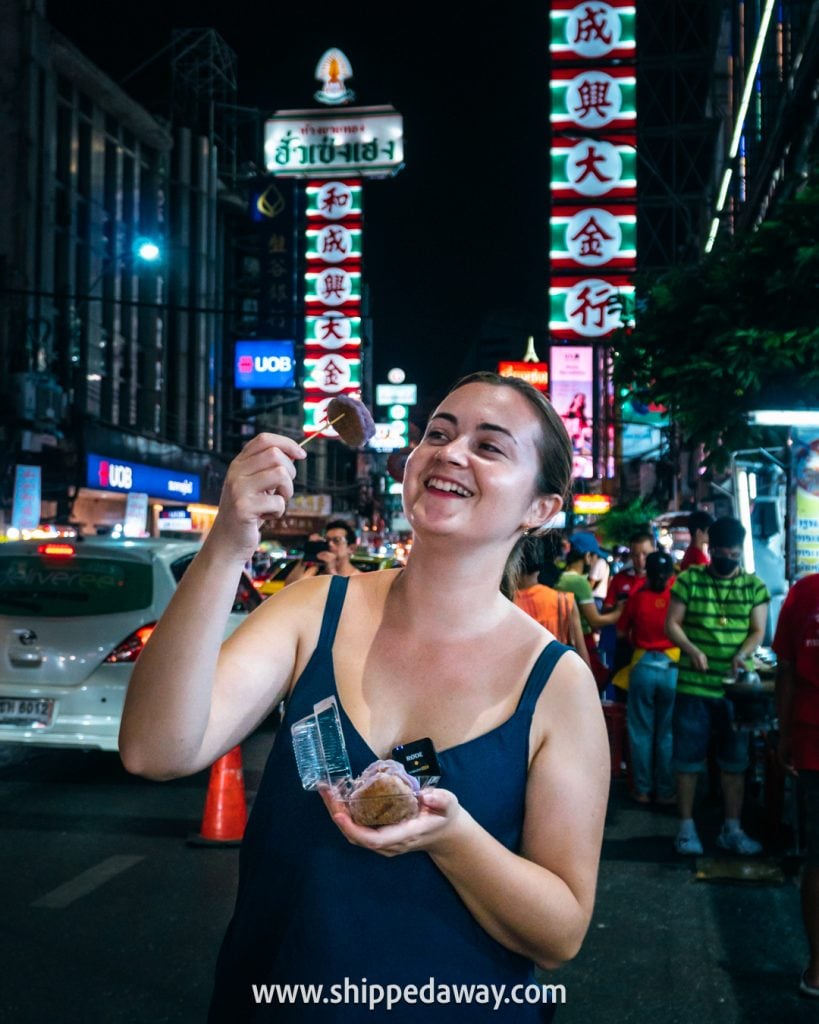
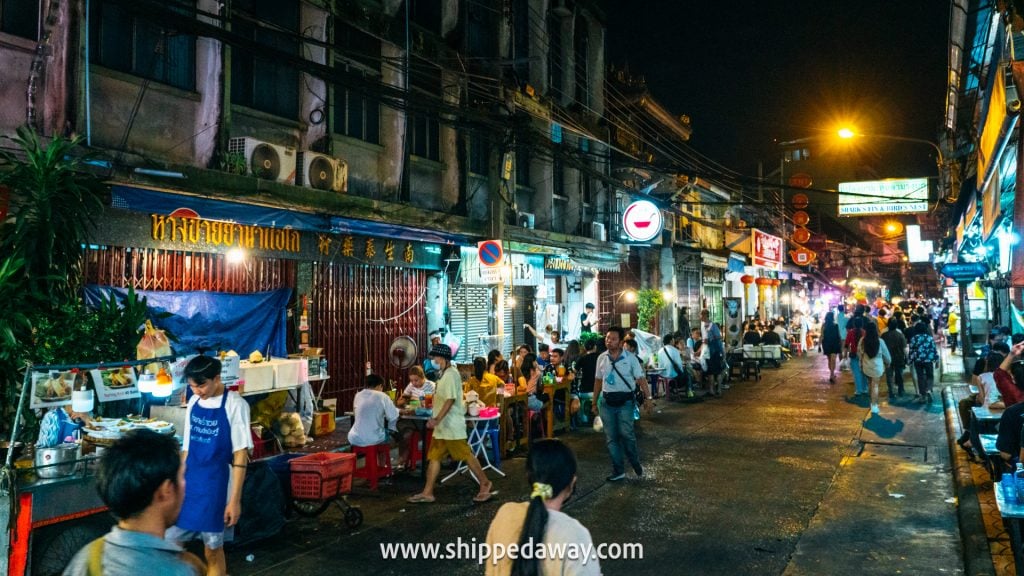
So, Bangkok’s Chinatown is obviously much more than just a night market, but it is a completely different place after dark. We visited in the evening, when Yaowarat Road was packed with traffic, colorful neon signs lit up the streets, and food stalls seemed to be everywhere.
It was busy, loud, and a little chaotic, but that’s also what made it fun!

It was definitely a different experience from Jonker Night Market in Melaka (Malaysia), one of our favorite food markets ever. Bangkok’s night market sits right alongside the busy Yaowarat Road, making the whole experience feel much more hectic (not in a bad way, though!).
We enjoyed simply walking around, soaking up the atmosphere, and looking at all the food, even without a big food tour planned. We even got handed a tiny dog from a car for a photo because we thought he was too cute. 😂
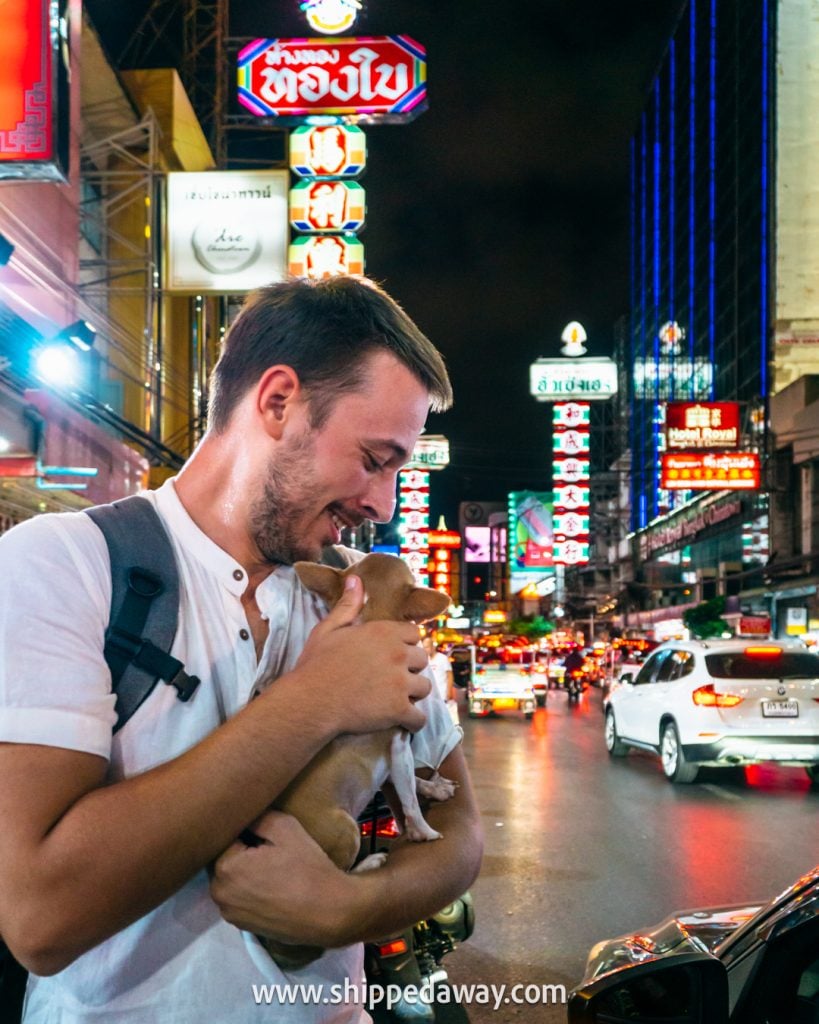

Honestly, you don’t have to be a huge foodie to enjoy Bangkok Chinatown at night. Just walking along Yaowarat Road and soaking up the atmosphere is an experience in itself.
That said, if food is not the main reason for your visit and you’re short on time in Bangkok, I’d prioritize other experiences (see our Bangkok itinerary) and save Chinatown for a spare evening. But if you have the time, it’s definitely worth a stroll!

What to eat at Bangkok Chinatown Night Market
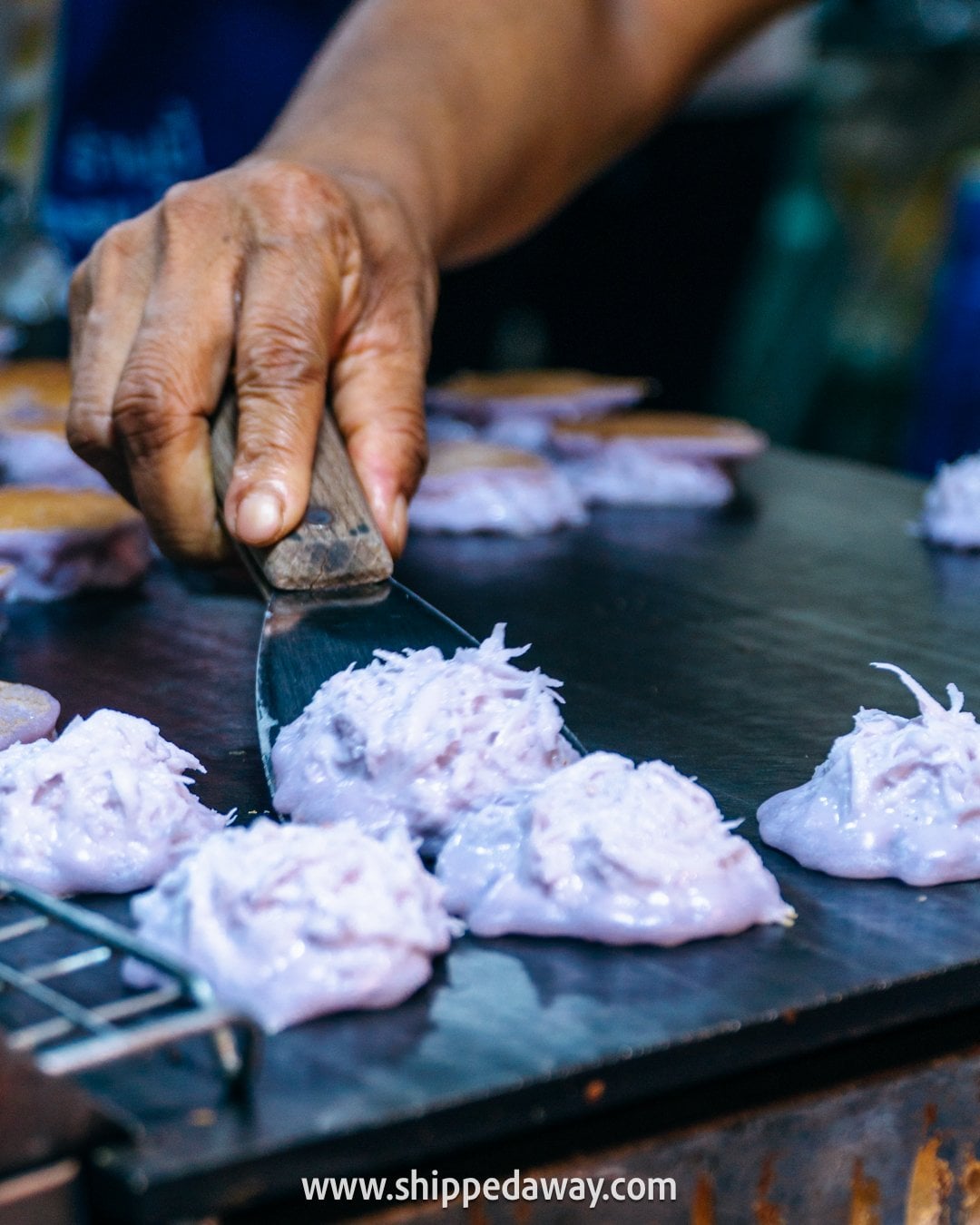
There are lots of choices, so it’s easy to get overwhelmed, but here are some main dishes that are worth trying.
Further down, there are also choices for vegetarians and vegans. Spoiler alert: it’s a much less satisfying choice 😅.
Must-try street food
- Kuay Jab / Kway chap (rolled rice noodle soup) – A peppery soup with rolled rice noodles, usually served with pork and crispy pork belly. One of Chinatown’s signature dishes.
- Hoi Tod (oyster omelet) – A crispy-on-the-outside, soft-on-the-inside omelet with oysters, eggs, and bean sprouts.
- Grilled seafood – Look for grilled prawns, crab, squid and fish. Some restaurants sell seafood by weight, so check the price before ordering.
- Fish ball noodles – Noodles served with homemade fish balls, usually in a light broth.
- Pad Thai – Thailand’s famous stir-fried rice noodles with egg, tofu, peanuts and your choice of protein.
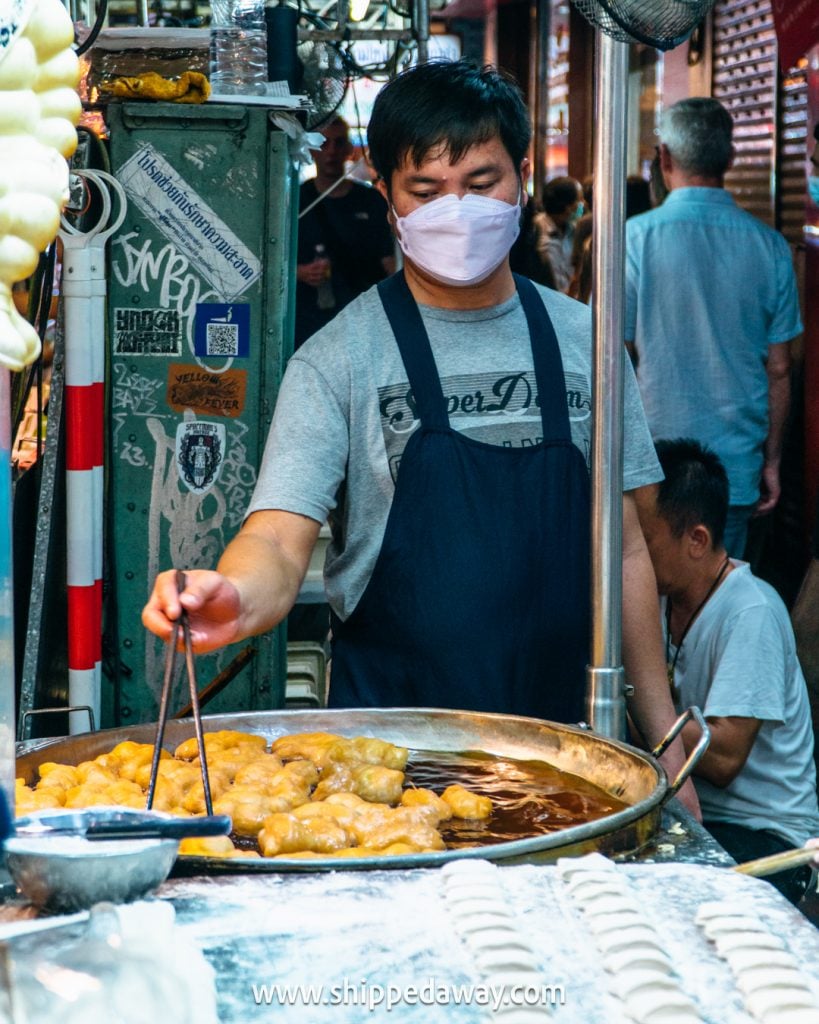
- Pa Tong Go – Crispy Chinese-style fried dough sticks, often served with pandan custard for dipping. Matej absolutely loved these! 🙈 We also found them in Chiang Rai.
- Yaowarat toasted buns – Toasted bread filled with butter, condensed milk, pandan custard or other sweet fillings.
- Bua Loy – Small glutinous rice dumplings served in warm coconut milk or ginger syrup.
- Mango sticky rice – Sweet sticky rice with fresh mango and coconut milk. A classic Thai dessert you’ll often find anywhere.


Vegetarian food options
Vegetarian options are a little trickier in Chinatown, as many traditional Thai-Chinese dishes contain pork, seafood, fish sauce, or oyster sauce.
Still, you can look for:
- Vegetable stir-fried noodles – Ask for noodles with vegetables and tofu, without fish or oyster sauce.
- Vegetable dumplings – Some stalls sell vegetable-filled dumplings, but check whether the filling contains meat or seafood. We found some garlic chives dumplings (regular and fried) that were quite nice.
- Grilled corn – A simple snack, but check what seasoning or butter they use.
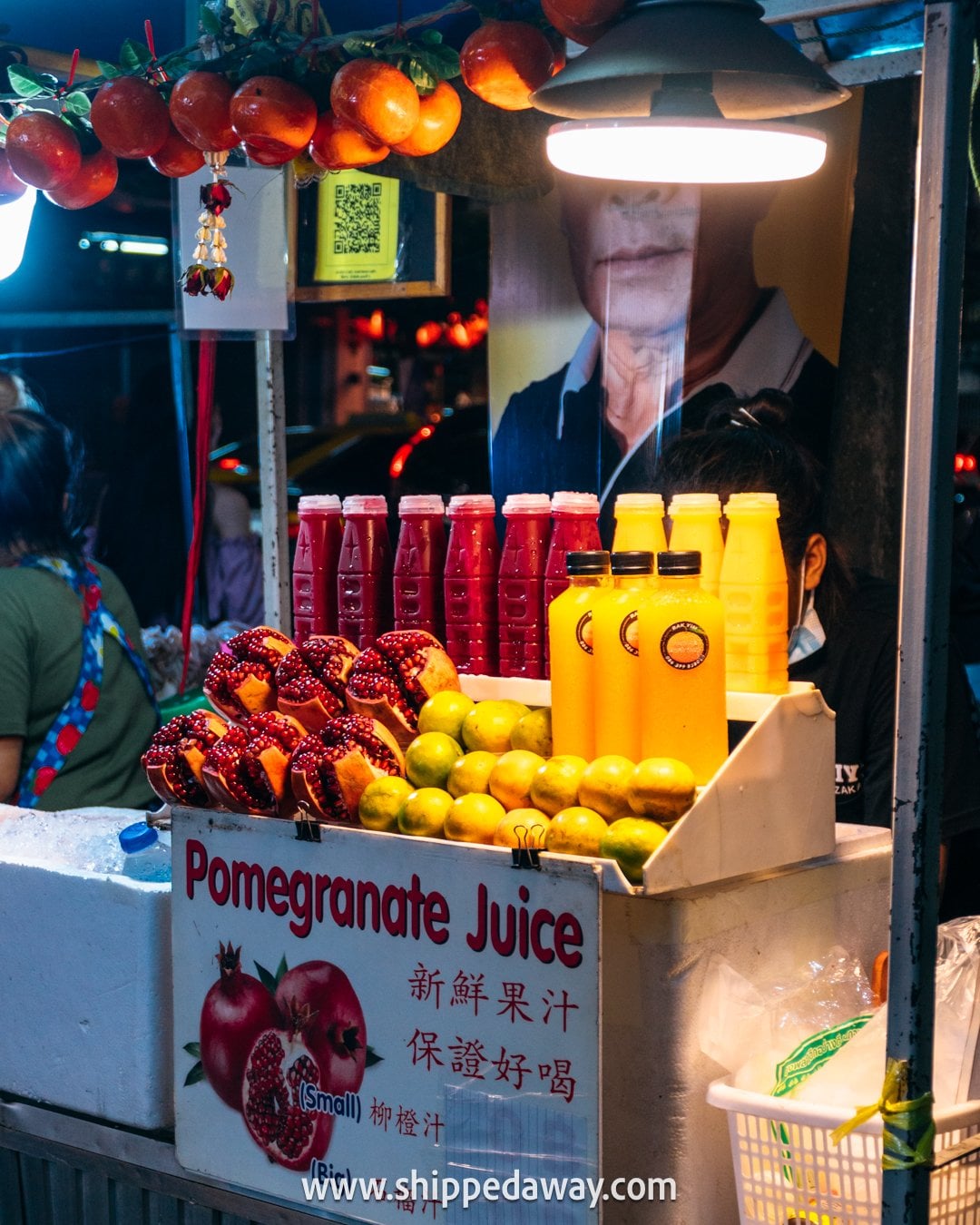
- Fresh fruit – You’ll find plenty of fruit vendors around Yaowarat.
- Sweet treats – Some traditional desserts are vegetarian, but check for dairy, eggs and other ingredients.
💡 Our tip: Look for food stalls displaying the yellow and red jay flags. These indicate Buddhist-style vegetarian food, which generally excludes meat and animal products. However, it’s still worth checking the ingredients if you have strict dietary requirements.

Vegan food options
Finding fully vegan food among the traditional night-market stalls can be even more challenging. If you want a proper meal rather than just snacks, we’d recommend:
- So Vegan – I’m Chinatown – A fully vegan restaurant on the second floor of I’m Chinatown shopping mall, close to Wat Mangkon MRT station. They serve Thai dishes, noodles, and plant-based alternatives.
- We ate here a lot during our many visits to Bangkok. 😄
- They’re open from 10 AM–8:30 PM, so it’s a good option before or early in your night-market visit.
- We ate here a lot during our many visits to Bangkok. 😄
- Jae Lee Vegan – A small, fully plant-based Thai-Chinese eatery with noodles, stir-fries and other local dishes. However, it closes in the late afternoon (8 AM–5:30 PM), so it’s not really a dinner option.
Conclusion is: if you’re vegan, don’t expect to find loads of options at every street food stall. Plan a proper meal at a dedicated vegan restaurant instead and enjoy the fruit and suitable snacks while exploring the market.
Best Bangkok Chinatown food tours
If you want to try several local dishes without spending ages figuring out which stalls are worth visiting, joining a food tour is a great option.
With countless food stalls, a local guide can help you discover places you might otherwise walk straight past. You’ll also learn more about the area’s Thai-Chinese food culture.
We love a good food tour, so here are a few options worth considering:
1. Bangkok Backstreets Food Tour with 15+ Tastings – Our top pick for food lovers
A small-group walking tour through Chinatown’s backstreets, with more than 15 tastings at around 8–9 local food stops. It lasts approximately 3.5–4 hours and includes an English-speaking guide.
2. Michelin Guide Street Food Tour by Tuk-Tuk
A fun option if you want to combine Bangkok’s famous street food with a tuk-tuk ride. The focus is on food stops recognized by the Michelin Guide.
3. Midnight Food Tour by Tuk-Tuk
A good alternative for those who prefer exploring Bangkok after dark. You’ll travel between food stops by tuk-tuk rather than walking the entire route.

Best Restaurants & Michelin Guide Spots in Chinatown
If you’d rather choose a few specific places instead of eating your way through random stalls, here are some popular Chinatown spots worth checking out.
P.S. Opening hours are approximate and can change. Check the latest information before heading out.
Did you know?
Many street vendors in Bangkok’s Chinatown have received the Michelin “Bib” for their great food.
Restaurants & food stalls
1. Nai Ek Roll Noodles – Michelin-listed (Bib Gourmand)
Famous for its kuay jab, a peppery soup with rolled rice noodle and served with crispy pork belly and other pork toppings. It’s one of the classic Chinatown food stops.
- Opening hours: around 7:30 AM–12:30 AM
2. T&K Seafood
One of Chinatown’s most recognizable seafood restaurants. Come here for grilled prawns, crab, squid, and other seafood dishes.
- Opening hours: 4:30 PM–2 AM
3. Lim Lao Ngow
A noodle stall famous for its homemade fish balls and chewy egg noodles.
- Opening hours: 4:30 PM – 9 PM
Another popular stop for kuay jab. Unlike the version at Nai Ek, this stall is known for its thicker, darker peppery broth.
- Opening hours: 10:30 AM – 12 PM
5. Sweettime – dessert place
Sweettime is a popular stop for traditional Thai-Chinese sweets, including bua loy (rice dumplings in sweet soup), ginger desserts, and other treats.
- Opening hours: 5:30 PM until late.


Michelin-starred and Michelin-recognized food
Bangkok’s Chinatown has several food spots featured in the Michelin Guide. However, not all of them have Michelin stars. Some have received the Bib Gourmand distinction, while others have been included in the guide’s selection.
Michelin-starred restaurant: Potong
- A one-Michelin-star restaurant serving creative Thai-Chinese cuisine in a beautifully restored historic building.
- This is a fine-dining experience rather than a street food stop, so expect a very different experience from the night market.
- 💡 Good to know: Reservations are recommended.
Michelin Guide street food:
- Nai Ek Roll Noodles – Famous for its peppery rolled rice noodle soup with crispy pork.
- Guay Jub Ouan Pochana – Another well-known stop for rolled rice noodle soup.
- Lim Lao Ngow – Known for homemade fish balls and egg noodles.
- Pa Tong Go Savoey – A popular stop for crispy Chinese-style doughnuts with pandan custard.

Tips before visiting
A few things worth knowing before heading to Yaowarat at night:
- Opening hours: There are no fixed opening hours for the entire night market. Food stalls generally start opening sometime in the late afternoon, with most activity from around 6 PM until midnight. Some places stay open later.
- Best time to visit: We’d recommend arriving around 6–7 PM. You’ll get to see the lights, find plenty of food options and hopefully avoid some of the biggest queues.
- Avoid Monday if possible: Many street food vendors don’t work on Mondays, so the selection can be considerably smaller. The neighborhood itself isn’t closed, and some restaurants (the permanent ones in the buildings) still operate.
- Bring cash: While restaurants generally accept cards, many street food vendors prefer cash. P.S. to save money on ATM transactions, we use this card.
- Expect crowds: Yaowarat gets incredibly busy, especially on weekends. Expect traffic, queues, and crowded pavements. But that is part of its charm and experience.
- Check seafood prices: Some seafood restaurants charge by weight rather than per dish. Always ask for the price before ordering.
- Don’t plan too much: There are so many food options that it’s better to walk around, see what’s available and choose what looks good to you.


How to get there
Bangkok Chinatown is easy to reach, but we’d recommend using public transport rather than taking a taxi during the evening rush.

Get an e-SIM to stay connected! (10% off with code SHIPPEDAWAY) We recommend the 10GB plan for 7, 15, or 30 days, which is a really good deal, as it connects to AIS or True, the two best networks in Thailand.
Here are your best transport options:
By MRT: The easiest option is taking the MRT Blue Line to Wat Mangkon Station. From there, it’s only a short walk to Yaowarat Road and the main night market area.
By boat: You can also take a Chao Phraya Express Boat to Ratchawong Pier and walk towards Chinatown. This is a nice option if you’re coming from the riverside or the Old Town, but check the last boat times. 💡 Check the Hop-On Hop-Off Boat or Tuk-Tuk and Boat combo.
By taxi or Grab: Traffic around Yaowarat can get quite bad in the evening, so you might be better off getting dropped off near the MRT station and walking.

Where to stay nearby
If you want to explore Chinatown in the evening without worrying about getting back to your hotel, staying nearby is a good idea. Plus, Chinatown is generally a great area to stay while in Bangkok. Win-win.
Here are a few accommodation options in and around Chinatown:
- 💲💲💲 Shanghai Mansion Bangkok – A stylish boutique hotel with Chinese-inspired interiors, right in the heart of Chinatown.
- 💲💲 Hotel Royal Bangkok @ Chinatown – A convenient option close to Yaowarat Road, with a rooftop swimming pool.
- 💲 Luk Hostel – A simple, affordable hostel in a convenient location (both private and shared rooms).
Frequently asked questions
Is Bangkok Chinatown Night Market worth visiting?
Yes! Even if you’re not particularly interested in street food, walking along Yaowarat Road at night is a fun experience. The colorful lights, busy streets, and food stalls make it one of Bangkok’s liveliest neighborhoods. That said, if food is not the main reason for your visit and you’re short on time in Bangkok, we’d prioritize other experiences (like Mahanakhon Viewpoint or see more things to do in Bangkok here). But if you have the time, it’s definitely worth a stroll!
What time does Bangkok Chinatown Night Market open?
Most street food stalls start opening in the late afternoon, with the busiest period usually between 6 PM and midnight.
Is Bangkok Chinatown Night Market open every day?
The area is open every day, but many street food vendors close on Mondays. If you’re visiting mainly for the food, choose another evening.
How long should you spend there?
Allow around 2–3 hours if you want to explore the streets, try different foods and enjoy the atmosphere. A quick stroll will take less time.
Is it free to visit?
Yes! There is no entrance fee. You only pay for the food and drinks you purchase.
Is Bangkok Chinatown suitable for vegetarians and vegans?
Options are more limited than in other parts of Bangkok because many traditional dishes contain pork, seafood, and fish sauce. However, dedicated vegetarian and vegan restaurants are available nearby.
Continue planning your Thailand trip
Find a list of over 95 travel guides to Thailand’s South, Central, and North.
Chiang Mai – Chiang Rai – Pai
Phi Phi Islands – Maya Bay – Koh Hong
Koh Samui – Koh Tao – Koh Phangan
Koh Kood vs Koh Chang vs Koh Mak
Similan Islands – Surin Islands